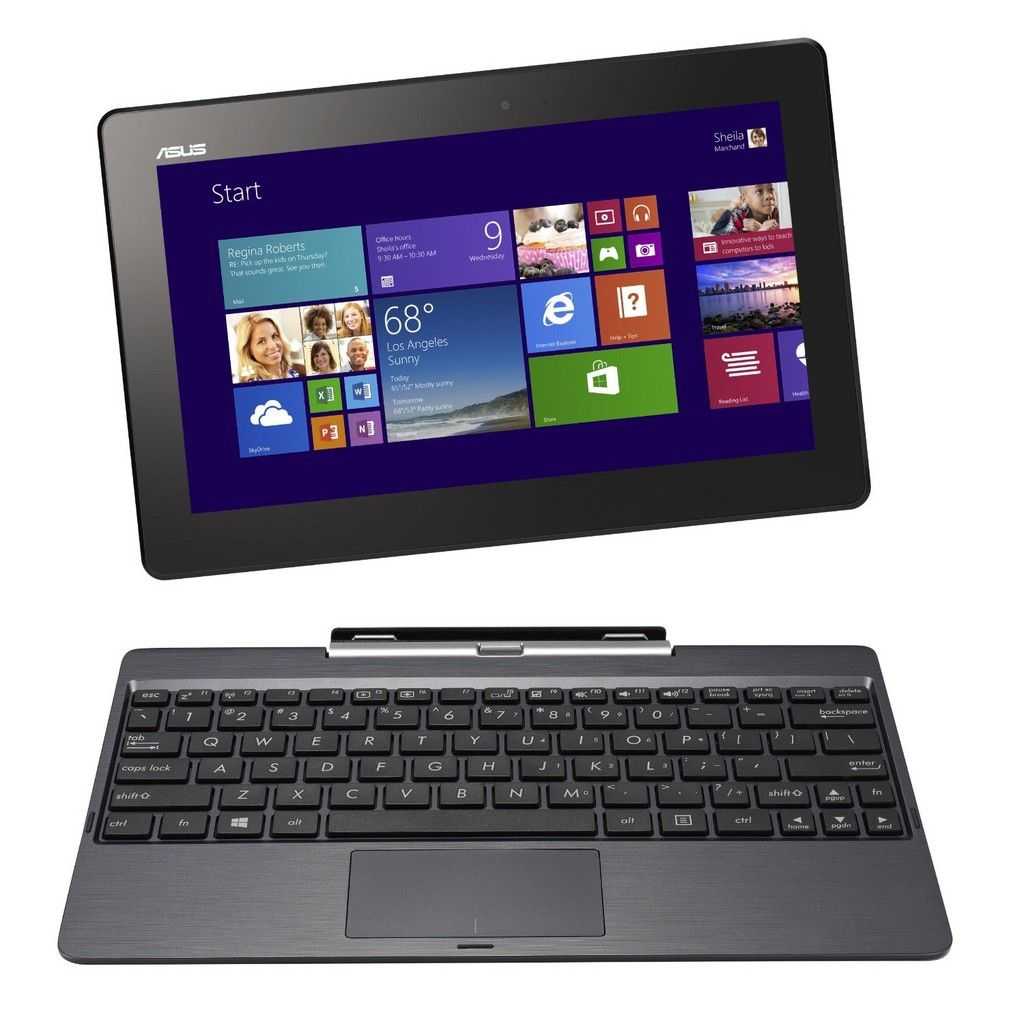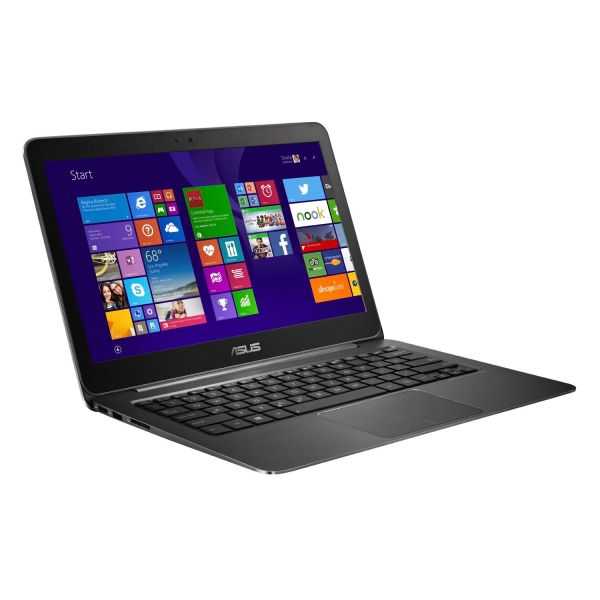
This is the seventh report on sizing trends in PCs below 12” screen size (and above 5”) appearing in the German market through the popular price comparison engine, Geizhals.at (*1) The last one was done in Feb 2011. Once again we’ve seen a big jump in overall numbers. The 7″ segment and 10″ segment have grown while the 11″ segment has shrunk. The 10″ market dominates more in this report than it did in the report of Feb 2011 although there is a clear trend occurring in the 7″ space where growth in products has occurred in all of the last 4 reports.
Number of SKUs in the market
The number of choices in the mobile screen space (above smartphones) has grown over 2x from approx 240 SKUs to over 630 SKUs.
Screen size distribution
The big jump in numbers is clear to see from the top graph. Total numbers jumped by 115 with most of that growth coming from the tablet form factor and the 10″ netbook/notebook sector. Big increases in the 7″ tablet sector (now the biggest number so far) and a reduction in the numbers of 11″ devices mean that percentage distribution has changed a lot. The iPad2 introduction caused the growth in the 9″ segment.
In the 10″ netbook space which accounts for 75% of the 10″ category there are now 18 AMD C-Series SKUs and 315 Atom SKUs. 64 of the Atom-based devices (20%) use the high-end N570 version.
In interesting statistic is that 1 in 5 devices on the market in the 5-11″ segment are from ASUS.
Across all categories, ARM-based CPU designs account for 23% of all devices, almost exclusively in the tablet sector. It will be interesting to see how that changes over the next 2 years with the introduction of Windows for the ARM processor.
In terms of weight, the tablets mean that the average weight of a device has gone down. 28% of the devices weigh under 1KG.
Meego appears for the first time along with the cheapest and lightest netbook ever launched. The ASUS Eee PC X101.
Chromebooks did not enter the sub 12″ screen space yet. (Acer 700 not available in Germany)
Sandy Bridge (2nd Generation Intel Core CPUs) enters the sector with 14 SKUs from 5 devices.
Total number of tablet form-factor devices: 193 (30% of total)
Cheapest devices:
X86/Windows Laptop – Eee PCR101D at 199 Euros. (Was: Samsung N145 at 228 Euro)
Non-Windows Laptop (X86-CPU) – Eee PC X101 (Meego) at 169 Euros
ARM Tablet – Debitel One Pad (Android 1.5) at 59 Euro
In terms of netbook trends, the search and news volumes seem to be steady after their large drop in Q1 (see Google Trends.) Numbers of devices in the market have increased and obviously the introduction of Cedar Trail in Q4 will create news, products and searches in the netbook category. The trend for netbook products, news and search is going to be level-to-rising for Q4 That may, or may not, relate to sales numbers.
In terms of handheld PCs, our focus here at UMPCPortal, it’s a sad story. The online market is now almost totally clear of 5-9″ X86-based Windows devices. It will be interesting to see how the Windows 8 market affects this in 2012.
Warning: Please remember that this is a single data-source analysis of what is happenning today, in the German market. This is not a complete market analysis report. You may use the data and images but please also reference this article which includes this warning.
*1 Based on SKUs, not model families. Data taken from Geizhals An English language (and UK market) version of Geizhals is available at Skinflint.
There’s an interesting post over at the French site blogeee.net today. They’ve put the latest AMD E-series Fusion platforms up against the new 1.8Ghz ‘Cedar Trail’ N2800.
It’s not exactly fair to be comparing the E-series with Cedar Trail like for like as they have vastly different thermal characteristics but there’s an interesting result to be seen in the GPU test results.
The new PowerVR-based graphics in the Cedar Trail platform are turning in 3x what the N570-based platform does. That’s excellent news.
As far as raw CPU power goes the tests don’t show any comparison but I would expect the dual-core Cedar Trail platform at 1600mhz to be about the same as the E450. The 1.8Ghz N2800 should turn in better CPU performance.
With the N2800 having a design rating of 6.5w and the E-450 at 18W you can see which one has more chance of appearing in smaller, lighter devices. One wonders if it might be a better choice than Oaktrail for Windows tablets.
The more I test Intel Sandy-Bridge based systems the more I am becoming convinced that laptop silicon will eventually extend as a high-dynamic-range platform into to ultra-mobile PCs and tablets. The reason is that the new laptop platforms are using advanced processes and techniques and are extremely efficient at getting things done. ‘Hurry Up Get Idle’ is a simple concept that means if you can get the same job done quickly, you can turn off or idle a pc and thus reduce the power used. The area under the power curve is smaller.
In practice, its difficult to make HUGI work because a lot of the tasks we do are either very short, can only work as fast as a human can input or rely on data coming from other sources. PC’s aren’t very good at idling either but from my recent video editing tests, I can see that there’s at least one scenario where it works very well.
The problem with getting laptop silicon into a handheld product is the thermals. Intel leads the way in this market and their products provide plenty of thermal monitoring and control but it will take a little bit more than what is currently on offer to be able to easily design and produce a 7″, tablet running a laptop-style processor. It’s been done before though. Samsung, experts in electrical engineering, produced a 7″ Tablet running a 1.3Ghz Core Solo but that was at a time when there was no competition from ARM-based devices, $1200 tablets were common and there wasn’t an Atom processor around. The latest tablet example would be the Eee Slate EP121 and for a 1.06KG laptop, the Samsung 900X1A gets close but that’s a little larger and heavier than a handheld device should be.
As silicon processes get better though and thermal control, dedicated silicon and single-chip solutions become more common, you can expect both Intel and AMD to try to offer the ultimate processing power in the handheld space. You can expect these products to have premium prices and to be targeted at niche markets but with Windows 8 as a catalyst and competition increasing from the latest ARM designs, offering these niche product is one way that the X86 chip makers can retain an advantage and one way manufacturers can differentiate their products.
Just over a month ago AMD announced their tablet-focused Z-01 APU, a dual-core APU focused at the Windows Tablet market. On-stage at the announcement was MSI showing off the Windpad 110W. We’ve seen a video and had a taster of the specs and hints about the price but today we’re able to bring you something more official.
Remember the MSI Windpad 110W has the 1280×800 screen and integrated mouse pointer, 32GB SSD, HD decoder (via the 6250M graphics,) 2GB of RAM and Windows 7 Home Premium – A well balanced feature set for a mobile PC. With a 2-cell battery we’re probably looking at 30-40Wh of power (unconfirmed) which is a 3-5hr usage time. If the Windpad includes some nice accessories (we’re assuming the docking port is still included) it could make quite a well balanced product. And good value too.
We’re seeing a 32GB non-3G model for €559 (Notebook.de) and a 3G model for €659 (also Notebook.de) The only thing missing is availability, and of course, a full test.
The Z-01 APU was announced yesterday in a blog and press release but AMD have just demonstrated it on stage at Computex. It looks like they’ve re-named the low-power C-50 part they’ve already talked about, a variant of which I believe is already in the Acer Iconia W500 Tablet so don’t get too excited as we’re talking about a 5.9W TDP here, not an ARM-architecture competitor just yet. It lines up nicely besides Oaktrail as a platform that can enable a good Windows tablet experience.
Interestingly, AMD accepted that Windows tablets haven’t had a huge amount of success recently and tipped a hat to Android by demonstrating a runtime version of Android which is provided by Bluestacks. We’ve already seen this briefly on the Viewpad 10 Pro.
Bluestacks running on an Acer Iconia Tab W500 – (Screen grab from live stream)
Announced features of the Z-01 are:
AMD Z-01 APU with AMD Radeon™ HD 6250 discrete-class graphics. This APU features two 1 GHz “Bobcat” CPU cores and checks in at TDP of 5.9 watts.
Full intelligence and operability of the Windows® 7 OS
Consistency in user interface and applications from work to home
Full access to view and edit work and personal documents created in Microsoft Office and other leading applications
Free and automatic online Windows 7 OS updates to enable the most current features
Full compatibility with iPhone, Windows Phone, Blackberry and other leading mobile phones
Seamless connectivity with virtually any USB device
HDMI support to enable a full 1080p visual experience
Full compatibility with XBOX 360 Media Extender Functionality
The first product to officially use the Z-01 will be the MSI Windpad 110W which has previously been reported as having a C-50 APU. We’re not sure if it’s going to ship with the Bluestacks Android layer.
In a press release, MSI state that the Windpad 110W will have six-plus hours of battery time – “the longest of any tablet with Windows architecture.” which is actually BS because I’ve got two here in the studio that will beat that. They’re based on last-gen Intel platforms too!
AMD do a great job with Fusion and the marketing is as smooth as silk so we’re reserving judgment until we get that 110W in our hands. As for Bluestacks it looks like Myriad have a competitor which is great news for us consumers!
You may recall that I lost a number of days work last week. Test results, screen caps and a whole bunch of text went out the window when I did a factory re-install on the device I was both testing and writing the article on. That will teach me!
The article was Part 4 of the Ultra Mobile Video Editing series and was a detailed look at two Brazos-optimised video editing applications on the Lenovo S205 AMD E-350 device. The results were, in general, quite impressive with both Cyberlink Power Director 9 and Corel VideStudio X4 showing use of the platforms features. In some cases, hardware video decoding and effects rendering was significantly speeded up through use of AMD Brazos features. In some cases, the results weren’t so good. It all depended on the type of output file.
After I lost my work on the reivew I wrote an overview of AMD APP enhancements amd i’ve just updated that with input from AMD and Cyberlink. The key thing to know with the C and E-Series APUs is this – AMDs video encoding acceleration subsystem (which used to be called Avivo) which is used by many of the AMD enhanced video editors and converters, is not implemented on the E-350 (or its drivers.) It’s likely to be because it’s actually slower than the CPU but the end result is that there are limits to the enhancements that can be made.You can’t expect General Purpose GPU (GP-GPU) enhancements.
The diagram above shows the Cyberlink PowerDirector Brazos acceleration process. Note that the encode stage is 100% CPU bound. Actually this Cyberlink diagram is slightly wrong because there are some encode enhancements implemented in specific effects code that has been written to use Open CL/APP by Cyberlink.
Corel Video Studio X4 (above) and Cyberlink PowerDirector 9 (bottom) video editing panes.
Click to enlarge. These are the hardware acceleration features in Video Studio (left) and PowerDirector.
Ultra Mobile Video Editing Test Results.
The parameters I’ve set for the project are shown below and you can read about why these parameters have been set here.
PC and software to cost less than 600 Euros
PC to be less than 1.5KG with 12” screen or less.
Total camera + PC solution to weigh less than 2KG and cost less than 1000 Euro
Source video should be 720p
Video sent to YouTube should be 480p minimum
Editing solution must include watermarking, overlays, crossfades, and multiple audio tracks.
Testing results. (Summarised from paper notes taken during testing.)
Source file: H.264 720p 8mbps 25fps. Output file H.264 720p 5mbps. All possible acceleration turned on. System power settings set to ‘always on’ (full power.)
1 – Corel VideoStudio X4 managed to do this test in 3.7x real time which, for such a heavy processing job, is impressive. PowerDirector 9 took significantly longer.
2 – In this test, the video decoding accelerations and memory transfer accelerations implemented tend to have little effect as the processing is very CPU intensive. Hardware video decoding and memory optimisations start to have a more significant effect where output files are smaller and use a less complex codec. 720p H.264 input and MPEG-2 DVD file output is a good example. Resutls were the same with and without accelerations enabled. Using the AMD System Monitor (V0.91) very little GPU activity was seen.
3 – Using Corel VideoStudio, the E-350 CPU was 1.5x faster than the C-50 and 2X faster than an N450 CPU on this specific video encoding test.
4 – For this project (480p minimum output size requirement) there wasn’t an output profile on either software suite that supported the required 852×480 output resolution. 852×480 is a favorable resolution for enabling HQ/480p experience on YouTube.
5 – By adding DivX Pro to the Lenovo S205 I was able to create the required output in an AVI container. I was not successful in getting MP3 audio into the container but I’m confident this is possible. Divx Pro is a 19 Euro license. Divx Pro is a similar implementation of MPEG4 to H.264 (MPEG 4 Part 10) The rendering speed was approx 2.2X real time. This was the best result I achieved in all the tests I did and one that proves the AMD E-350 is capable of producing fast results for my specific video editing and upload requirements. Based on this test it appears that Divx Pro is more tunable (for both resolutions and encoding speed) than the H.264 codecs used in these editing suites.
6 – I was able to output a 720×576 file with 16:9 aspect ratio (correct when re=sized to 852×480) using Power Director 9. The rendering speed was an impressive 1.8x real time. This option as sub-optimal as some resolution is lost when the rendered file is squashed into a 720-wide frame.
Other notes:
The YouTube processes on both Cyberlink PowerDirector 9 and Corel Videostudio X4 don’t support an HQ profile. On Cyberlink, the profiles outpur WMV files which took much longer then H.264 files to output. (Aprox 5.5x real time)
VideoStudio took a very long time to start from fresh boot. Over 60 seconds. PowerDirector 9 is about 25 seconds to start up in the same scenario.
Both video editing suites were fluid in their editing processes.
Power Director has some effects that are implemented in OpenCL for a significant acceleration advantage.
NotebookItalia also did tests (translation) with Corel VideoStudio and got similar results with Corel VideoStudio . We worked together on cross-checking our articles before posting.
Summary
Editing 720p content with these two software packages is quite acceptable for small, in-field projects. Rendering profiles need to be chosen carefully though to get the best out of the system. For my requirements – a 720p H.264 file input and a 480p file output for optimal YouTube uploading I found that a combination of Corel VideoStudio and Divx Pro worked best. Hardware and memory acceleration works in this process and with an 8mbps H.264 720p file input and 480p 30fps file output with ‘fastest’ Divx encoding settings and a 2Mbps bitrate. Rendering rate was 2-2.5x real time depending on audio codex setup. (Using high-power ‘always on’ battery settings on the system.) The images below show most of the configuration settings used.
With most of the process being CPU-load though, one wonders what a dual-core N570 CPU would achieve with the same test. I will be looking to get that result added to this report as soon as possible.
Let us all know about your mobile video editing experiences in the comments/discussion below.
Stay tuned for the next part of this series where I will be testing a standard laptop CPU and chipset, possibly an Intel Sandy Bridge system.
I’ve been working on a big ultra-mobile video editing article since last Wednesday that gives you all you need to know about video editing on the Lenovo S205. Unfortunately, I just re-installed the S205 OS and forgot to backup the directory where the draft article was. I’m hoping to recover the file this afternoon but I can at least tell you one thing – The Lenovo S205 (and possibly Acer 522) don’t support the important AMD Video Converter (Avivo) software from AMD because they have special driver builds that do not include this layer. The Avivo software, as far as I understand, is the base software on which video encoding software (as in video converters and video editing software) that are AMD APP-enabled, hook into to get a GPU hardware boost from the E-350 APU for rendering H.264 and MPEG-2.
Update:07 April 2011
I have had a conversaion with an engineer from Cyberlink who confirms that AVIVO-based encoding acceleration is not supported on these [E-Series, We suspect C-series too] AMD Fusion devices. In fact, what’s really happening here is something more important. AMD Fusion [E-series, C-series] does not support video encoding acceleration. The APP (was ATI Stream) feature that is used by the AMD Video converter base software (was AVIVO) is not implemented. Information from Cyberlink…
Fusion APU does not support Accelerated Parallel Processing (aka ATi Stream) for video encoding. The current AMD drivers do not allow HW acceleration to be enabled for video encoding on the Fusion APUs, and this is by AMD design.
I wish AMD, Cyberlink, Corel and the other companies promoting AMD APP would have been kind enough to point this out earlier. Take a look at this marketing brief…I would call it very misleading.
Transcoding is a very time-consuming and computationally intensive process. With the new AMD Fusion UVD 3 (Unified Video Decoder), and AMD Accelerated Parallel Processing (APP) technology, CyberLink PowerDirector – the world’s first 64-bit video editing software – offers up to 3.7x faster video rendering speed, allowing users to produce professional-looking videos in less time. MediaEspresso, universal media conversion software, now offers ultra-fast transcoding capability via the UVD 3 Decoder, enabling consumers to enjoy up to 2.75x speedup in performance, significantly reducing waiting time while giving users more time to share and enjoy their HD videos. [Ref: Cyberlink Press Release]
That’s a carefully crafted statement right there. PowerDirector does use APP, but only for some effects. You want to speed-up a section of video that has a fireworks effect on it, yes, PD9 will use APP to accelerate it. MediaEspresso doesn’t use APP. Al it uses are 1) The hardware video decoder which, when your output files are small and simple, provides a big boost. When your files are large and complex, 720 H.264 for example, the percentage advantage of the hardware decoder drops to almost zero. 2) It uses some “optimizations to enable Direct Memory Access between the CPU and GPU memory. Using DMA, we are able to save precious CPU cycles when the CPU is accessing the decoded video frames stored in the GPU memory.” Source: Cyberlink
So that clears up the question mark over my test results. Fusion enhanced video software can use 1) UVD, the hardware decoder, to accelerate decoding of source video 2) Some optimisations to speed up memory optimisations 3) Specific effects process written to use the APP API.
So will AMD Video Conversion (Avivo) support come in future driver sets? I also ask myself the question, if you can write code to implement affects enhancements, why can’t you write code to improve the video encoding process? Is this something this might come in the future? These questions remains unanswered for the time being.
End of Update. 07 April 2011
Update: 12 April 2011
It appears that I kicked a little bees-nest with this post as both Cyberlink and AMD have been in touch. The information and contact is much appreciated. Both AMD and Cyberlink wanted to clarify that the video encoding limitations don’t / won’t apply Fusion-wide. i.e. The E-Series APU that we’re testing here is aimed at consumer markets but there will be other products that will widen the use of APP.
The AMD E-Series parts are designed with the latest technology in their class making it a fully capable platform. While entry-level AMD VISION systems are capable of video transcode and editing, they are primarily designed with a focus on content consumption. VISION Premium and VISION Ultimate are the recommended systems for content creation. Upcoming AMD Fusion products designed for these mainstream and enthusiast markets will bring the capabilities of the current AMD Fusion products to new levels and introduce new and exciting levels of APP support.
So. Clearly there will be new products soon. I’ve been pointed to the AMD Fusion Developer Summit in a couple of emails so maybe they (AMD, Cyberlink) will be announcing new products then?
Cyberlink also sent a PDF which highlights the Brazos acceleration in their products. Here’s the diagram that shows the UVD (Decode) and DMA (Memory transfer) accelerations.
I posed a question to Cyberlink – can you do anything else to enhance performance through APP? The answer -They are looking at it and expect to implement for APP use in the future. Cyberlink are at the Fusion Developer Summit and holding a talk on Optimizing Video Editing Software with OpenCL. Details can be found in the event catalogue here.
End of update – April 12th
How stupid is that? AMD will be pleased to hear that that part of their platform is crippled on the Lenovo S205. Especially as they’re promoting it. (See Update above. The limitation was actually designed into Fusion from day 1)
Yes, I’ve tried updating all drivers but I can’t get the video encoding acceleration working at all even with new versions of Catalyst 11.2 or 11.3. I’ve tried 5 different software packages that claim to get a boost from the Fusion GPU but none of them get any speed increase at all. Some of them don’t even see the hardware.
I can get some specific code in one video editing program working (an effects overlay that is written to use AMD’s APP API) but that’s about it.
This is such a shame because the S205, when using Corel VideoStudio Pro X4 is really looking good even without the hardware rendering acceleration. The editing process itself is very smooth. There’s a need for some new profiles to enable my specific usage case and an SSD would improve the lengthy start-up time but I was seeing H.264 being rendered at 5mbps in 720p at about 3.7x real time. (slower than real time.) The rendering speed for 720p h.264 could be brought into the 2x range if Avivo was working and that’s very usable indeed.
My final test before sending the article out was to run the software again after a factory reset on the S205. I didn’t quite back everything up before I did it! I’ll bring you more details soon but right now I’m working on recovering 4-days of work on the article! Update: Looks like I lost it. I’ll put together a new one over the next few days. (See update above)
Many thanks to NotebookItalia.it who I discussed test results and thoughts with during this test. They have an article up showing vido rendering tests on C-50 and E-350 CPUs here. (Translation)
As part of my ‘ultra mobile video editing’ project I’ve bought myself a second notebook. Previously I worked with the Acer Aspire One 522 based on the AMD Ontario APU. This time I’ve bought a Lenovo S205 notebook based on the E-350 Zacate APU and have moved up a notch in my search for a good-value, low-stress 720p editing and rendering solution.
Watch the unboxing video below.
Like the Toshiba NB550D I tested last week, the Lenovo S205 lightweight laptop feels like solid, a well-built device. I’m sure Lenovo could have shaved 100gm from the plastics but it looks like they’ve adhered to their build quality standards with the S205. The materials feel good, the finish is nice and the keyboard is a very high quality feature.
For 399 Euro you get the dual-core Zacate CPU running at 1.6Ghz with the Radeon HD6310 GPU with HD decoders. There’s 4GB of RAM, a useful 500GB hard drive (in two partitions with 400GB free on one, 27GB free on the other intended for ‘One-Touch Recovery’ images) and it’s running Windows Home Premium. The 11.6” screen has a useful 1366×768 resolution which, along with the excellent keyboard, reduces stress levels when sat down trying to create any sort of rich document where images, links and other items that need to be pulled together from various sources. Veriface facial recognition software is included which initially quite exciting to use but it’s much slower than typing in a password. One-Touch Recovery is software that can take a snapshot of the operating system drive and save it as am image. This is useful when you’ve got your initial build stable and efficient. A boot optimiser and power management application are included and there’s a DirectShare application which hasn’t been tested yet.
It does weigh 1.47KG though which is a noticeable step up from a 1.2KG netbook. Along with that, there’s a significant increase in battery drain meaning the rather low-end 48Wh 6-cell battery could be drained in 2 hours if you try hard. In a video rendering test with the screen and Wifi on I was seeing 16Watts being used which equates to 3hrs. After removal of McAfee and may Windows 7 effects, a reboot and a settling down period, I’m now seeing an average drain of 6W with Wifi off, screen on a 20% setting and the Livewriter application running. As a typewriter, you’re looking at about 6-7 hours of battery life. That’s quite the dynamic range there. Anything between 2 and 8 hours depending on usage! If only Lenovo had put a high-capacity battery in this. 60Wh would have permitted an ‘up to 10 hours’ marketing statement. 5hrs is the claim and that seems reasonable.
In terms of performance I’m seeing a good step up from AMD C-50 performance although there’s not much of a difference in CPU processing power to what I’ve measured on a dual-core N570 CPU that you’ll find in upcoming netbooks . 3D graphics performance is indeed impressive but not impressive enough to make this a full gaming device. It will certainly boost Google Earth, Cover-Flow and other 3D features in high-end applications though and it boost the UI experience well. Some gaming is possible but don’t expect to use high-end settings. Again, you’ll hit the 2hr mark when gaming so bear that in mind when mobile,
Here’s a comparison of the CrystalMark tests on a stock Asus Aspire One 522 (AMD Ontario C-50 CPU) and the Lenovo (AMD Zacate E-350 CPU)
Acer Aspire One 522, Left. Lenovo S205, Right. Click to enlarge. You can see 50-60% CPU performance increase (which relates to the 60% clockrate increase) and the disk and memory get a boost too. I’m confused about the open GL scores though. CrystalMark is quite an old test so perhaps the improvements aren’t showing up in this test.
Update: I was right to question the graphic scores. It looks like the ‘Power Play’ feature [available in the Catalyst Control Center] was set to restrict GPU performance. With ‘Power Play’ configured for max performance, the scores are very different:
For comparison, here’s the result from a dual-core N570 Atom CPU with Nvidia Ion platform (Asus 1015PN tested at CeBIT 2011) The results across the board match very closely. (See the update above, The Zacate APU outperforms the ION2 platform by a lot in the GPU tests)
I tried 3D Mark 03 on the Lenovo S205 but it crashed after the first test. 3DMark 06 was tested on the S205 over at Ndevil.com with a result of 1995 points. Interestingly, Netbooknews tested the NB550d, based on the Ontario platform, and saw 1889 points. Again I’m confused about the graphics performance here. Update: The results could have been due to the issue I experienced above.
A few more notes before we go into the video…
Fan – On most of the time and varies in pitch a lot. Not annoying, but noticeable.
Screen – Good clarity, contrast and brightness. Excellent side-to-side viewing angles. Opening angle not great, Hinges seem OK.
Mouse and mouse buttons – Good quality. Small Touchpad area might take some getting used to but it avoids accidental wrist touches.
Speaker – (Mono I believe) OK for the occasional video, skype session.
Memory and disk not easily accessible
USB ports are 2.0 only
Bluetooth is 2.1 + EDR only
Comes with McAfee pre-installed.
Hard drive includes movement detection and protection.
Summary
While the AMD platform inside the S205 idles down nicely to show an efficient build, it’s capable of draining battery faster than any netbook I’ve seen. The 7 hour battery life seen when typing a document could drop to 2hrs when gaming. Heavy CPU usage will also push the drain up and the battery life down towards the three hours mark. Average battery life for the normal user looks to be about 20-30% less than on a 10” netbook, about 4 hours with the included 48Wh battery. If Lenovo had dropped in a high capacity battery we would be looking at a much more interesting 5hr figure but that’s not the case. I like the build quality and the 1366×768 screen is OK for my eyes at standard settings in this 11.6” frame. It’s also good for some applications that require 768 pixels vertically before they install or run.
Performance is good but not in a new league compared to the latest Atom N570 and Ion2 platform. I honestly expected more from the CPU and I’m confused at the 3D test results I’ve seen. In general, it’s a well-balance system and performs most daily tasks well. In my daily routine, a largely web-based office existence, the S205 performs well. The keyboard and mouse are impressive and when combined with the screen, it’s a noticeably less stressful experience than when using a netbook.
For the price, I paid 399 Euros, the Lenovo S205 is a high quality, well balanced and flexible device that offers enough power for everyday computing, some gaming and an impressive show of high-definition playback performance. It’s a sensible choice, almost boring, but one that will keep many happy and provide a good upgrade from a 2-year old netbook.
I was really expecting more from the E-350 CPU and it’s clear from early tests that this isn’t the comfortable, ultra-mobile 720p editing solution that I’m looking for. 3hrs rendering battery life equates to about 45 minutes of 720p video rendering. While that might be enough for a days worth of clips, it’s doesn’t leave enough battery life left for typing the articles (although there’s some scope for typing while rendering here – it seems to multitask well.) Like the Dual-core Atom and C-50 devices, this is for 480p only and I’d class it in the high-end netbook performance category.
An SSD is going to boost startup performance nicely but with the disk appearing to perform well anyway, it may not be as noticeable as on some other devices. I love the build quality and want to keep the S205 but I know there are better solutions out there. Your suggestions for next-in-line on this test series are welcome! I’m looking at Corei3, i5 solutions next.
I took a step outside my usual 10”, 1KG zone today by buying an 11.6” notebook. I explain the reasons in an earlier post so I wont go over it again but suffice to say, there are good reasons for buying it.
I’ll be writing more about the device in relation to the AMD Brazos platform and its suitability for ultra mobile work and I’ll also be covering the device in a video-editing-related post. On that topic though, be aware that the video below was shot on a Nokia N8 phone and edited and rendered on the S205 in 720p
So far I’m impressed with the build quality, screen and keyboard (all very, very important) but not so impressed with the E-350 CPU performance. I expected more.
I’ll be doing more testing over the next few days so watch out for my review notes and impressions soon. In the meantime, enjoy the video.
Thanks to NDevil.com I have a Toshiba NB550D in my hands for a few days while they have my Asus Aspire One 522. Having just spent a lot of time with the 522 with testing and upgrading, its the perfect time to compare it with another AMD Brazos device.
The first thing I noticed as I pulled the NB550D out of the box was the weight, the construction and the rubberised finish on the back of the display. It’s about 10% heavier than the Acer Aspire One 522 but that weight brings a feeling of quality and sturdiness; The 522 feels somewhat flimsy in comparison. The rubberised finish on the NB550D is nice, clean and grippy although I wonder how long it will be before it starts to wear and peel. The covering appears to be well baked-in but you never know.
Turn the device on though and there’s really not much difference at all. Of course I noticed that the screen wasn’t 1280×720 but having pumped the PPI up on the 522 last week, the font size was exactly the same and there was scarcely a difference, in fact, with a slightly higher contrast and colourful screen, it even looked slightly better than the Acer when playing back a 1080p video. It will depend on your eyes of course. Young eyes will get more of a benefit from the 522 though and if you’re running a standard Windows font-size, you’ll immediately notice web pages that extend beyond the default browser settings.
Apart from that, there’s very little difference in real-world usability. Boot-time is comparable. Application startup time is comparable and I was unable to even spot any differences in the CrystalMark tests I did.
The only thing I can really call out as a significant difference, apart from the weight and size, is the keyboard. That’s important to everyone and it needs to be said that the NB550D keyboard is better than the one on the Aspire One 522. Not only are the keyboard mechanics better but the mouse buttons are easier to use too. They’re more ‘clicky’ but because they are separate, individual buttons, there’s less stress in using them. The 6-cell battery also lifts the device to a nice typing angle too. If you need a netbook for typing, this is something you’ll have to consider carefuly.
More notes:
Access to memory and hard disk is provided through an removable panel. Note that with the right operating system, these netbooks can support 4GB of RAM.
Speakers. While i’m impressed with the loudness and quality of the harman/kardon speakers, especially with the Dolby Audio Enhancer, turned on, I wonder just how important these are. Netbooks aren’t generally used as desktops where one can enjoy a little background music while one works and the speakers aren’t good enough to fill a room with quality sound.
Bluletooth is limited to version 3.0 profiles and comes without ‘HS’ (high-speed over Wifi) support
No USB 3.0 – The three USB ports are version 2 compatible
Wifi signal is acceptable.
Battery – The 61Wh battery is nearly 30% bigger than the one on the comparable Acer Aspire One 522 (47wh) and results in a significantly longer battery life. Idle drain and in-use drain appears to be close to some of the best netbooks we’ve tested so you really should expect 6-7hrs of real-world battery life from this. When you consider this with the build-quality and good keyboard it adds up to make quite an interesting workhorse.
Video performance is as expected, impressive. Expect HD content to work without issues and, through the HDMI port, you’ll be able to view the full glory of 1080p content on an external screen.
The NB550D is not an ultra-light netbook but it offers a good balance of performance, build-quality, battery life and keyboard without any major showstoppers. An HD screen, BT3+HS, USB3.would be nice to have but for 330 Euros it’s ultimately a good value, good quality netbook and another good show for AMD.
Personal thoughts on Acer Aspire One 522 vs Toshiba NB550D
I’m loving the more solid build of the NB550D over the Aspire One 522 and, I’ll be honest, the speakers do impress me. The 61WH battery adds a seriously usable extra dod of battery life and I’m finding the keyboard really easy to use. It doesn’t have BT3.0 or the HD screen of the Aspire One and it is 100gm heavier but these features don’t carry the same ijmprotance that a keyboard and battery life do. Either of the devices are good choices but I think I prefer the Toshiba NB550D for the sort of work I’m doing…but not enough for me want to change from my original choice of the 522.
Intel have dominated my mobile device choices for nearly 5 years but all that has changed in the last 4 months. Today, my UMPC retires and my netbook gets an upgrade.
For the last two, years my main computers have been a Quad-Core desktop that I use for hosting live sessions, podcasts and some video editing, and two mobile devices. The Gigabyte Touchnote Convertible Netbook has been my laptop and a Fujitsu U820 (actually a Japanese version U/B50N) UMPC has been used as my hot-desktop (as shown in this article.)
Today, the two mobile PCs drop away and are replaced with an AMD-based netbook solution and an ARM-based tablet. The Acer Aspire One 522 and Galaxy Tab have become my mobile device choices which means there is no longer a UMPC in my life.
The Fujitsu U820 had previously been my ultra mobile computer for expo’s and conferences and I remember using it successfully at SXSW in 2009. Over the last 5 months though its usefulness has waned because the Galaxy Tab has taken over. It fits *my* usage patterns a lot better. I sacrificed some ‘Full Internet Experience’ for weight, battery life, location, social networking apps, built-in camera, always-on and 3G. I talked about this ‘changeover’ last year. It’s now happened.
The Touchnote was still working well and I had no problems with it. After 2 years it’s proved to be rugged and capable but when the Acer Aspire One 522 came along last week it gave me so much more, in less weight and cost. Now that the Tab has taken over ultra-mobile duties to an acceptable level, there’s also no need for the U820.
I’ll miss the touchscreen on the Touchnote but I’m getting better battery life, more processing power, way better HD and graphics acceleration and my 4GB RAM, SSD and Home Premium upgrade are adding to the experience i’m getting from the Acer Aspire.
The Acer Aspire One 522 is now my daytime desktop as well as my lightweight notebook.
What happens next?
As 7” tablets get better and better with improved software, faster processing engines and higher quality connectivity there’s more and more that can be done on them. I’m already creating articles, emails, Tweets, IM and images but I see improved video and camera hardware and software coming too. I see accessories that could help the tablet become a unit that everything could be done on if needed. I would have no problem whatsoever using a solution like this for a week if weight and energy restrictions demanded it. The need for an ultra-light netbook is reducing for me. Having said that, the requirement for a PC with a keyboard doesnt drop away completely.
7” screens aren’t comfortable for rich content generation and editing so I still see the need for a netbook or notebook for ‘bum-on-seat’ activities. What I see happening is that my netbook will get taken up a notch into a 11.6 or 12.1” territory that allows me to improve my video work. It’s a project I’ve already started. That could happen very soon as the Asus Eee PC 1215b nears availability.
Smartphone load drops.
As for the pocketable device in my life, I’m finding I use a smartphone less and less now. Dropping back to a 3.5” or even 4” experience for Internet and social networking activities is painful and I’d rather take the Tab with me than have a large smartphone. My smartphone is now a voice, sms, MP3, USB storage and emergency internet device. The N8 fits in so well here because it also has a stunning camera that allows me to photoblog with ease.
Because of my tablet use, I don’t expect to be putting much load on my smartphone any more and the list of requirements changes totally.
Intel’s next netbook move.
I confess that I didn’t have a lot of faith in AMD’s Brazos solution but they did it. They’ve made a classic disruptive move which will change the face of the netbook forever and, unless Intel repond quickly, take share away from Intel in the low-cost computing market. Well-known features/keywords like ‘HDMI’ and ‘1080p’ that are recognizable to the man on the street will differentiate AMD from Intel and where the price is the same, there’s little to think about. Games are also possible on AMD netbooks and it leaves little room for Intel to play in when it comes to Cedar-Trail. They’ll have to increase the CPU power (1.66ghz dual-core is a nice figure that looks better, and performs better than the AMD 1.0Ghz solution) and add their thermal monitoring to allow overclocking on a core-by-core basis. 2.0Ghz ‘Turbo’ will be worth seeing. They’ll also have to add the 1080p capability from their Menlow and Moorestown platforms. To beat AMD they will need Wireless Display and hardware-accelerated H.264 and WMV encoding features to help with video format conversion. Longer battery life is a must and this is something Intel is highly likely to deliver with amazingly low quiescent states and very tightly-coupled wireless solutions. Given the likelihood that they will have a lower platform TDP and enable a smaller motherboard size, Intel solutions are likely to be thinner and lighter.
Can Intel enter the always-on tablet space?
AMD appear to be a long way off from having a soft/hard stack that satisfies the requirements for an ultra mobile computing device but I still see big opportunities in the near, 1-2 year timescale for Intel. 2011 truly is just the start of a new era of multi-device computing and Intel have been working on developing solutions to hit all areas of the market for the last 3 years or more. Wi-Di (wireless display), hardware security, thermal monitoring, overclocking and Intel Insider are features that could really add something to a mobile platform and as we look towards higher processing platform capability (including faster busses and rich connectivity) Intel do have an advantage, especially where screen and wireless connectivity take the lions share of the battery drain. As for always-on, their Moorestown and Medfield hardware, coupled with their software solutions, appear to have that covered. Android for consumption; MeeGo for a cross-over Linux-based solution. Windows for a full, pro-computing solution. They have had serious problems getting a partner to make a compelling device but lets talk about this again after the MeeGo conference in May and the Nokia MeeGo product which could also air at that time.
And don’t think I haven’t forgotten about all the advantages that come with having a traditional mobile PC soft and hard architecture. USB host, multitasking user interface, mouse-over, business software, security, multi-user, extended display, remote desktop, upgrades and hacks, printing, ad-hoc Wi-Fi and a thousand other features that you forget about until you need them. If anything, my desire for high quality, flexible productive systems has gone up in the last months and this might sound strange but since the Japan disaster last week, I’ve been looking at mesh networking and emergency computing again and find that an X86 UMPC would be the best place to start. To that end, I’ll be loading up the U820 as my emergency computer.
Note. All my computing solutions have been paid for by my company and are not sponsored in any way. Runcore, however, supplied the SSD that i’m using in the Aspire One 522.
Out-of-the-box, the Acer Aspire One 522 is a very decent netbook. 3D graphics and HD video support out-pace anything that’s built on an Intel platform and with a dual-core 1Ghz CPU that challenges the dual-core Atom at 1.5Ghz AND keeps the battery drain down to impressive levels, a 1280×720 screen and a reasonable build quality you have something of a bargain at 299 Euros but I wanted to see just how much I could get out of the Aspire One 522 if I pimped it out with a RAM, storage and OS upgrade. The results have been impressive; But there’s a limit.
The Acer Aspire One 522 is built on the AMD Brazos platform with the Ontario APU. The CPU is a 64-bit part and supports 4GB of RAM. In the standard build, however, it is delivered with 32bit Windows Home Starter, and 1GB RAM. Even with a RAM upgrade it is OS-restricted to 2GB of RAM usage. Clearly an upgrade to Windows Home Premium 64bit with a clean install over 4GB of RAM is the easiest way to enhance the device. I spent about 125 Euro on a Home Premium license and a 4GB RAM stick to achieve that but before I did, I took a Runcore Pro IV 64GB SSD (2.5” SATA) worth $150 and dropped it in with a copy of the standard OS build. If I was to recommend just one upgrade, this would be it. The SSD cuts boot times and application startup times in half and gives the system a much better feel all-round. Lets take a look at the results using a CrystalMark test suite.
Using CrystalMark 2003 (a simple, easy-to-run suite that I’ve been using for 5 years) I tested the stock system and came up with a respectable score all-round.
In comparison, a Pinetrail –based netbook (Single-core 1.6Ghz) will turn in about 25K and a dual-core N550-based system like the Samsung N350 gives a similar 35K score but most of that score comes from the CPU. A 1.6Ghz dual-core Atom-based Asus Eee PC 1015PN due to be launched soon clocks in at an impressive 45K. While the AMD-based system is good, it’s not class-leading.
By dropping in the SSD though, the HDD score goes through the 100MB/s barrier and really gives the system a boost along with the scores. Here’s the CrystalMark score after the SSD upgrade and the replacement of 1GB RAM with a 4GB stick (2GB enabled in Windows Starter.)
I was surprised to see that some of the CPU scores went up so much after the disk and memory swap and I was unable to repeat the 8270 ALU score at a later time but the important thing here is the jump in disk performance. You can see the ‘HDD’ score at 14648 and the sequential read speed at up to 108MB/s which is about double that of the original disk.
How Do you Upgrade RAM and Disk on the Acer Aspire One 522?
Before I show you the results for a fresh 64-bit Windows Home Premium install (which frees up the full 4GB of RAM) let me show you how to take apart the netbook to upgrade it. The video shows my early attempt at taking apart the device so please take note of the annotations because you don’t have to remove the outer casing screws, you don’t have to remove the two rubber feet and you don’t have to disconnect the keyboard. Be careful of the keyboard catches too. I have already broken two of mine and I’ve seen a report from someone who broke all of them meaning the keyboard would have to be stuck down permanently with glue or tape.
Statistics are all well and good but how does the device perform in real life with a fast SSD upgrade? In the video below I show the boot-up time and startup times for some common applications. On average, boot-up and application start times are cut by half which is a huge, huge difference.
Upgrade to Windows Home Premium 64-bit (and full 4GB RAM usage)
This part of the upgrade is useful on many levels. Importantly, you get to make a fresh install of the OS without the pre-installed services and software from Acer. Secondly, Windows Home Premium opens up more Windows 7 functionality including Windows Media Center, Aero and Themes and, importantly here, the ability to access more than 2GB of RAM.
The license cost me about 85 Euros (OEM License) and installation was made on a clean SSD from an external USB DVD drive.
Drivers for the various Acer Aspire One 522 models are available here and can be copied from a USB stick (the Wi-Fi, LAN and SD card don’t work on initial Windows 7 install.)
After install you should see this in the system settings.
Final Performance Check.
With Windows 7 Home Premium 64-bit, 4GB of RAM and the Runcore Pro IV SSD installed, here’s a rundown of performance reports starting with the impressive disk scores which rise 30% above the 2GB, 32bit scores.
Yes, that’s a 138MB/s transfer rate, on a netbook! Importantly, the small block read speeds are excellent.
Final Crystalmark score (Note: This is a 32bit test)
The two results were taken at different times with different Windows 7 themes.
Battery life, Noise, Heat
No differences in battery life, noise or heat were noticeable after the upgrade. There may be a measurable difference in battery life but I estimate no more than 5% gain under full-usage scenarios. Note that on the Aspire One 522, the fan is on nearly all the time. It’s relatively quite but audible in a quiet room.
4GB vs 2GB
Having 4Gb of RAM available on a netbook is somewhat of an overkill and any applications that might require such memory are also going to require more CPU processing power than is available on the platform. The recommendation would be to buy a 2GB RAM stick although the small extra cost and zero additional effort of buying a 4GB stick means you might as well do it anyway! Remember that hibernation will be much slower with 4GB of RAM than with 2GB of RAM.
32bit vs 64bit
I’m not seeing clear, end-user advantages yet on the system build here but clearly there are some 64bit-capable programs that might take advantage of it. Cinebench 10 returned 1390 points with the 64-bit version compared to 1290 with the 32bit test – a 7.5% improvement. More testing is needed here and through my ultra-mobile video editing project, I should get some more results.
Windows 7 Starter vs Windows Home Premium
At over 80-euros to enable an extra 2GB of RAM, themes and a media center, it seems a little excessive and is something that needs to be considered carefully. A clean install of Windows 7 Home Starter on a fast SSD could be a better choice unless the user is looking to get every last drop of capability out of the system.
HDD vs SSD
There’s no question that the SSD upgrade brings the best end-user improvements. SSDs can be lighter too but the user needs to be careful not to choose a slow SSD (some aren’t built for speed.) I’m currently using a Runcore Pro IV that was loaned to me.
Lightweight SSDs.
I’ve got a 32Gb SSD here (Sandisk SDSA3AD-032G loaned by Tegatech) that weighs 9gm. Thats 100gm lighter than the pre-installed solution and would bring the weight of the 522 down to under 1.1KG which is impressive given the CPU, GPU and battery life. Worth considering.
Alternatives and weight considerations
After the upgrades, the device returns much better performance but there are alternatives out there. The Asus Eee PC 1215PN with dual-core 1.6Ghz CPU and Nvidia Ion platform offers excellent CPU and graphics performance and we expect it to be available with 2GB and Windows Home Premium (as the 1.5Ghz version is) for around the 450 Euro mark. Add the SSD to this and you’re at the same price with a much better performance. The weight is the same although you don’t get the 1280×720 screen.
Looking at 12” devices it will be interesting to see how the 1215n and 1215b compare. Weight is 200-300gm more but performance gets a big boost. The EeePC 1215b is said to be available for 450 Euros and, it the end-user is happy with 300gm more weight, could be a better buy.
If the user is looking for a good value 10” device with HD screen and future upgrade steps, the Acer Aspire One 522 represents a very good deal indeed.
Will I keep the Acer Aspire One 522?
I’ve been impressed at the ability of the AMD Brazos platform to go to 4GB RAM and 64-bit Windows. The disk controller also responds well to a fast SSD. Overall, the ‘balance’ of CPU and GPU power is also good. The advantage of going to 4GB RAM is, however, a little over-the-top for a device that really can’t be used for high-end memory intensive work that often requires high-end CPU power. What would make more sense is 4GB RAM in the higher-end Brazos platform with the dual-core 1.6Ghz ‘Zacate’ CPU and the higher-clocked GPU. If that platform can be down-clocked to a similar 1Ghz rate with the same power requirements as the 1Ghz Ontario part you will have an interesting power-efficient platform with a relatively wide dynamic range of processing capabilities. Unfortunately there are no Zacate-based device with the E-350 (Zacate) variant so you’ll have to look at 12” solutions with higher screen power requirements and a weight of 200-300gm more. If 300gm is acceptable to you then taking a closer look at the Asus EeePC 1215b will make sense. I’m expecting better battery life and more processing power than the successful Intel-based 1215n making it a top-candidate in its class. I will use the 522 for the time being now though as going back to the single-core N270-based Gigabyte Touchnote is not an option but when the 1215b is available, it will be at the top of the list for my next purchase and test.
Component and cost details
Aspire One 522 – 299 Euros (Germany)
SSD – Runcore Pro IV 64GB 2.5” SATA (Loaned for test by My Digital Discount) – $139.99
Memory – Corsair CMSO4GX3M1A1333C9. 4GB single module. 45 Euro
OS – Windows 7 Home Premium 64-bit English OEM – 83 Euros
There’s one thing that was clear from last nights live testing of the Aspire One 522 – I’m the worst person in the world to demonstrate 3D games. Interestingly though, that’s because I never have devices that can play games. In the last 5 years we’ve seen just a handful of mobile devices that can play games and the fact that I was thrown into Half-Life 2 and Unreal Tournament demos shows that the Acer Aspire One 522 is quite unique – and an indicator of where netbooks are going next. We tried hard to find showstoppers and major issues, design problems, heat and noise or anything that would confirm that this is a cheap device but no, after 3 hours, it was clear that the Aspire One 522 is a real bargain and a true upgrade option for those with first or even second generation netbooks.
Highlights and Lowlights
1080p playback via local or YouTube works flawlessly on-screen (1280×720) or via HDMI
In normal use, this is a 6 hour working device with a 3-hour gaming capability, 5 hours or more video playback and up to 10 hours with radios-off in low-power use as a text-entry device.
No heat or noise to speak of although the fan is constantly spinning and can sometimes be heard or felt through the chassis.
The Hard Disk seems to be a bottleneck in some situations
Mono speaker just about does its job
The glossy screen appears to be a little washed out compared to high-end displays
Wifi reception is better than average
No USB 3.0 or charging USB port
Plastics very thin
Access to memory and HDD is easy. Upgrade to 4GB is possible (Only 2GB available in Windows 7 Starter)
Gaming needs more testing but viewers on the live session seemed very excited!
Battery life / weight ratio is very good
A word of warning though, in terms of CPU processing power, there’s not a lot of difference here between the Intel Pinetrail platform in single or dual-core variants. in a pure-CPU video rendering test we saw the Aspire One coming in at 15% faster than a Intel N450 CPU which puts it between the N450 and N550 in terms of processing power. Compared to first-gen netbooks, that’s a great improvement but its far from mainstream.
It’s the ‘balance’ of CPU, HD Video and 3D that works so well with the Acer Aspire One 522 (and, we suspect, other Fusion C-50 APU -based devices) and if Intel don’t one-up the C-50 with Cedar Trail in a significant way, they will lose a good percentage of netbook sales. At €299, there’s very little room for beating AMD on price.
So here are the three videos we made during the 2.5hrs online last night. As usual they are captures of the low-quality stream but I’m sure you’ll get a lot out of them. Thanks again to everyone that joined and helped-out in the live session. Spread the word – this is how reviews should be done!
Part 1 – Overview and first impressions.
Part 2 – Heat, battery life, video performance, browsing tests
Part 3 – Video testing, webcam, high and lowlights, Crystalmark test
Sometimes gadget purchases go from zero to ‘own’ in a very short time. That’s how it was today as I assessed devices for the Ultra Mobile Video Editing series and checked out the Acer Aspire One 522. It’s an AMD Fusion device running on the C-50 APU at 1Ghz. CPU performance, as we’ve already determined, is lower than the dual-core Atom N550 CPU but there’s a trick or two up its sleeve when it comes to video playback and 3D graphics performance because the processing platform includes a Radeon HD6250 GPU. The whole AMD Fusion package is also tuned for low power consumption making it compete in the netbook power envelope but with better capability.
I’m not convinced the Aspire One 522 will help me achieve my goal of 720p editing on a lightweight, low cost computer but at €299 and with a need to research what AMD are doing with Fusion it makes sense to buy it. When your local store has it in stock and there aren’t many reviews out there already, it adds up to a must-buy for this blogger! Update: Liliputing is also testing the 522 right now.
Acer aren’t regarded as a high-end product builder as they tend to build to a price. Quality does suffer and I’ve experienced it first hand. Others will report similar experiences but out of the box, the Acer Aspire One 522 appears to be an absolute bargain. I seriously don’t think I’ve ever had this much computing power in my hand for so little money and it looks good and feels good too. It even weighs under 1.2KG which, for a netbook with a 6-cell battery, is class-leading. 1080p playback? No problem (*1). A hi-res 720P screen (1280×720) is included too. Long battery life? You’ll clearly have trouble getting less than 5 hours out of this and I’m sitting here now with 43% battery left after 4 hours of on-and-off testing. 3D performance will blow any Intel-based netbook out of the water. Even the build quality seems better that you’d expect for this money.
As I write this, I’ve had no showstoppers so far. BUT – I’m only into the 7th hour of ownership here so beware, there could be issues. Don’t get over-excited about the CPU or GPU power too. It’s good for a netbook but nothing like a low-end notebook. A 3D Mark 2001SE score of 5959 is good for a netbook but I seem to remember that my 5-year old Ti4200 graphics card would pull in 12K on that test. For 300gm and 200 Euro more you can get something much, much more powerful.
A glossy screen with less than 768 pixels in the vertical (important for some software installs) a fan (barely audible) and a disk that, like other netbooks, seems to slow down applications load times are the only things I want to complain about so far. In reality, that’s not a bad hit-list and I’m feeling confident that when I put this through our live, open review, it will come out looking good.
LIVE OPEN REVIEWof the Acer Aspire One 522 is planned for Tuesday 8th March at 2100 Berlin Time [Other times here]. Join us at UMPCPortal.com/live for video, chat and your chance to ask questions and watch everything happen live. Nothing is covered-up!
The ASUS EeePC 1215b might be outside the 10” and 1KG limit we generally apply on UMPCPortal but there’s a few things to note. 1 – This could be one of the lightest, and cheapest devices you could use for mobile 720p video editing and 2 – The technology could filter into high-end, if quite large, UMPCs.
I didn’t get a chance to do a Crystalmark test for a quick overview of the system performance but I did check out the Windows performance score. The CPU is the lowest of the scores, pegging the index at 3.8
Are you waiting to see how that 1Ghz dual-core AMD Fusion platform benchmarks before buying your next 10” device? I am. As someone who’s had a netbook for nearly two years now I am probably in the same boat as millions of other people – I’m looking for an upgrade. I’m not buying until i’ve assessed Fusion though which means I’m scouring the web for information every day.
I’ve seen reports on the 1.6Ghz dual-core Zacate E-Series devices but they’re not targeted at the 10” segment. The one that’s going up against the Atom is the Ontario series. The C-50 being the dual-core 1.0Ghz version, the C-30 the single-core 1.2Ghz version. While the latter has been benchmarked, its the C-50 that is more interesting for day-to-day work.
The Toshiba NB550D has just hit the German online channels in the last week and is showing up for around 325 Euro (lowest price.) which puts it head to head with the ASUS EeePC 1015PN (with ION graphics.) The question is, which platform has the better day-to-day performance. The two platforms has a similar total TDP but the AMD part is going to be a lot better in 3D and HD video performance. With Flash 10.1 and HTML5 canvas elements taking advantage of GPU, the AMD advantage might be more significant that it first seems for non-gamers. For gamers, the advantage is clear.
Enough of the pre-amble. What have I found?
Well we’ve got a price as mentioned above. It’s Windows Starter 7 and 1GB of RAM for the 325 Euro price which doesn’t impress me so assume a 400+ price for 2GB and Windows 7 HP. The EeePC comes in at a minimum of 429 with those specs. That’s the entry point you want to be looking at if you’re upgrading though.
Secondly, we’ve got some unboxing pics.
The unboxing comes via eprice (translation link) and there are more images available. The keyboard reminds me instantly of the one on the Toshiba AC100. That’s good. I like the look of the speakers too.
Unfortunately the author doesn’t go as far as to benchmark the device (although I’d expect it to happen soon) but there are some YouTube tests. I’m looking at the results thinking, hmmm, that’s very similar to what I saw on the Samsung N350. The 720p videos are playing with >50% CPU load.
720P video playback time when most of the water is running between 56 to 68% will go to 7X% or even to 9X% off
All I can say at the moment is that given the C-30 performance data and this YouTube performance data it’s going to be a very close match between the CPU performance of the C-50 and N550 but as I said earlier, if you get the extra 3D performance and it translates to noticeable improvements in web and UI speed, Cedar Trail is going to have to really bump up the GPU performance in order to compete. (Unless, of course, it brings in significant power savings. Intel’s Oaktrail platform indicates that it might.)
Let’s keep an eye out for more data points, and battery life figures, over the next week.