Posted on 04 December 2009
Tags: atom, crunchpad, intel, Tablet

Meet:Mobility is a project organised by Sascha Pallenberg of Netbooknews, JKK of JKKMobile.com and myself. We create regular podcasts and vodcasts and join together to cover major events. Be sure to add the podcast to your podcatcher!
Meet:Mobility Podcast 36 is now up. Recorded on Dec 3rd 2009.
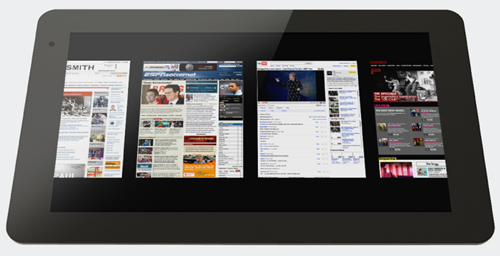
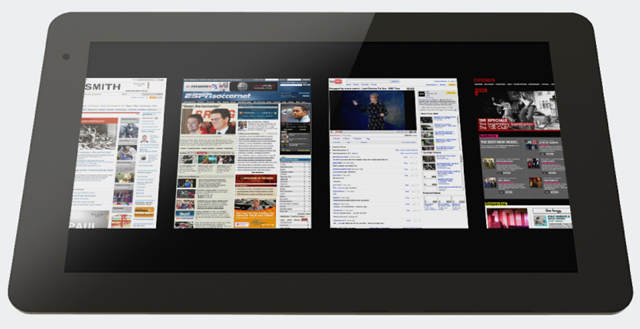
JKK, Sascha, Chippy and special guest, Warner Crocker from GottaBeMobile talk about the new Fujitsu Handheld PC, Time Inc’s Tablet concept and the Crunchpad. What happened there? We also tell you how you could win a car with the Intel Atom Developer Program.
All the details including download, itunes link, rss and multi-format streaming link over at Meet:Mobility
If you are interested in sponsoring the bi-weekly podcast, please contact us.
Posted on 04 December 2009
Tags: atom, crunchpad, intel, Tablet

Meet:Mobility is a project organised by Sascha Pallenberg of Netbooknews, JKK of JKKMobile.com and myself. We create regular podcasts and vodcasts and join together to cover major events. Be sure to add the podcast to your podcatcher!
Meet:Mobility Podcast 36 is now up. Recorded on Dec 3rd 2009.
JKK, Sascha, Chippy and special guest, Warner Crocker from GottaBeMobile talk about the new Fujitsu Handheld PC, Time Inc’s Tablet concept and the Crunchpad. What happened there? We also tell you how you could win a car with the Intel Atom Developer Program.
All the details including download, itunes link, RSS and multi-format streaming link over at Meet:Mobility
If you are interested in sponsoring the bi-weekly podcast, please contact us.
Posted on 30 November 2009
Tags: crunchpad, Fusion Garage
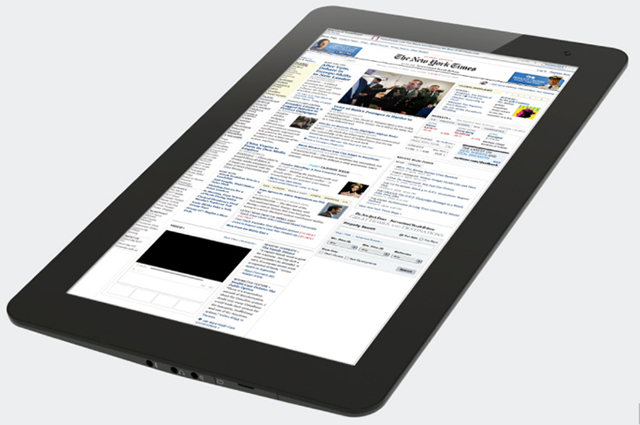
The Crunchpad project has collapsed due to a critical business issue between the two partners controlling the project.
In a post this afternoon, just weeks after I picked up on the comments by Mike Arrington in the Gilmor Gang videocast, Mike Arrington explains how he and Fusion Garage, the partner company in the project have failed to reach an agreement on terms. There’s no statement from the Fusion Garage yet.
It’s a sad way to end a project that has been #1 on UMPCPortal for so long. The Crunchpad was the most viewed product for a long time. It was even the most anticipated product in a poll we ran. Maybe there’s a chance that the project will re-ignite but judging by the tone of Mike’s post, it sounds like he’s given up. I wonder if this issue was just the straw that broke the camels back?

Crunchpad popularity graph. (Updated daily)
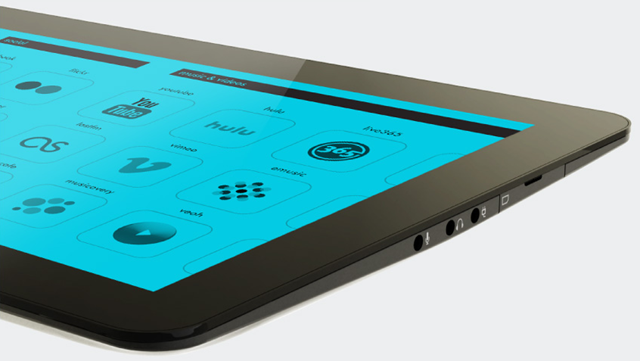
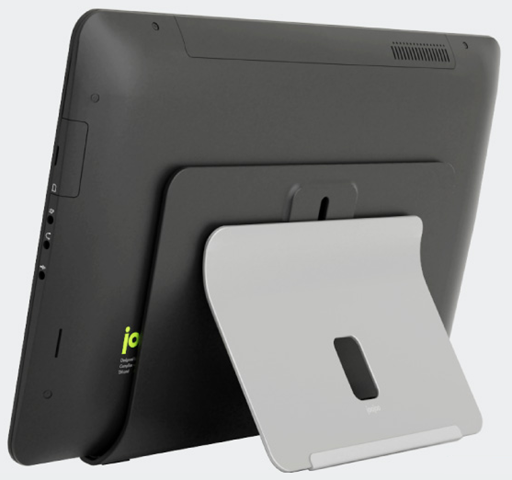
I hadn’t expected the Crunchpad to be a huge success but I was keen to see if my predictions were correct. Was it a Menlow-based device? How much battery life were they getting on the 12” screen. What was the weight? At least we can see that it was a 28.1Wh battery: (That’s about 4-hours worth of Wifi-connected usage with the best Menlow platforms and engineering.) Note the fan too. (Not a good sign for a consumer pad.)

Ironically, it was a basic tablet computer that came along to move it from the top spot on the UMPCPortal charts so there are options out there now for those interested in these sort of device. The Archos 9 is coming at $550, the EviGroup Pad at about 450 Euros and a very interesting ARM/Android-powered 7” pad from WITS. The A81 at about $250. (We’ll have some hands-on with that in the next few days.) There are other devices available too. I’m loving the web/media focused Archos 5 IT and the X70 is probably my UMPC of the year. Click on the images below for more information.

We’ll double our efforts to get hold of the EviGroup pad and Archos 9 for you ASAP. Stay tuned. In the meantime, 10 seconds silence for the Crunchpad please………………………..
Posted on 15 November 2009
Tags: atom, crunchpad, webpad
I should have been in bed but I got hooked into an excellent Gillmor Gang videocast (below) this evening. Robert Scoble, Mike Arrington, P Rangaswami, Kevin Marks, and Saul Hansell talk a lot about the iPhone and Driod war, discuss the differences and then, all of a sudden, at about 39 minutes in, the conversation switches to the Crunchpad.
As I watched, I sent three important tweets out:
- “crunchpad is steamrolling” , “costs keep coming down”. “big news on that shortly” says @arrington
- Crunchpad is going to sell “for something between three and four hundred dollars” , web-only says @arrington
- “soft revenue”, “sponsorships” on Crunchpad. Sounds like ad-supported “without impacting the user experience”
There’s more in the video below.
$300-$400 dollars PLUS advertising (sponsorship) is what everyone will be talking about. For mass-market couch-surfing, that’s too expensive. The Archos Android tablet and iPod Touch have already set the pricing bar (and possibly the sizing) for home-based sofa-surfing devices.
To be fair, I don’t think Mike Arrington expects the Crunchpad to be selling millions and he understands that the home ‘pad’ market is just taking off so this, like many other 1st attempt projects, could be more of a learning and branding exercise than anything else. If you think about how Nokia are playing with their Maemo devices it’s much the same. They are nurturing awareness and developer support for a time when the market is ripe. That could be 2010, 2011 or beyond but you have to be ready to strike when the conditions are ready.
Clearly the Crunchpad is alive, it’s going to cost between 300 and 400 dollars, it’s Atom-based, it’s going to be sponsorship-supported, web-only and we should expect ‘big news’ shortly.
Related recent article from Ben: Slates, slates, they’re everywhere, they’re in the water, they’re in the air
Via: Techcrunch
Posted on 14 November 2009
Tags: archos 9, crunchpad, evigroup pad, slate, UMPC, viliv, viliv x70 viliv s5 wits, wits a81
When will the madness end? New Slate devices currently seem to be announced as frequently as a new Eee PC model was a year or so ago. Why are all these slates popping up, and is anyone even buying them? This all seems awfully familiar too… didn’t we already hate these devices once before?
What’s with all of these damn slates lately?
Over the last few months we’ve seen Slate devices spread at a ridiculous pace. For a simple demonstration of this, take a look at the visual version of the Portal — 6 of the top 10 devices are slates!
Archos 9 – Evigroup Pad – Wits A81- Viliv X70 – Viliv S5 – CrunchPad
And while not yet in the Portal, the IDC Vega was also just recently announced, and there are plenty of other pending slates that I haven’t listed.
Where did they come from?
I blame one device, one example of vaporware, and one rumor. That would be the iPhone, the CrunchPad, and the Apple tablet rumor respectively. Hat tip to Jenn of Pocketables.net who got me started thinking about article by saying that Apple “messed up” what people think of as the ideal form-factor in a device. Apple showed that a Slate form factor at the iPhone size can be a a productive and downright useful tool, but only when all of the pieces fit together perfectly — meaning not just hardware, but software as well.
Then we got started with the Apple tablet rumors which could have an entire article dedicated to them alone — but I’ll spare you the agony. Long story short, Apple tablet rumors seemed to start forming from a combination of wishful thinking and a few touch oriented patents that Apple filed. Now weekly we see at least one rumor. But what effect has this had on these slate devices? Well I’d argue that without this Apple tablet rumor insanity, the majority of these devices wouldn’t even exist. Apple tablet rumors have been ongoing since at least 2000, but we don’t see them start to pop up in the form that we know today until shortly after the release of the iPhone in 2007.
Even the CrunchPad (one of the first of these slate devices) which doesn’t appear to have been conceived as a response to the tablet rumors, was compared from all angles to this rumored device, that doesn’t even exist, from the get-go. With some headlines heralding it as an “Apple tablet killer” despite the fact that it is often hard, nay impossible, to kill something that has no physical presence in this thing that we call reality.
Is it just me, or does it seem like most of the above devices are attempts to beat Apple to a market that they might not even enter, using the power of the Applet tablet madness to drive interest? Honestly, most of these devices aren’t even released yet and they are still commanding top positions here in the Portal. Clearly there is interest, but that doesn’t mean that these devices are going to be any good. In fact if we think back just a few years ago, we might find ourselves with a feeling of promnesia.
(continue reading on page 2)
Posted on 18 August 2009
Tags: crunchpad, htc shift, trends
Does anyone remember the excitement about the HTC Shift that resulted in a series of total showstoppers that caused it to fade quickly from public view? Battery life, screen resolution and (slow) operating system were my personal deal-breakers and if there’s one thing I’ve learnt from 3 years of product blogging it’s that people are very quick to get excited about a product en masse but when it comes to the crunch, there’s often a show stopper that kills interest, en masse.

The Crunchpad has been at number 1 in the UMPCPortal charts for about a month now and because we’re not particularly highly ranked for Crunchpad search terms it indicates that there’s rather a lot of traffic out there for it. In fact if you look at Google Trends you see that searches for Crunchpad are in the same ballpark as for the terms ‘UMPC’ and the popular UMPC brand ‘Viliv.’

The Crunchpad is clearly getting a good number of eyes and if it’s well executed it should sell well but the lessons of the HTC Shift have to be remembered. Battery life and operating system are the two main issues here.
Two years ago we wanted a 3hr minimum battery life on our portable devices. Now, that expectation is up to 5hrs which is going to be a tough call. It is possible with a well engineered Menlow-based design (probably not with a typical netbook-platform design) but then there’s the issue of software. Creating an end-user Linux build is extremely hard work. Whatever OS is chosen though, if Firefox takes more than 7 seconds to open and page loads average more than 10 seconds, its ‘slow.’ The iPhone 3GS is in the 10-15 second range for average page load times now so there’s no excuse for slow page loads.
Finally there’s the price. Mike Arrington, the owner of the company has set a lot of expectations down at the $200-$300 level so if he misses that target by much he’s lost a lot of momentum. With well-built 8.9” 1KG Asus 900’s going for under $200 there’s a lot of competition.
I would love to see the Crunchpad succeed and for thousands of people to have a portable touch-based web solution available but I worry about the lessons we all learned from the HTC Shift.
HTC Shift details and links
Crunchpad details and links
Posted on 31 July 2009
Tags: crunchpad, Fusion Garage, techcrunch
When we guessed the specs of the Crunchpad back in April we based it around what we thought was the best that could be achieved. It appears we may have got the pricing in the right ballpark but woah!, wait a minute, we’re now hearing that it will weigh a hefty 1.2kg. Take it from me, that is way too heavy for consumers. My Gigabyte Touchnote (similar specs to the Crunchpad) weighs the same and it’s not a device I use on the sofa or in the bed. Anything over 1KG is simply not comfortable.
Not only that but we’re now hearing that the Crunchpad will have 3G built-in. 3G? Why? This is supposedly targeted at the sofa or office desk. What Crunchpad customer isn’t going to have Wifi available at the sofa? 1.2kg makes it too heavy for toting around as a web reader too so why the high-speed data? A low-end 3G modem is going to cost $30-$50 to the parts cost. Again, Why?

The third shock of the article is the price. $399.
With specifications and potential price-creep like this, the Crunchpad isn’t going to get much in the way of praise when it launches. We’ve seen it many times before in the UMPC market and UMPCs still don’t sell in huge numbers today despite being available for under $500 now. In fact, I’ve got specs of a 10” Atom-based tablet in front of me right now that matches closely with the Crunchpad. In quantity it’s available for $320. Despite the excellent value I still don’t expect it to sell very well.
Having said all that, there’s every possibility that reporting mistakes have been made here especially considering the article title is ‘Worlds first tablet PC.’ The Crunchpad organisation knows what’s going on around them and they won’t be giving out too many finalised details at this stage.
Update: As we expected, the information is unauthorised. Mike Arington is mad too but he does like to get dramatic at times. It’s all part of the SEO show folks!
Source: Straitstimes. Via Slashgear.
All specs and details now in the Crunchpad product page.
Posted on 10 July 2009
Tags: always innovating, always innovating touchbook, archos 9, asus, asus eee, asus eee t101h, asus eee t91, crunchpad, Kohjinsha, kohjinsha sk3, Netbook, open pandora, Poll, UMPC, viliv, viliv s5, viliv S7, viliv x70
Several days ago I put up a post asking which device was most anticipated by readers of our site. 648 of your responded and I’m here to share the results. Take a look at the graph below:

For readers who didn’t have a chance to participate in the poll from the previous post, here is the list of devices which readers could have chosen from (click the link to be taken to the product’s Portal page).
Crunchpad | Asus Eee T91 | Archos 9 | Always Innovating Touchbook
As I watched the results roll in, the Eee T91 stayed the leader for nearly the entire duration of polling. The CrunchPad came in second, followed by the Archos 9 and then the Always Innovating Touchbook. There was a good amount of ‘other’ responses. in fact enough to tie the CrunchPad for second place (I’ll add more devices to the poll next time!). What I found interesting was that some people filled in the ‘other’ dialogue with existing devices, and some filled it in with devices that they would like to have, but might not be products at this point. Here is a short list of ‘other’ entries for existing products:
And a short list of ‘other’ entries featuring devices that don’t yet exist:
- Apple tablet
- Archos 5” Android device
- LG UMPC (this person must be old school!)
- Next Nokia Internet Tablet (several people called this the N900)
- Viliv S5 with keyboard
Interesting suggestions everyone. Thanks for participating in this poll. Its good to know people are looking forward to these devices. We have quite a few nice products lined up that we’ll be reviewing for our readers. Chippy has the Viliv S7 coming eventually, and we’ll also hopefully have our hands on the Asus Eee T91, and the Always Innovating Touchbook in the near future.
Posted on 05 July 2009
Tags: crunchpad, UMPC
You’ve probably heard of the upcoming CrunchPad by now. Its a project started by Michael Arrington, and the goal of which is to bring a web tablet with easy to use functionality to market with a reasonable price.
A recent post on CrunchGear says that Arrington may be planning a CrunchPad event (presumably an official announcement/launch) at the end of this month, or perhaps early August. Additionally it looks like the final price of Intel Atom powered CrunchPad will still be under $300 which certainly seems reasonable as long as the device is adept at consuming web content.
Posted on 04 June 2009
Tags: crunchpad, MID, techcrunch, UMPC
We’ve been following the interesting developments of the CrunchPad, which aims to bring an intuitive and inexpensive web tablet into the hands of consumers. When it was first announced, the idea seemed wild, but as time goes on, the CrunchPad is looking better and more concrete every time we hear about it. Previously we’ve seen an earlier prototype of the CrunchPad on video, but we are now seeing for the first time, an all new, beautiful looking device that TechCrunch says is almost ready for production.
They moved to an aluminum case in place of plastic, vying for strength at the cost of increased price, but it also allows the device to be more thin, bringing the overall thickness to just 18mm. After watching a recently unveiled demo of a slightly older prototype, I’m really hoping to see the CrunchPad’s software evolve further. The idea is wonderful, but if they don’t craft the software with masterful precision, I’m doubting they will get the experience they are targeting if they are relying on a passive touchscreen.
Head to TechCrunch for more images.
Posted on 27 May 2009
Tags: crunchpad, ebook, EReader, MID, q7, smart devices, smartq7, UMPC, webpad
The Q7 may not be a UMPC but there’s a lot to like and a lot to learn from the device. It highlights the difference between professional and consumer devices very well so in this article I’ve mixed a review of the Q7 with some thoughts about consumer web tablets.

The Smart Devices Q7 has a slow, incomplete web experience, no Flash or AIR, poor video quality, very restrictive ARM11 core, runs a partially re-translated Chinese version of a year-old Ubuntu ARM port, doesn’t have a keyboard, is not good for outdoor use, needs a dongle to get Bluetooth working and has some twitchy touchscreen characteristics. Despite all these scary issues, i’m still using the device many times a day.
Full Q7 specifications available here.
Read the full story
Posted on 10 April 2009
Tags: crunchpad, tabletpc, techcrunch, UMPC
Update: All specs and details now in a new Crunchpad product page.
I was one of the ‘doubters’ that questioned the Techcrunch Tablet. I questioned what Mike Arrington said in his first information post. “If all you are doing is running Firefox and Skype, you don’t need a lot of hardware horsepower, which will keep the cost way down.” We all know that’s not true because rich Web browsing is one of the most CPU-demanding applications there is. Now, 8 months later, you’re looking at an Intel Atom powered device with a 12” capacitive screen. The $200 price target isn’t looking so achievable now and I’m sure they’re now having a big battle with the weight/battery life equation. The article doesn’t give much away so lets take a fun minute or two to make some estimations about weight, battery life and price.
More images at Crunchgear
Lets assume they’ve dropped a 1.1ghz or 1.3Ghz Intel Atom inside with the SCH (UL11 or US15) chipset. The 800Mhz version won’t provide enough headroom for YouTube, Hulu and Skype in my opinion so it has to be the 1.1 or 1.3Ghz versions. From our testing with various MDs we know that these can idle, without screen but connected to the internet, in a minimum of 3W of power. The 12” screen will add a big power drain to that though. Unless they’ve gone with a Pixel-QI or similar low-power screen, you can add 2-3 Watts to the overall power envelope bringing the average drain close to 6W. Real-world battery life will have to be above 2hrs to get anyone’s attention (remember they are targeting in-home use) so a 15wh battery is likely. Given that, the weight is going to be about 700gm. As for price, if they can shift a 50,000 or more, they’ll probably be able to hit $399. I’m basing this on the fact that the Benq MID, a device built on almost exactly the same Intel and Linux technology but with a larger screen) sells for Euro299 from TIM, the mobile carrier in Italy. So here’s my guess on the missing specs:
- Intel Atom 1.1Ghz
- 512MB Memory
- 4GB Flash
- 15wh battery providing 2.5 real hours (‘up to 4 hours’ in marketing-speak!)
- Weight 700gm (the maximum, in my experience, for a one-handed experience.)
- Price (USA) $399
- Reminder, these aren’t official specs.
- Availability July 2009.
So despite having a 12” screen, it could come in at a very portable 700gm, about the same weight as most UMPCs. Is it a UMPC though? Considering that it won’t be any larger than the PepperPad (image right. The PepperPad was built for the same target market, but failed to get much interest in consumer markets) It’s going to be a tough decision for Techcrunch and a big risk due to the better capabilities of similarly-priced netbooks and Mike knows that (see one of his comments in this article where he says it ‘may never happen’) but the device looks slick and there’s a lot of Techcrunch fans out there. Source CrunchGear Software design: Fusion Garage More comment at Techcrunch who say that more information will be available in about a week. Note, the name ‘CrunchPad’ comes from one of the photos of the packaging. This may be a project name.
Posted on 19 January 2009
Tags: crunchpad, Tablet, techcrunch, UMPC
I can’t really let the day finish without mentioning the Techcrunch Crunchpad. Although it’s a relatively big and non-mobile tablet, there’s a few things to mention.
Mike Arrington’s original focus for the design was web activities so it’s not suprising he’s gone for a PC-based solution. Web-based activities are getting to be some of the most CPU-intensive daily tasks that people do so a strong CPU is a must-have. The VIA Nano is, clock-for-clock, likely to be much more powerful than an Atom so a good choice for processing power but with it’s relatively high thermal power rating, it’s going to need some cooling. That means fans and airflow space in the chassis. Not a good sign for bedtime browsers! Having said that, the low-end of the VIA Nano range at 1Ghz might be just right and I’m sure there’s scope for lowering it further if necessary. This would be a nice win for VIA if they can pull it off.
Why didn’t Techcrunch go for an ARM-based solution? It would allow for a much smaller and longer-battery life design. Maybe it’s because the high-end of ARM isn’t quite up to performing at the sort of levels that consumers expect? 5-10 seconds per web page load is probably just out of the reach of one of the latest ARM-based platforms.
The battery life is going to be a problem too. With a 4-cell, 2200mah-per-cell (a high-end, heavy-sounding 2p2s 7.2v) battery pack he’ll be looking at the 4-hour range with that huge screen. The backlighting budget will probably run to 5W and I’m sure that when you’ve added the relatively high-end CPU in and connected it to a Wifi hotspot, you’ll be draining 10-12 watts average. Possibly more when you’ve got flash content taking up CPU cycles. As many others have commented today, it might be better to settle with a 1024×600 8.9″ screen and maybe reduce the battery capacity to save weight. It wouldn’t be perfect in portrait mode but landscape mode would be fine and you’d probably save 2W in backlighting and 300gm in weight. Overall though, you would probably lose battery life. It’s a tough balancing act.
Aesthetics play an important role but as we can all remember from ‘Origami’ in 2006, so do keyboards. I could write for hours about that but I’ll just say that if you need sales numbers, you’ll probably want to think carefully about the form factor and include,somehow, a physical keyboard. The T91 or T101H from ASUS might bite Techcrunch in the bum unless they can get excelent on-screen keyboard software and some good early reviews about it.
All in all I think Techcrunch have set themselves tough targets for the device. While not impossible, I suspect it will be more expensive than planned, will have so-so battery life and could be a little too heavy for most people. They’ll need to convince an investor that they can sell hundreds and hundreds of thousands in order to hit the parts budget and that convertible netbooks or MIDs won’t be a threat.
Fingers crossed for Techcrunch though. I’m enjoying watching the project, am hoping it tends towards a 9″ device and I and wish Techcrunch and VIA every success with it.