Tag Archive | "hd"

Acer Aspire One 522 Live Review Videos and Results

Tags: , , , , , , , , , ,


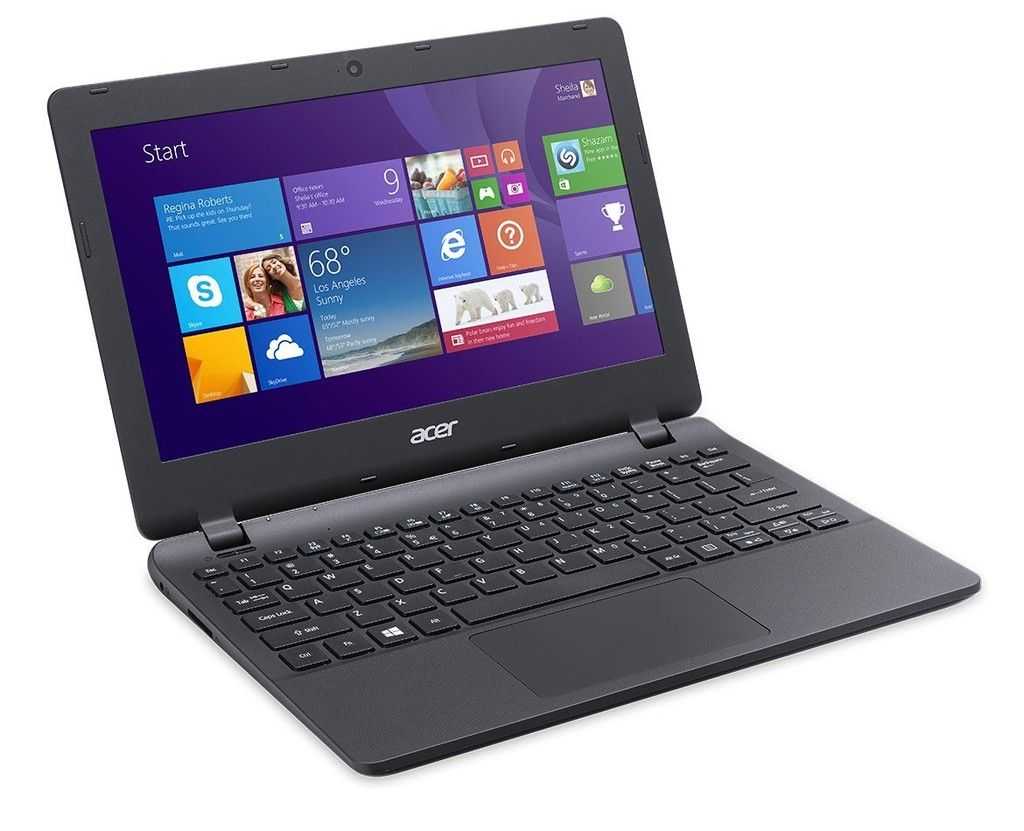
There’s one thing that was clear from last nights live testing of the Aspire One 522 – I’m the worst person in the world to demonstrate 3D games. Interestingly though, that’s because I never have devices that can play games. In the last 5 years we’ve seen just a handful of mobile devices that can play games and the fact that I was thrown into Half-Life 2 and Unreal Tournament demos shows that the Acer Aspire One 522 is quite unique – and an indicator of where netbooks are going next. We tried hard to find showstoppers and major issues, design problems, heat and noise or anything that would confirm that this is a cheap device but no, after 3 hours, it was clear that the Aspire One 522 is a real bargain and a true upgrade option for those with first or even second generation netbooks.


Aspire One 522 (12)

Highlights and Lowlights

  • 1080p playback via local or YouTube works flawlessly on-screen (1280×720) or via HDMI
  • In normal use, this is a 6 hour working device with a 3-hour gaming capability, 5 hours or more video playback and up to 10 hours with radios-off in low-power use as a text-entry device.
  • No heat or noise to speak of although the fan is constantly spinning and can sometimes be heard or felt through the chassis.
  • The Hard Disk seems to be a bottleneck in some situations
  • Mono speaker just about does its job
  • The glossy screen appears to be a little washed out compared to high-end displays
  • Wifi reception is better than average
  • No USB 3.0 or charging USB port
  • Plastics very thin
  • Access to memory and HDD is easy. Upgrade to 4GB is possible (Only 2GB available in Windows 7 Starter)
  • Gaming needs more testing but viewers on the live session seemed very excited!
  • Battery life / weight ratio is very good

A word of warning though, in terms of CPU processing power, there’s not a lot of difference here between the Intel Pinetrail platform in single or dual-core variants. in a pure-CPU video rendering test we saw the Aspire One coming in at 15% faster than a Intel N450 CPU which puts it between the N450 and N550 in terms of processing power. Compared to first-gen netbooks, that’s a great improvement but its far from mainstream.

It’s the ‘balance’ of CPU, HD Video and 3D that works so well with the Acer Aspire One 522 (and, we suspect, other Fusion C-50 APU -based devices) and if Intel don’t one-up the C-50 with Cedar Trail in a significant way, they will lose a good percentage of netbook sales. At €299, there’s very little room for beating AMD on price.

So here are the three videos we made during the 2.5hrs online last night. As usual they are captures of the low-quality stream but I’m sure you’ll get a lot out of them. Thanks again to everyone that joined and helped-out in the live session. Spread the word – this is how reviews should be done!


Part 1 – Overview and first impressions.


Part 2 – Heat, battery life, video performance, browsing tests


Part 3 – Video testing, webcam, high and lowlights, Crystalmark test


SmartQ T7 Android Tablet plays 1080p H.264, MKV, WMV HD, DivX (Video Demo)

Tags: , , , , ,


smartQ7demo

The video below speaks for itself. This test based on new SmartQ T7 [info] firmware I received from HOTMID.com today. (SmartQT7-3G_AD_V1.0)

The application used was Act 1 Video Player and clearly it’s using hardware acceleration. I’m impressed. You?

SmartQ T7 information page.

SmartQ T7 Live Review.

Streaming YouTube HD on the Archos Internet Media Tablet. (Video)

Tags: , , , , , ,


IMG_0912 Before we start on the topic of video performance I have to highlight how complex the subject is and how difficult it is to present performance figures. Digital video is a complex matrix of multiple wrappers for multiple encoding types (video, multi-track audio and multiple subtitles) with different encoding profiles, options, resolutions and bitrates. Format conversion, phsycovisual optimization, buffering and on-the-fly resizing is another set of complex topics. Speak to anyone in the video streaming business and they will take pleasure in telling you how extremely complex it is. For example, at IDF I spoke  Envivio, a company that specialises in video streaming.  Because of the complexities and ever-changing capabilities of client devices they’ve chosen to do all their encoding in software on general purpose X86 CPU’s rather than in dedicated silicon.

As consumers, we tend to use a number of benchmarks. YouTube streaming, DVD and camcorder files.  YouTube quality is determined by how smooth LQ, HQ and HD versions are in windowed and full-screen mode. DVD is a tighter standard based on MPEG-2. Camcorder files have already reached high bitrates and there are even 1080p (1920×1080 resolution) consumer cameras out there. I tend to talk in terms of codecs and bitrates rather than 720p/1080p because those expressions are often used incorrectly but for online video, the simplest way to do it is just to demonstrate it using what most web-based customers are moving to. HD-quality YouTube.

YouTube HD quality is based on MPEG-4 Part 10/AVC  (H.264) and offers 720p resolutions (1280×720) at an average bitrate of 2Mbps. (See good Wikipedia entry here for more info) Netbooks and UMPCs running XP can not play this file format but by installing the Adobe Flash player, you get access to this format via YouTube and their embedded Flash content. Unfortunately, the Adobe Flash player is heavy on CPU usage so on these low powered devices the quality is terrible.  There are ways to improve this. YouTube download tools allow you to play content in a separate video player which works in an efficient way. I’m able to play downloaded YouTube HD files on my netbook right here. In the near future, the Flash 10.1 player will be able to access hardware video decoders (not currently on most netbooks although the next generation of netbooks will be able to support this) making it even easier for consumers but there are already a few devices out there that can give you the YouTube HD experience out of the box.

I’ve been testing one of those devices. The Archos5 Internet Media Tablet running Android and many people have been asking me about the video performance so I thought I would answer most of the questions by way of a video demo. Some of the details get a bit technical and of course, the video is not representative of the actually quality of video playback on the Archos 5 but the demo gives you a good idea of what you can expect.

Just one note, this was shot in VGA using M-JPEG encoding at about 15Mbps, converted to 1.5mbps WMV  and you’re watching it via the flash decoder after conversion by YouTube to the H.264 (or Sorenson) codec. See what I mean!

Break out into a full-screen window and hit the ‘HQ’ button for the best quality possible. The original WMV version is available at Blip.tv.

For completeness and attribution, here’s the original video on YouTube.  Hit the ‘HD’ button and see how it streams on your device.


Recommended Sites

  • Big Beach Our marketing advisors. Located in UK.
  • Carrypad Tablets and consumer mobile products
  • JKKMobile JKKMobile – Mobile computing and hacking – Partner of UMPCPortal
  • Liliputing Netbooks and small-form-factor laptoping – Partner of UMPCPortal
  • Ultrabook News Ultrabook products, specs and news