The Archos 5 Internet Tablet (oh so slim!) unboxing video is now ready…
So far i’m really liking what I see. There’s no flash support in the browser (Q1 2010 for Flash 10 and Android 2.0) but YouTube plays via the built-in video player in excelent quality and the general browsing speed is really impressive. I threw a load of videos at it and they were all recognised (some need an HD plugin) and there’s a bunch of exciting apps in the app store. It’s early days but I’m feeling really positive about this. If only it had 3G!
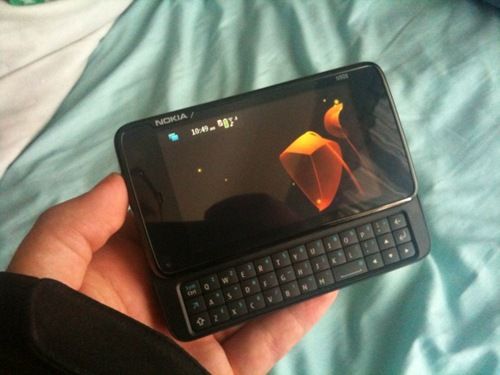
Amazing. The Mobile-Review team out in Russia have had a prototype N900 for a while and because of the leaked information they have seen on it they have chosen to air some initial thoughts including device images and a ton of images about the OS. There’s a lot to analyse here. It’s a phone. It’s running Maemo 5. It’s looking like Nokia really is moving to Maemo as their high-end OS. I’m quite stunned that Maemo has come this far. Hats off to Nokia. I’m going to try and get myself down to Stuttgart for Nokia World now because clearly this is going to be on the agenda there in just a few weeks.
We’ve added all the specifications we could confirm from the article into a new N900 information page which we’ll be updating as new information comes in but for now, the best information is over at Mobile-Review.
As usual there’s a lively conversation over at Internet Tablet Talk. Your immediate thoughts are welcome in the comments below.
The alpha SDK for the new Maemo 5 platform has just been released and is packing some interesting new things. Most notably the new UI framework is now available for developers to code around, and as stated ”provides a simple and beautiful experience with a finger based full screen context.” Developers are urged to follow this new UI style to keep a consistent user interface.
This release only contains a simplified UI implementation of the Desktop and Application menus, with full versions to follow in the future.
As for planned features, we can guess at many from the list of the new APIs included are (directly quoted):
Location API: methods to build location-aware applications.
City Information: methods to obtain information about cities, including city name, country name, and country code.
Time management: an interface for handling time change notifications and collect relevant time and time zone information.
Vibra service: methods for triggering and controlling vibrations.
Device orientation: respond to changes in orientation and discover current orientation.
Maemo will therefore be gaining some nice features that we have become used to on other devices such as vibration notifications and an accelerometer support.
Before I say why I think Eldar Martazin didn’t see a 2011 Nokia MID, let me take the chance to tell you a little bit about ARM’s ‘Sparrow’ platform.
When I first heard news about it a few weeks ago I was a little confused about where it was positioned on the scale of ARM cores as it looked to overlap the ARM11 MPCore designs. I fired off a query to a contact in ARM and they came back with some information that has enabled me to better position it.
It’s a symmetric multi-processing platform that uses cheap (read simple) cores with the ARM V7 instructions set used in the high-end Cortex cores. I liken it to a multi-core Atom CPU which is focusing on cheap, small, low-power and ‘reasonable’ performance. ARM say that it will enable performance as you see today in the high-end Cortex devices at a much lower cost. The multi-processing element will, I assume, allow cores to be dialled in and out for either power-saving or processing power. Its going to offer 2009 high-end performance at feature-phone sizes and prices.
It looks like the folks at Nokia are still working hard as ever to improve the user experience on the Nokia Internet Tablets, specifically the N8x0 models. While the new update isn’t OS2009, it offers some significant improvements to OS2008 that were frustrating to users. I can tell you personally how annoying it was to have to reflash my N810 if there was an update to the system. No back up media meant that I would lose all of my applications and data, and for those that did back up the process didn’t always work correctly.
The Diablo update will turn on over-the-air updates that install incrementally. The User will now be notified of updates to the official OS as well as third-party applications right on the home screen. Previously, one had to manually go to the Application Manager and refresh all sources (which could take several minutes if you have a lot of sources installed). Nokia calls this update feature SSU or Seamless Software Update, I call it SHBTTBW or Should Have Been There To Begin With. The least they could have done was made it possible to back up to your computer before reflashing. At least it is here now, though ironically you’ll still have to reflash for this update, but hopefully never again. Additional improvements include an updated email client based on Tinymail and Modest. The old default mail app was very buggy, an d most people ended up using Modest installed via third-party sources anyway. Now they just need to do the same with the Wayfinder GPS app and replace it with Maemo Mapper.
Bravo Nokia! Nearly a year before I started writing about ultra mobile devices, Nokia had launched the 770 Internet tablet. It was the 2nd device I ever mentioned over 2 years ago on what was then the Carrypad journal.
Nokia 770. I got very excited about this device to start with. The screen and connectivity options looked perfect. Until you find out that its got a rather weak ARm-compatible Ti-Omap that doesnt look like it will get about 500kbps of divx, let alone the 1mbps needed for a reasonable 320×240 25fps experience. No keyboard and no pim software too. The 350 Euro price tells us something about where its marketed and that could be that its a test-device. Nokia have already announced that they might release new hardware with a keyboard. If they address the processor issues, they could be spot on. I’ve recently read about Naviflash – a commercial Navigation product built on Linux over Xscale so there’s potential even for decent nav software. Fingers crossed for this one. For me its Nokia against Apple at the moment. [Feb 2006]
The TabletBlog.com has always been one of the best places to get the latest info on the Nokia Internet Tablets and Dan, AKA Thoughtfix, who runs the blog, has just published a really great read about what is effectively, a MID before MIDs were launched.