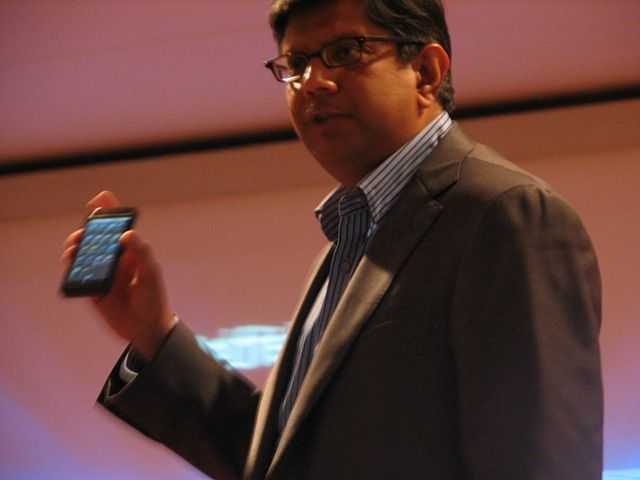
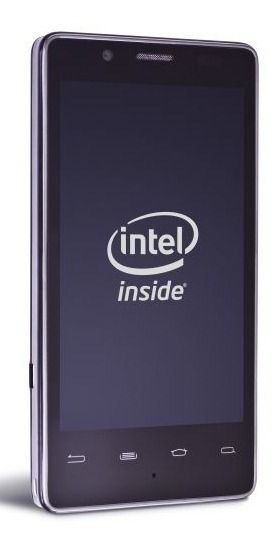
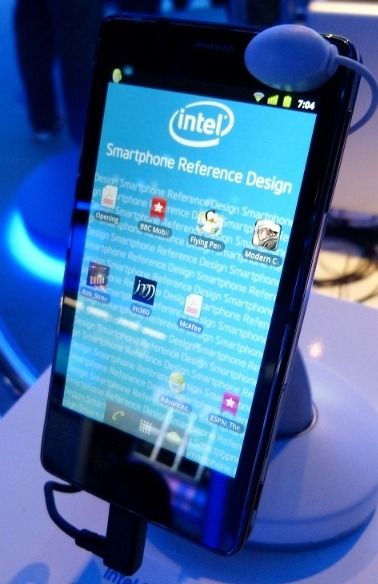
When I tested an Intel Menlow-based MID in July 2008 and saw the PC architecture streaming music into a browser-player running at 2.8W I knew Intel were on the right track. Two years later with their next-gen architecture, Moorestown, they tackled the standby power drain and managed to get it into a phone. I had exclusive hands-on and although the device was hot and eventually deemed uncompetitive, it was clear to see where this was heading. This week at CES I put my hand on the back of an Intel Medfield-based smartphone and felt nothing. No heat! On the front, I saw a quick user experience and when I tested Sunspider I saw an impressive result of 1290ms, with Android 2.x.
Over at AnandTech, meanwhile, Anand has been discussing more details about the performance and energy consumption figures. Not only are we seeing good performance but Intel are telling us that the efficiency is in the leading class too. The most impressive figure on the article? 1W browsing. That’s with screen-on and 3G-on. 1 WATT! Intel are now able to control a ‘PC’ to the point where everything turns off except the parts required. That doesn’t mean that Intel will be competitive in all areas though. Like Ultrabooks, the platform is likely to have a high ‘dynamic range’ and probably a higher system thermal design characteristic but if the work that Intel have done on Android is solid, that may not be a problem.
What a shame though that Meego wasn’t around to benefit from Medfield. I’m sure there are Meego devices in the Intel labs working just fine and I’m sure that Tizen is likely to re-surface too (My bet Samsung + Intel + Tizen make an announcement at MWC) but it would have been nice to see Intel’s Meego work result in a product. I wonder how Nokia are feeling at this point? With the N9 having been a success and the figures on Medfield/Android looking good, Intel may get sweet revenge!
What Intel need now are product partners and platform advantages. Being competitive isn’t going to be enough to make the best product in the market so this is where 1080p hardware encoding, hardware-based image processing, Wireless-Display, McAfee and other technologies come into play. Intel Insider (for securely streaming first-run movies) and integrated radios, hardware encryption and of course, Intel’s silicon process advantage. if you consider how far Intel have come in the last 4 years, look at their technology portfolio and think about what’s going to happen in the next two years there should be no doubt that Intel will be playing, and possibly leading in the years to come.
I won’t discount Cortex A15 and similar ARM architectures and we must not forget that ARMv8 is going to be feeding in after a few years but Intel’s position with Medfield now enables it to go and court some of its biggest customers for phones, tablets, set-top boxes and more and that partner ecosystem could be the real advantage for Intel.
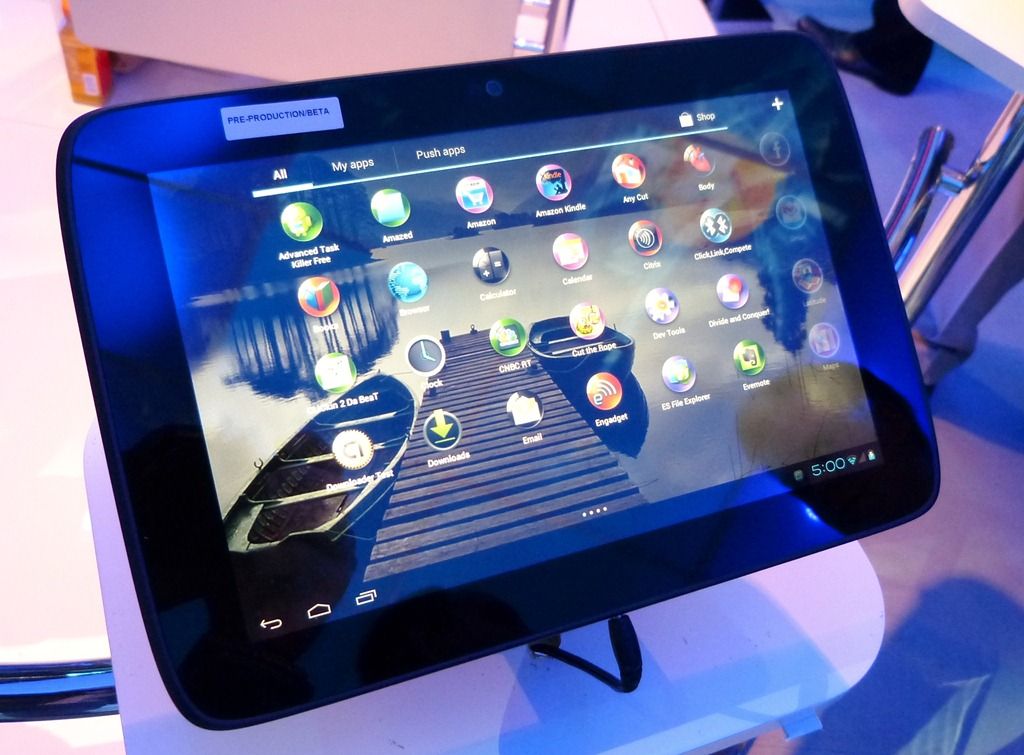
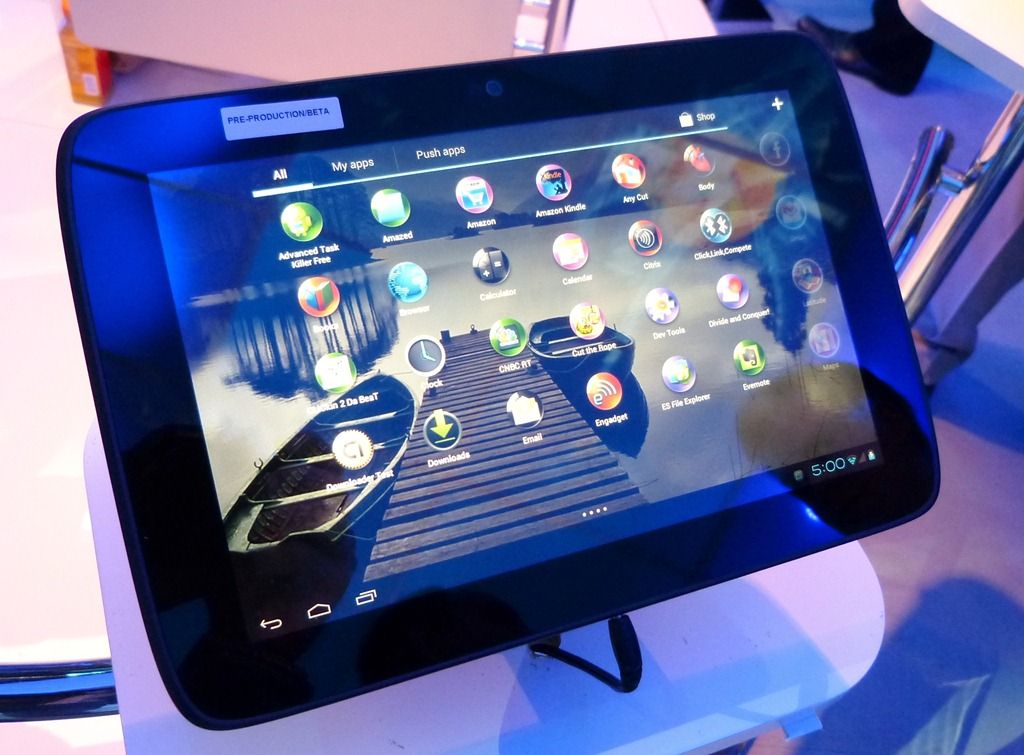
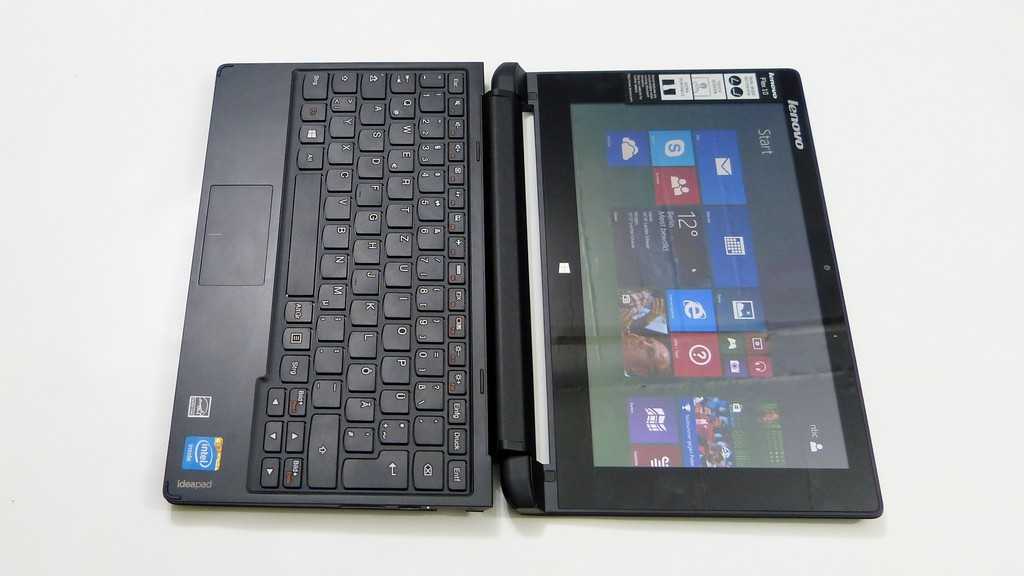
I was taken completely by surprise this morning when I was told that the Intel Medfield-based tablet running Android ICS at the Intel booth today is in fact the Lenovo Ideatab K2210 due later this year. Wow! Is it finally going to happen?
Following up the last post, our hands-on with the Intel Android Smartphone here at CES, here’s a demo showing hardware accelerated playback and control of a 360 degree 1080p video. It’s impressive. You’ll also see 1080p video playback and some gaming which again were super smooth.
We’re likely to hear more about this 1.6Ghz Medfield-based smartphone at the Intel Keynote later today so stay tuned as we’ll be there.
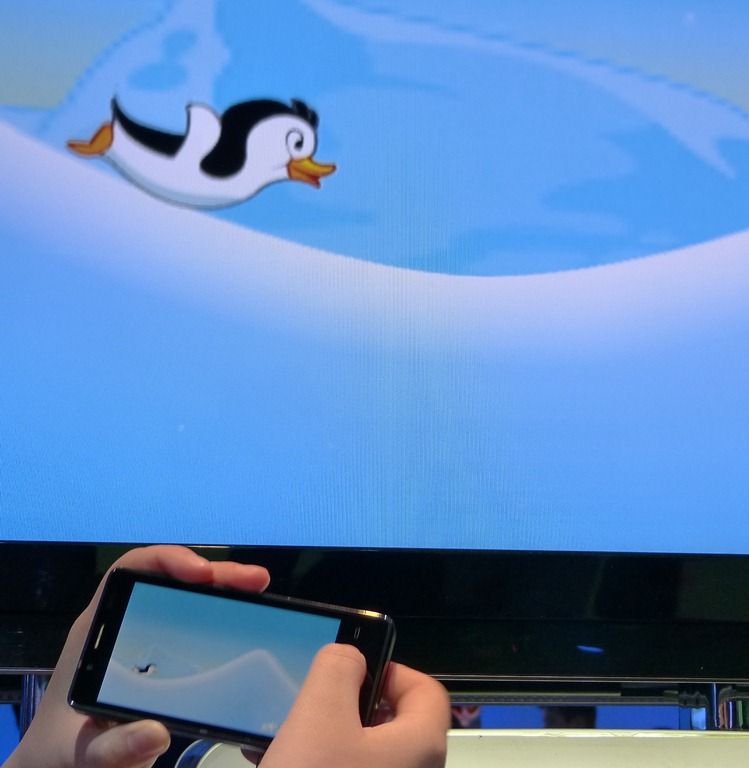
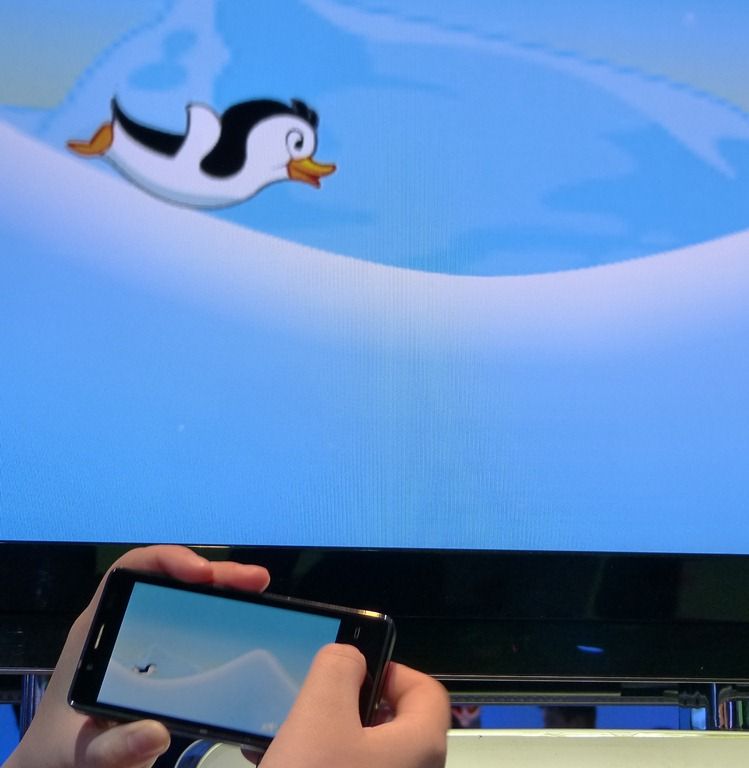
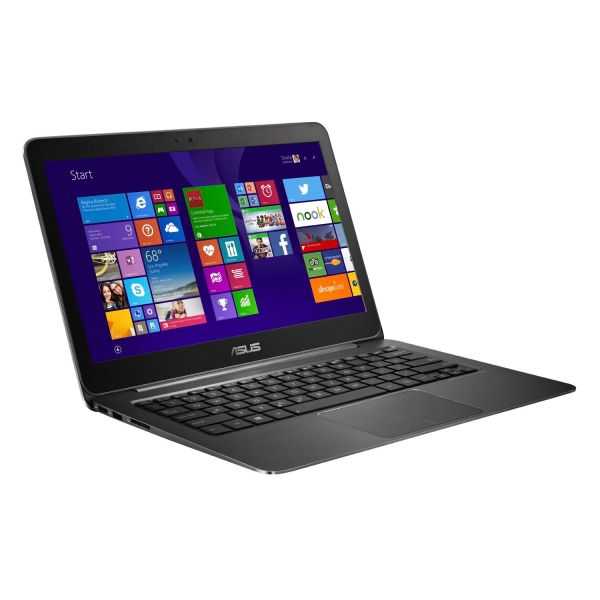
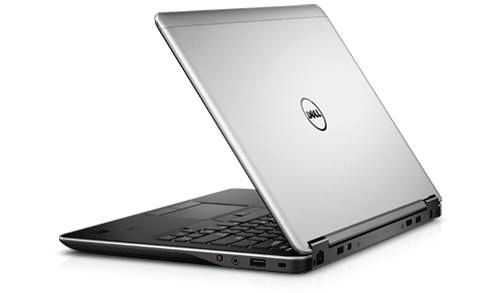
I believe Intel Wireless Display (also known as Wi-Di) could be one of the best ‘value-add’ technologies Intel has implemented for years. Not because of any technical skill (it’s an extension of the Wi-Fi Direct ‘soft AP’ standard implemented in their Centrino network cards and Core processors) but because it adds capability to the PC platform that makes real sense and doesn’t require any extra interfaces or radios. Wireless display is going to be something that, once you’ve used it, you probably won’t wouldn’t want to lose. Expect to see this on most Ultrabooks next year.
Intel have been working on this for a number of years now [good background story here] and although it’s available in Ultrabooks and other PCs based on Core architecture, it’s also coming to Cedar Trail and Medfield as an option.
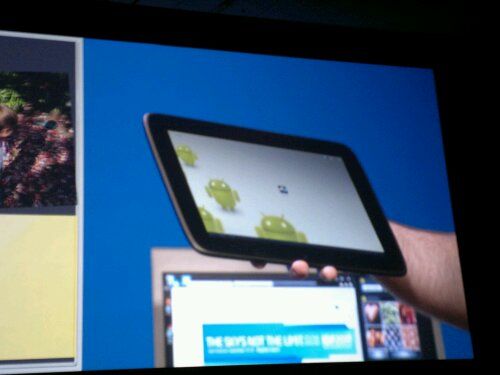
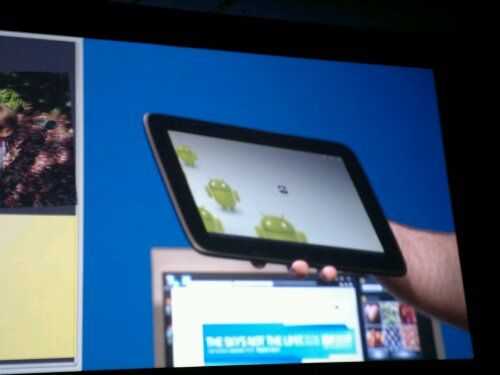
Amongst a packed keynote from Intel at Computex today that includes Ultrabooks, Ivy Bridge, Cedar Trail and cloud talk, Intel showcase a Medfield tablet running Android Honeycomb.
At least, that’s what a pre-event press release via Engadget says. The event and press release hasn’t even happened yet! (Scheduled for about 2.5hrs from the time of this post)
The press release is interesting though and goes on…
Intel showcased a “Medfield” design running Google Android* 3.0 (“Honeycomb”) for the first time. In production later this year, the platform will enable sub-9mm designs that weigh less than 1.5 pounds for tablet designs in market the first half of 2012. It will support a range of operating systems including Android and MeeGo.
We’ll be back with some pics, vids and info from the teams on the ground very soon. I posted the full press release here.
We’ve spotted, from the press release on the tables here with Intel, that Medfield is now sampling. This increases the chance that we’ll see a Medfield prototype phone in the presentation.starting in about5 mins. Stay tuned.

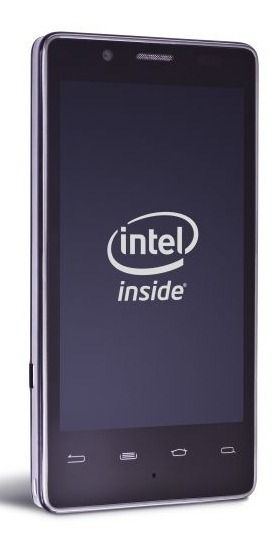 When I tested an Intel Menlow-based MID in July 2008 and saw the PC architecture streaming music into a browser-player running at 2.8W I knew Intel were on the right track. Two years later with their next-gen architecture, Moorestown, they tackled the standby power drain and managed to get it into a phone. I had exclusive hands-on and although the device was hot and eventually deemed uncompetitive, it was clear to see where this was heading. This week at CES I put my hand on the back of an Intel Medfield-based smartphone and felt nothing. No heat! On the front, I saw a quick user experience and when I tested Sunspider I saw an impressive result of 1290ms, with Android 2.x.
 What Intel need now are product partners and platform advantages. Being competitive isn’t going to be enough to make the best product in the market so this is where 1080p hardware encoding, hardware-based image processing, Wireless-Display, McAfee and other technologies come into play. Intel Insider (for securely streaming first-run movies) and integrated radios, hardware encryption and of course, Intel’s silicon process advantage. if you consider how far Intel have come in the last 4 years, look at their technology portfolio and think about what’s going to happen in the next two years there should be no doubt that Intel will be playing, and possibly leading in the years to come.