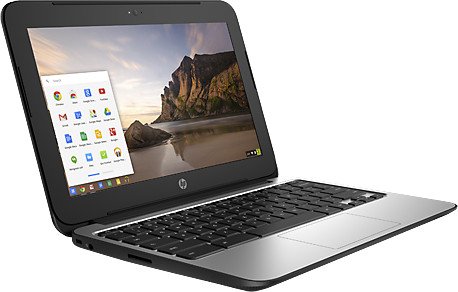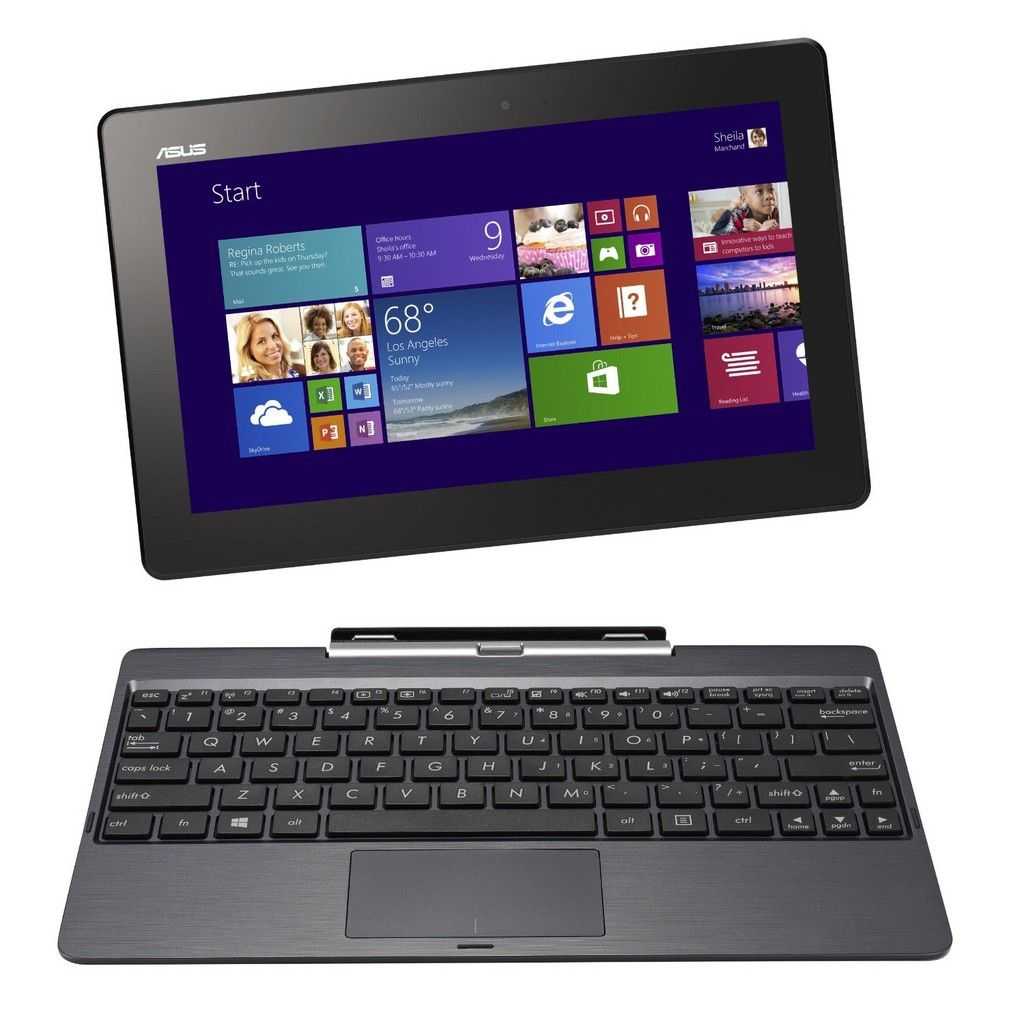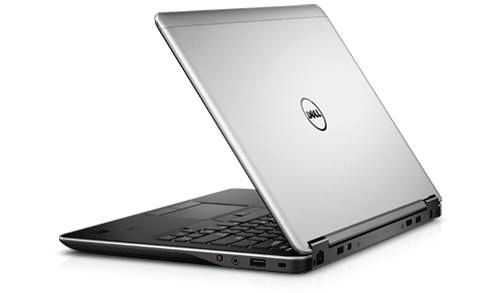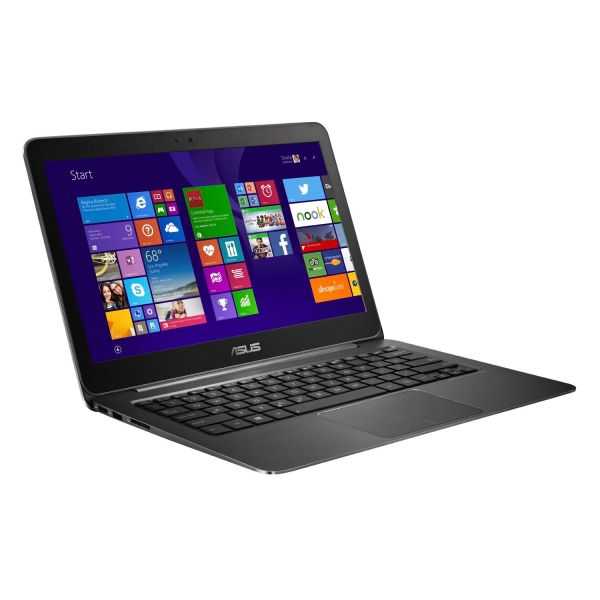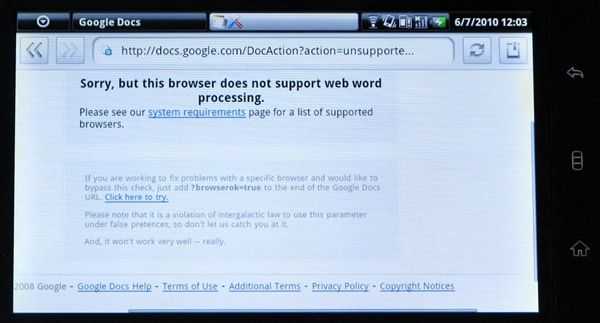
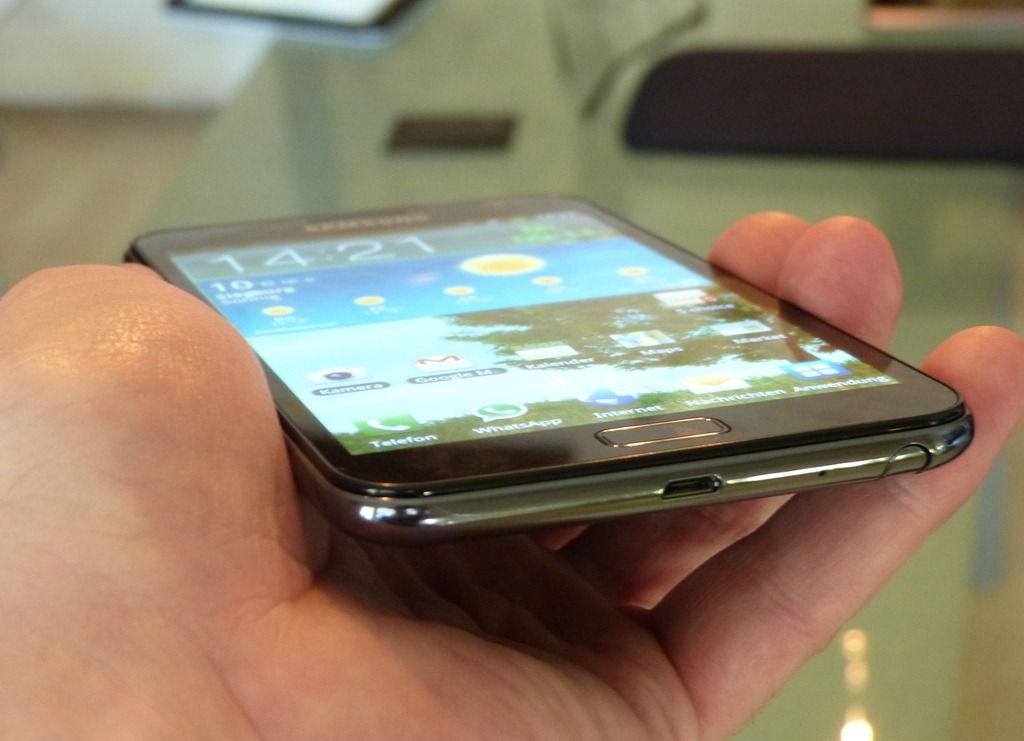
If you weren’t aware that TechCrunch are planning to make a cheap tablet-style internet browsing device, a MID if you like, you might wonder what the hell the author of this anti-netbook article is talking about. In my opinion, it’s a rather hopeless attempt at putting down netbooks in order to prepare some space for a new web-browser product they are planning. it’s terribly off-target and badly-researched - "A typical Netbook has a 7 inch screen, an Intel Atom or Via Nano processor" (There hasn’t been a 7" netbook hit the blogosphere for months and as for the Nano-powered devices, we’d like Mike Arrington to show us one!) and "iPhone or iPod Touch, with a tiny 3.5 inch screen, has a vastly better browsing experience than any Netbook (it’s faster too)." Give the article a read here.
I’m all for the TechCrunch tablet and MIDs like it but now that I’ve seen how badly educated TechCrunch are about the computer hardware market, it gives me more reason to believe that they don’t understand exactly what hurdles they are up against with their MID. I’ll never forget what TechCrunch put in writing before: “If all you are doing is running Firefox and Skype, you don’t need a lot of hardware horsepower, which will keep the cost way down.”
Here is a pretty cool video of what appears to be a working screen that is playing back video while the bezel that encapsulates is folds in half. This is just a concept from Samsung right now and probably has lots of technical limitations; it is probably still many years away. If technology like this can be squeezed into pocket sized devices, it could mean some pretty amazing displays on MIDs that don’t have any issue with folding up and going with you in your pocket during your day to day travels.
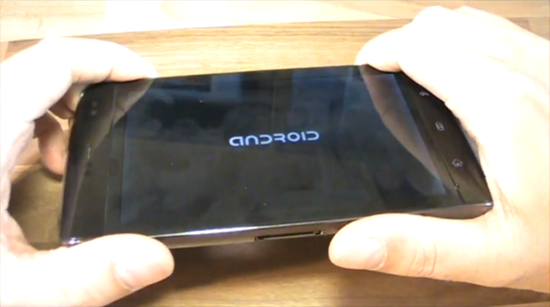
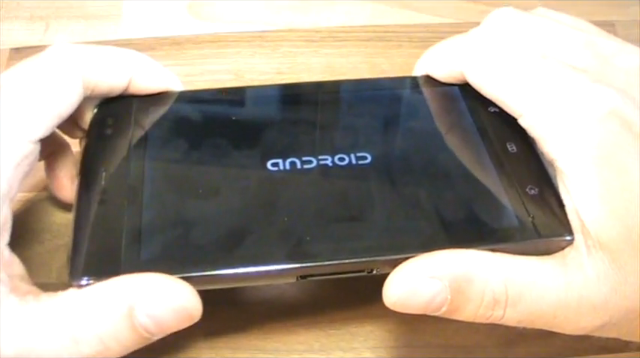
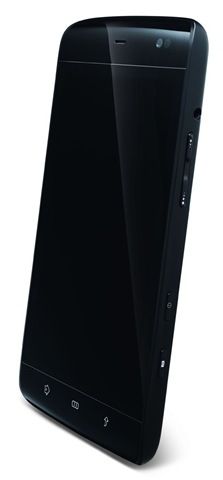
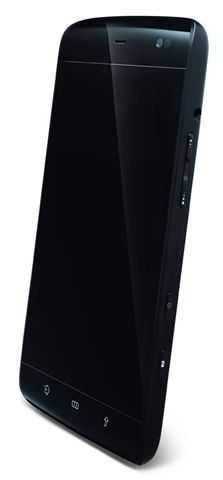
Chungwa and Gigabyte will be launching the M528 on Dec 6th with availability set for Dec 22nd according to an official statement appearing in PC World via the IDG News service.
This is of course good news for the west because up until now, the product didn’t even have a production line schedule. We had heard that the M528 was to go out initially through Expansys in Europe but that could have changed. I doubt anyone will be getting it as a Christmas present but we’ve put queries out to our contacts and hope to bring you the definitive answer later today.
The local price in Taiwan (including 3G and 3mp auto-focus camera) will be $583 dollars without any subsidy. Expansys are offering pre-tax pre-orders (aff. link) now for the equivalent of $685 but it’s not listed on the Expansys US web site yet.
Our hands-on with the M528 is here. There’s plenty more information in the M528 page.
This is the question that I’ve been battling with over the weekend after someone asked ‘Is the Kindle a mobile Internet device?’ Six months ago I probably would have said ‘no’ and stuck to my belief that a MID should be a pocketable device but since then I’ve changed my opinion slightly. I now believe that the non-pocketable ‘handheld’ aspect is also an important category of MIDs, just as, say, the chunky Dash form-factor is.
Consider these Kindle features for a moment.
Of course, there’s a lot of issues with the current Kindle. The browser is basic, the speed of the device is a major issue and the lack of backlight a serious shortfall but if you think about it, you can easily envision variations of the Kindle that focus on other forms of consumption. Web, Video and Navigation being just three. The current Kindle may not satisfy those seeking a full browsing experience but the core concept of a book-sized, connected reader is undeniably good.
For me, the definition of a mobile Internet device has to include ‘hand-holdable.’ The volume of the device is important so a 300gm, super-thin reader would qualify in my, updated, book. Netbooks don’t cut it for mobility as 2lb is still too heavy and the volume of these devices is huge compared to others. You can fit 25 iPod touches inside the volume of the MSI Wind! Fancy carrying 25 iPod touches in your backpack?
Maybe Intel should loosen-up on their definition of a MID because while pocketable is good, there are other mobile Internet customers out there that can be served by the same technology.
In the Gates / Jobs interview at D5 last year, Gates said that flexible displays were about 5-years out if my memory serves me correctly. Screen-size is one of the stumbling blocks getting in the way of smartphones moving into other product categories, including personal computing, and if the problem was solved it would only leave processing power and battery life issues to be solved before smartphones really could become the only device you need to go mobile with.
IDG New service is reporting today about a 5" folding screen that could be one possible solution. PC Advisor is running the story and reports that the concept design, by European design company Pilotfish, is based around a real, hinged screen developed by Taiwan’s publicly funded Industrial Technology Research Institute (ITRI.) The interesting thing about the screen is that the hinge is actually a display element. Apparently a touchscreen version is in development which just leaves the issue of a customer to find. We’d estimate a 3-year timeframe before you saw this on any device but I’m sure smartphone ODMs will be interested in this one in order to take their portable device to the next level. See PC Advisor for another image of the device ‘closed.’
Chrysler are introducing a ‘web-edition’ mobile Internet device package for their cars which comprises a Wifi/3G router with one year of 3G data contract, a Sony PSP, a Dell Mini 9, an Apple iPod Touch and Eye-Fi wifi/sd card. The option price is $1999. Mobile Internet Mobility!
It got me thinking, given $2000 and assuming you had no mobile devices, what devices would you choose? You’d need to cover the following mobile scenarios.
[continued...]
In a recent ‘Thought Leaders’ study by Phil Hendrix of IMMR, a number of (US-based, I believe)people were asked the following question:
Three years from now, among individuals who own or use a PC, cellphone or smartphone, at home or work, what percentage do you think will have purchased a MID, again, by Q3 2011.
The average prediction is that by Q3 2011, 33% of these people will have a MID.
I know what you’re thinking. ‘No way.’ That’s what I thought until I read their definition of a MID. The IMMR definition of a MID is:
MIDs, or Mobile Internet Devices, are a new class of devices/PC’s that offer many of the features of a PC, but at 1-3lbs. are lightweight and portable enough to easily carry and use virtually anyplace, at any time.
Its not the definition that Intel use but its certainly the definition I’m hearing from ARM, Ti and others that regard even netbooks as mobile Internet devices. Based on that definition, I totally agree with the ‘Thought Leaders,’ whoever they may be.
A complimentary copy of the report, titled ‘The M in MIDs stands for Mobile’ and sponsored by GigaOM, the GSMA mobile Innovation Market and InMobile, can be downloaded from the IMMR website at www.immr.org and it’s an interesting read covering more than just the penetration question. There are some quotes from the respondents included too like these two that I hear a lot: “Someone who has an iPhone right now, essentially has a MID already” and “With smartphones taking on 80%+ of MID-type activities, it will be tough to convince people to carry yet another device.” So if the iPhone is a MID and more voice-enabled MIDs are on the horizon, what are we arguing about? Based on this segment of the market alone I’d say we will reach 30% penetration by end of 2011. Add netbooks into the mix and it’s almost a certainty but for me, the even nicer thought is imagining the hundreds of variations of mobile Internet-enabled devices that will appear.
Related article: MID, a definition that is hard to ignore.
As you might have seen from the initial hands-on review, the Aigo MID brings a new level of Internet browsing to the pocket.
The results beat a previously tested set smartphones and other pocketable ‘Internet’ devices by an average 9 seconds per page. In terms of Internet browsing performance, it blows the N800/N810 out of the water and even the iPhone only averages 20 seconds per page over WiFi. [Aigo averages 12 seconds] The only pocketable device that gets close is the new Archos 5 with an average, over a similar set of tests, of 15 seconds.
It does pretty well on video playback too with higher-bitrate files really taking advantage of the high-quality screen. Its just a shame that the media software is so basic. In my opinion, Video, Search and Browsing are the most important elements of a MID’s capabilities so lets see how the Aigo P8860 performs. Videos and notes below…
After you’ve checked out our new video presentation, take a look at our hands-on report and at other peoples opinions by checking out the river of links for the Aigo MID. Pocketables and JKKMobile both have reviews and videos in the can. The reason I say this is that the Aigo MID device may not be for you. It’s not a bad device at all, I’m loving it more every day, but I just wanted to warn you that this device is something that will appeal mostly to the hardcore mobile Internet fans, mobile Linux developers and gadget-lovers out there. If you want a device, a platform and a software stack that offers you the best Internet experience and an exciting Linux-based playing field, the Aigo is a superb choice and arguably, the only freely-available choice today.

OFFER CODE: 14I6-U7AR-Y6HK-CARRYPAD
Mobilx have very kindly set-up a 5% discount code for us that you can use by clicking through the image above and ordering in Euros or Dollars using the code shown. The device is in stock right now and Mobilx can ship one out, globally, via DHL Express.
Coming tomorrow: Aigo MID video performance demonstration. (My notes are here if you can’t wait.)
Umid of Korea have kindly sent over a set of new images and the official specs of the nice looking clamshell device we saw a few weeks ago. It’s due for official launch in ‘early of 2009′ which hints towards CES or CeBIT. Pricing is unknown but with those pro-level specifications I would expect it to be more than the Aigo MID variants.
We’ve added all the details to a new UMID product information page so feel-free to browse the specs, the gallery, the links, see what devices are similar in specification (Fujitsu U2010 is probably the closest competitor in terms of form-factor but the Aigo MID comes closer in size) and take note of a few things. 1 - The battery is 17Wh which, given the lower processing power and smaller screen when compared to the U2010, should give it a 4hrs+, active-online battery life. 2 - The size. It’s much smaller than a U2010 so this one should be easier to slip in a jacket pocket.
Thanks to UMID for sending the details over. The device isn’t on the UMID website as we publish this but there’s obviously a placeholder there. No pricing or territorial info available at this stage.
The MID market is really starting to build up steam in and its fairing-up to be an exciting Q1 2009. Here’s the latest entrant under the ‘next-gen PMP’ banner as presented by Pocketables. With a possible ARM-11 core, this may not be the powerhouse required by many pro-mobile users and if the media experience isn’t up to scratch, it probably won’t compete well with the Archos 5G but it at least proves, again, that mobile devices are evolving towards a better mobile Internet experience.
Read what Pocketables have uncovered here.
Following through behind the ARM / Ubuntu announcement last week is another shot in the direction of Intel’s MIDs. Adobe’s Flash 10, probably the most commonly used multimedia plug-in in the Web world and a significant part of the full web experience, is coming to the ARM architecture. Not only will you be seeing full Flash 10 support on the next generation of evolved smartphones and mobile Internet devices based on the ARM Cortex core which are starting to trickle in now via specialist devices such as the Archos 5, Open Pandora and the next generation Nokia Internet Tablet but existing ARM11 architectures will also see a port. In addition to the Flash 10 announcement, Adobe have announced that AIR will be available so applications like twhirl and the ebay app could end up in your hand within the next year.
The press release talks about being able to ‘remove the barriers to publish content and applications seamlessly across screens.’ and points towards the website - Openscreenproject - that was announced earlier this year.
“Adobe Flash is the leading video format on the Web today, and this collaboration with ARM is another important step towards bringing the complete Web experience to mobile devices worldwide,” said Gary Kovacs, general manager and vice president, Mobile and Devices at Adobe.
Read: TGDaily
Read: ARM Press
Thanks to Mobilx.eu I’ve had the Aigo MID for a few weeks now. I put a fairly lengthy post up a few weeks ago explaining where this device fits in but now it’s time to give you an overview of it in action.
Here’s the video, made with very little preparation so you get to see a few problems with the device too.
Just in time for the holidays: you could win yourself an impressive gadget package from Pocketables.net. The holiday prize package features one of the first MIDs to have real consumer availability, the Aigo P8860 [Portal page]. Take a look at Jenn’s review of the unit, and don’t miss UMPC Portal’s own coverage of the device.
The Aigo P8860 is certainly the centerpiece of the prize package, but there are some other great accessories as well. The winner of the prize package will receive the following:
The iGo bluetooth keyboard is arguably the best portable bluetooth keyboard out there and I have heard good things about the Jawbone bluetooth headsets. When all is said and done, the package you could win is worth over $1000. Want to win? Head over to Pocketables to read the official rules. Be sure to hurry, the entry period is already half way over!
When we talk about ‘Mobile Internet’ the first thing we often think about is mobile Web. We’ve heard about ‘Full Internet Experience’ and ‘Internet in your Pocket’ and seen diagram after diagram showing how a full-fat 800×480 browser is the key but the truth is that it is just a small element of what’s picking up steam in the mobile Internet device market. In fact, the mobile Web is just one of the things enabled by mobile Internet. Its a strong focal point but it would be a complete mistake to think that that is the only thing a MID is going to be.
Article continues…