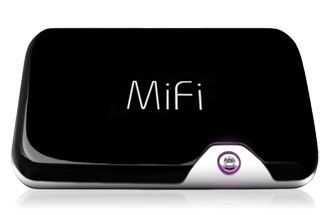
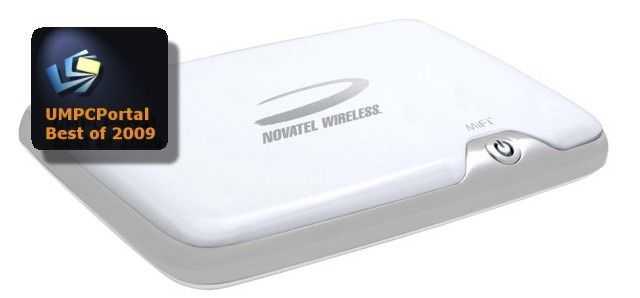
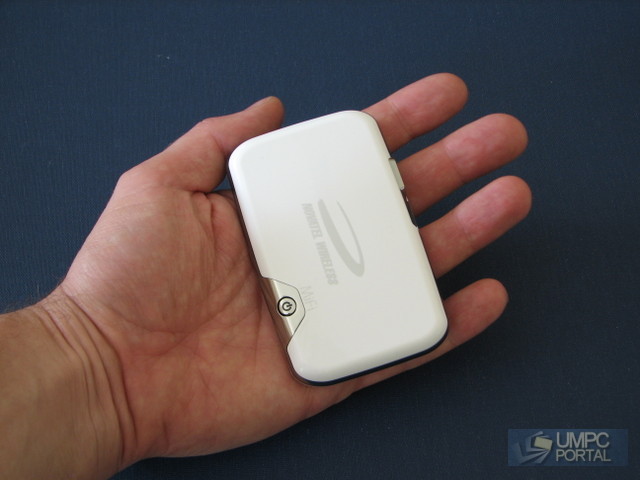
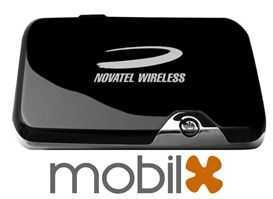
Those of you that have the MiFi 2352 or 2372 will know that the device contains more than just a 3G/Wifi router. There’s a GPS and an application processor inside. The application processor runs a basic web server that allows configuration and statistics. Unfortunately, the GPS has never been accessible and despite promises of new applications, they never materialised. MiFi OS looks likely to change that.
MiFi OS is a new set of firmware that includes a number of applications aimed at the corporate user. VPN, data tracking, location service, cloud storage and SMS handling applications are all included. We saw an application demonstration back in Feb (video below) although we suspect that things will look different on the finished product.
The new OS is being offered to carriers (who will want to authorise its use, run the assisted GPS servers and presumably, make sure it is locked to a premium data service) and according to other news, it will launch with Teir 1 wireless carriers in Q4.
If you’ve got a Novatel Mifi 2372 (Canada) or 2352 (Europe) model, you might want to read this.
Update: Readers have confirmed that the 2352 is affected. See comments below and check back here for feedback from Novatel. I am in direct contact.
Apparently there have been some battery swelling issues reported on the 2372 related to Bell which have caused the battery door to become jammed. In two cases, it appears that customers have punctured their batteries by using sharp objects to remove the cover.
Engadget have reported the story (in a rather sensationalist fashion considering that this is a safety issue) and we’ve had a call from Novatel themselves who took the time to detail the issue.
Two carriers in Canada have reported the issue and Bell have made the decision to disable their MiFi’s remotely. (There’s a remote-kill feature?) Novatel have kicked off a program of battery and battery door replacements through the two carriers and issued a product advisory.
Note that there is no product recall taking place.
What they fail to address is the 2352 which is the same device with European HSPA bands. Novatel confirmed to us that the 2352 is the same design so one assumes that the same battery supplier is used and that the same problem can occur. 2352 owners out there, please be careful. Don’t use sharp objects to open the battery cover and if you experience a swollen battery, please let Novatel know (and drop a comment here so that we can pass it on too.)
Clearly the GSMA have been looking for guidance on what to choose as a top mobile gadget at MWC, saw that we had awarded Mobile Accesory of the Year to Novatel’s MiFi and followed suit by giving their own little award for Best Connected Device (Non-handset)
Or maybe they checked it out and realised it was a damn fine bit of kit on their own.
Either way, Novatel just picked up another award for the MiFi from the GSMA
SAN DIEGO Feb. 22, 2010 Novatel Wireless (NASDAQ: NVTL), a leading
provider of wireless broadband solutions, is pleased to announce that its
MiFi Intelligent Mobile Hotspot has won the GSMA Global Mobile Award for
Best Mobile Connected Device (non-handset). The GSMA Global Mobile Awards is
the mobile industry¹s leading annual award presentation that honors
excellence and innovation in the mobile communications industry worldwide.
Well done Novatel. Keep that Mifi-love flowing. Our wish-list is below:
10 hours battery life (Bigger battery version?)
USB charging without becoming a USB device
Easier to understand indicator lights. (After nearly a year, I still don’t understand them!)
Less heat
Faster cold boot
Firmware upgrade for existing owners to enable GPS and applications support.
The MiFi 2352 (HSDPA version) saved our bacon quite a few times at MWC. It was the hotel WiFi, our live podcast feed and we used it countless times around the site and at events with a cheap, 35 Euro flat rate SIM card from Vodafone ES. I even used it for advertising. I set my SSID as ‘Chippy and Carrypad are here’ and people actually found me because of it too.
It goes without saying that we thoroughly recommend it and if you’re interested in the HSDPA version, it’s available through our friends at Mobilx for just 214 Euro inclusive of EU taxes. Trust us, it’s worth it! (Affiliate link.)
As promised at CES, Novatel are moving forward with their plans for the Mifi 3G personal mobile internet hotspot (that has been a life-saver for me at MWC) to include applications and software features. We spoke to the team at the Mifi booth at MWC a few days ago and got a nice demo of a GPS-enabled application. GPS is enabled in the next firmware but I’m getting the impression that it’s going to be a new model of the Mifi with slightly newer features which ‘might’ include, USB charging without becoming a device, better battery life and of course, the GPS. I’m hoping that the firmware comes to existing Mifi’s (or at least the ones with the application processor in them) to enable the GPS that’s already included in the unit.
In the video below, Gareth Davis talks about some of the things possible and demonstrates a nice GPS-enabled application served through the Mifi webserver itself.
We have also heard that the EyeFi (Wifi-enabled SD card) application is progressing and we’ll be sure to keep a close eye on it. Clearly a web-based navigation service would be possible and there’s a ton of things that can be done with social networking. Can anyone think of other interesting apps that could be created on this platform?(Apart from the obvious ‘free wifi’ password-inspection app that would be sure to pick up some interesting information if you left it for a few hours in a press conference!)
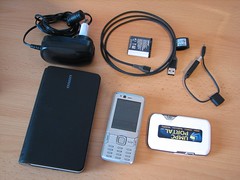
Mobile World Congress is going to call for a significant refinement of my ultra mobile reporting kit (see below for previous versions) which means leaving the netbook in the hotel safe and traveling as light as possible. I aim to be roaming with only a man-bag and with about 1KG/2.2lb of equipment which is quite a challenge. Quality and speed of reporting during the day may suffer but I’m prepared to take the hit in order to be mobile and quick. Here’s a detailed look at my MWC setup as it stands just a few days from travelling.
The initial kit list looks something like this:
Hardware (825gm / 1.8lb)
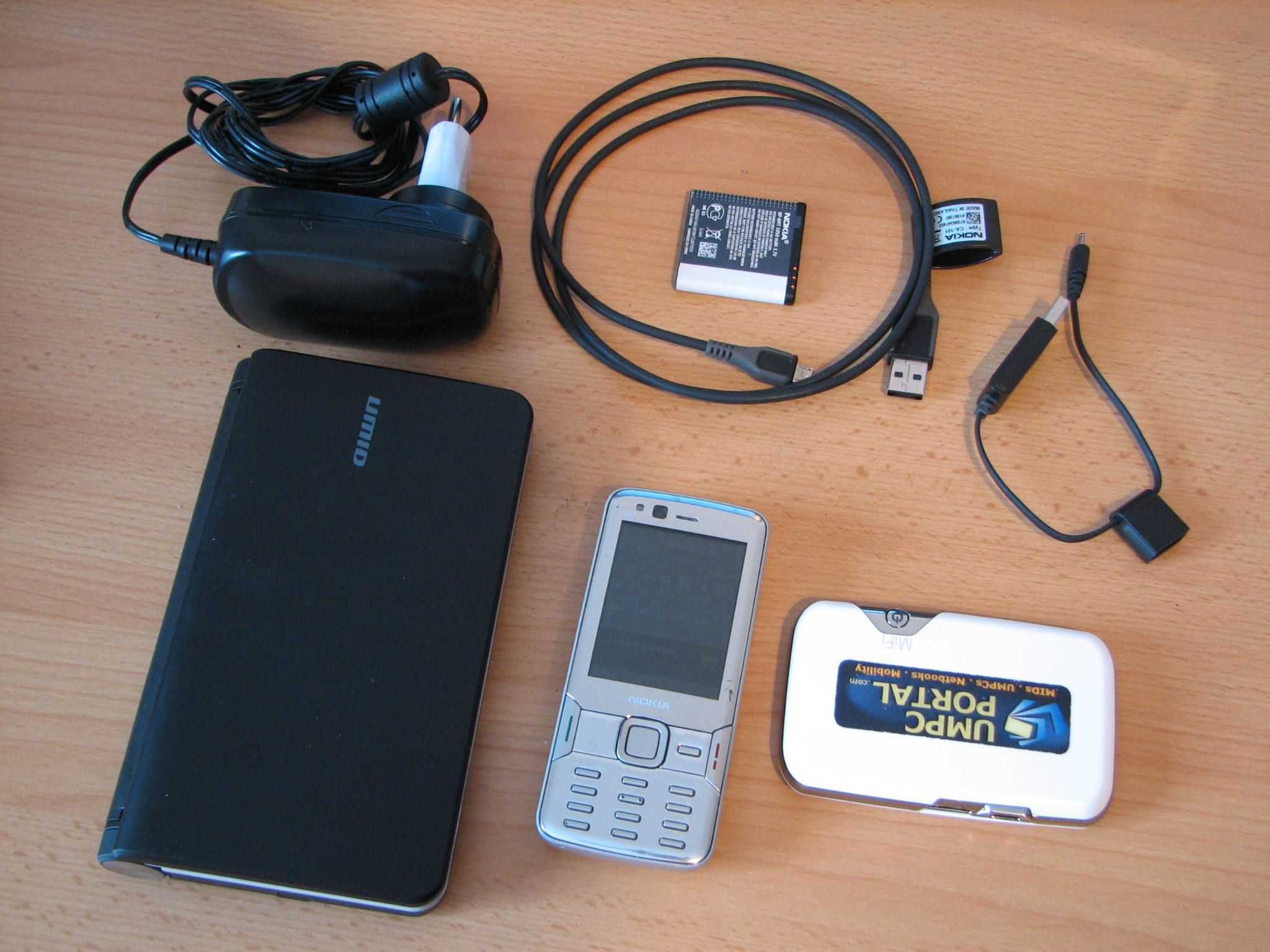
UMID BZ as PC and USB power source. Including mains charger cable.
Nokia N82 as camera and backup 3G tether. Including spare battery.
Oh the stress of choosing a bag. Right now I’m leaning towards the Jack Wolfskin one because it can be worn in on the back or front of the body and it looks, well, less man-baggy!
Here’s how I would use the kit to post images and videos with text.
Yup, problems occur but in previous and recent tests it looks like it will take about 5 minutes to do a 2-paragraph blog post around a photo. Video really depends on Internet bandwidth but with the mobile reporting kit I can close the lid of the UMID and leave it to continue posting to YouTube. You have to be careful of time-outs in this case because re-starting the uploads usually requires a full upload again. Here’s the image I took during the video. As you can see, quality is excellent (click to enlarge.)
Photo camera: Around $300 but get one with BT and Xenon flash.
Mifi: $250
Improvements and optimisations.
Could a Motorola Droid/Milestone do all this? Yes. Photo’s to Flickr and editing and re-posting from Flickr is easily possible. Video also possible. Live video using QIK also possible. Text entry with Droid keyboard also possible. Cost: Around $500 including an extra battery (or two!) It’s a great single-device option and way, way lighter than what I’ll be carrying.
The issue with using a Droid is that you don’t have a PC with you for ‘everything else.’ That includes basic video editing, 100% full web access, USB accessories support (printing, usb sticks, usb cam for example) high quality audio recording using USB mic/audacity, audio/video streaming using UStream, connectivity to LCD screen and full size keyboard and use of all the normal desktop client software such as Firefox, Tweetdeck, Paint Shop, LiveWriter, Skype and anything else that a PC would be flexible for. It’s basically a trade-off. Using the UMID is way more expensive but it gives that flexibility to use to a full desktop tool-set if required and that, to me, is worth it’s weight in gold. If either the N82 or UMID die, I’m left with one working device which is a nice backup strategy.
The N82 video quality (test video here) could be improved a lot. I’d love to see a photo camera with high-compression, 720p video recording and checking across the range of smartphones available today, the Omnia i8910 would make a better choice for video with it’s 720p capability. File sizes could be a problem though so HQ VGA at about 2mbps H.264 would be perfect. Anyone out there done extensive phone-cam testing?
Battery life is an issue and will require careful management. Fortunately the UMID BZ is proving excellent in that respect and just by closing the lid I can make it go into standby or hibernation. Returning for these standby modes is 5 and 20 seconds respectively. The UMID is returngin a regular 4.5-5hr in-use battery life. Despite that, I’ll carry a mains charger with me because I may have to charge the Mifi or the N82. Both can be charged via USB which is a huge bonus. The Mifi can even be used while it charges.
Update: In a 34 minute test I saw 17% battery drain indicating 200 minutes of battery life. About 3 hours! (Device closed with screen/touchscreen off)
Embedded 3G in the UMID. Yes, this would be great. No question. There’s no need for a Mifi if you’re only using one 3G-capable device but even in that scenario, i’d probably have the Mifi with me as a backup. The antenna on it is superb and it comes in really handy for a table of five net-less bloggers!
Your suggestions welcome.
Please feed-back in the comment section below. I love to hear how people are using their mobile kit. Are you mobile blogging at MWC? If so, lets meet and have a chat about the kit on video.
I’ll post a follow-up after MWC.
Previous versions of the ultra mobile reporting kit.
Thanks to UMID for the loan of the BZ. If I didn’t have the UMID here, I would have replaced it with the Fujitsu U820 as a second choice. The BZ really is the best choice out there right now.
I’ve been extremely happy with the Mifi 2352 (and the Sprint version I used at CES) We voted it mobile gadget of the year and have previously highlighted it for ease of use and its ability to improve security over open hotspots. Unfortunately we’re going to have to retract the latter statement because of a serious security issue based around multiple vulnerabilities. The latest update highlights the ultimate danger.
1-16-2010: @aramosf posted to twitter that the MiFi’s config can be directly accessed without authentication. If you combine his attack with the above attacks it turns out that an attacker can download the entire device configuration, including clear text credentials!
The hack has been proven on the Verizon version of the Mifi but we’d recommend caution for all Mifi users. Keep your Mifi out of view when in use and hide the SSD if possible.
Combined with further software installed on the application processor version of the MiFi, the 2352, it’s not difficult to imagine a situation where the MiFi is turned into a traffic logger.
We’ve contacted Novatel for a statement and will update you here on the latest.
Latest from Novatel:
MiFi has CGI parameters that are intentionally programmable so that developers can read or change MiFi settings and build browser based widgets. Most of these are openly published by Novatel. There are other CGI settings not published for MiFi that are accessible only when a user surfs to a malicious web site and stays connected to that site. The nature of the threat is better characterized by the ability of the hacker to change MiFi settings, only when connected to the malicious site, and does not provide access to the user’s personal data. The exception to this is location data such as GPS. In this instance, the user location data is visible only when the user is connected to the malicious site and GPS is activated. No malware remains on MiFi when the user disconnects from the malicious site. Any data received or sent through MiFi is secure. Novatel will provide a patch going forward.
For more detailed information, a review and a video, check out the round-up we published over at UMPCPortal earlier this year.
To have a chance to win the Mifi 2352, all you have to do is to answer one easy question. Head on over to Carrypad for more details.
Many thanks to Mobilx for their support. Mobilx offer a wide range of mobile computing solutions and are able to ship worldwide. Check out their web site here.
2009 was, again, a tough year for designing, building and selling UMPCs. Windows Vista continued to drag down performance and the economic situation meant that many UMPCs didn’t reach the market. Despite that, the advances we’ve seen in 2009 have been some of the best ever. Performance was boosted with the availability of high-speed SSD drives. Battery life was improved through the use of the Intel Menlow platform and market pressure meant that the price/performance ratio took a huge step forward. In one of our videos this year I talked about ‘double the battery life, for half the price.’ That’s how far we’ve come since 2006 but into that equation go more features like GPS, 3G, haptic feedback, better designs, silent operation and lighter weight. Only last week, Fujitsu launched the UH900 which makes it, if our database serves us correctly, the first 5.6” UMPC to break the 500gm barrier. Amazing.

In this article we would like to highlight four products that we think deserve ‘Best of 2009’ status.
We’ve chosen the Viliv X70 EX SSD because of it’s focus on quality and it’s flexible form factor. Battery life, build quality and disk speed help to make this a solid and reliable device and a good part of an ultra mobile setup that can go from sofa to car to desktop. The SSD helps to make the X70 EX rugged too which is very important. 3G, Car mount, quality casing solution and even voice capability are options if you want them.
Viliv have proven that many of the most important elements for quality ultra-mobile computing can be put into a device at a very reasonable price. A huge step forward.
We also considered.
Viliv S7. Another very solid and reliable device with amazing battery life. The S7 is focused on ultra-portability though and is best used on a table-top.
Fujitsu U820/U2010/Loox U. A device from 2008 that is still able to offer excellent all-round UMPC qualities.
Best Mobile Accessory of 2009
This was an easy one. First tipped as accessory of the year in March, it proved itself during the rest of the year. The Novatel Mifi 2352 (GSM/UMTS) version is simple, reliable and performs very well as a bridge between a single 3G data connection and a WifI hotspot that up to 5 devices can ride on. With a built-in web server and router firmware it’s exciting to imagine how this access box could turn into a content delivery platform. We predict many variants and versions of this popping up in 2010.
We also considered:
Nothing else came close.
Stay tuned here and at Carrypad.com for details about how you can WIN A MIFI 2352 over the next week.
Best Mobile Software of 2009
2009 was the year that the mobile application market took off in a very very big way. There are thousands of mobile applications to choose from but the one application that continues to help mobile computing users more than any other is Mozilla Firefox. Version 3.5 saw a much faster javascript engine being introduced and it’s plugin ability allows mobile and small-screen users to tailor their web experience in ways that bring huge productivity and efficiency advantages. Notable plug-ins include the ever-useful Grab and Drag, No Script and of course, Mozillas own Weave plugin which is a bookmark, password and tab syncing software that can save a lot of time and keypresses.
We also considered.
Google Chrome for it’s CPU and javascript efficiency.
We simply have to give an award to the Archos 5 Internet Tablet. This isn’t a UMPC, isn’t a 3G-capable mobile internet device and is still in need of a lot of firmware work but the technology, operating system and price are a huge step forward for ARM-based devices. The web experience is good (although far from perfect) and the battery life puts all UMPCs to shame. As for sizing, we’ve never seen so much internet-connected capability is such a small device. The Archos 5 Internet Tablet shows us what could be possible in 2010. Full review here.
Biggest Disappointment of 2009
While deciding this award, the team discussed the Crunchpad/JooJoo. We also wanted to list the ASUS R50A too but the first hasn’t been launched yet and the latter was a 2008 device.
We first reported about it in May and were excited to see what Linux and an ARM cortex processing engine could bring to the sector. The design, a modular Slate/netbook design was interesting too. We were so excited, we ordered one. Fortunately for us we weren’t part of the early set of customers and after we read the early reports, we withdrew our order. Users reported stability issues in the software and even stability issues in the device itself; it had a tendency to tip. Battery life was unimpressive, the firmware poor and all-in-all, it looked like customers were being asked to pay to join a beta-testing program. The story hasn’t changed much since then. Always Innovating have released a ‘fix’ for the early balance problems; “a small plastic part that customers can glue at the back of the keyboard part” and there have been a number of firmware updates but core hardware updates need to be done before this is a real product that can serve duty in the ‘pro-mobile’ sector.
It highlights a very important point because the Archos 5 and Always Innovating Touchbook are based on similar hardware and software platforms. Specifications are only half the story.
Top Articles of the year.
Here are the most popular articles of the year. Thanks to Ben for two articles that went viral and crashed the server!
As soon as I’ve got the details ironed-out, I’m going to be giving away a Mifi 2352 courtesy of Mobilx.eu this week. If you haven’t heard of it, it’s a tiny, palm-sized device that you put a SIM card in. You press the single button and it connects to 3G and provides a Wifi for up to 5 devices to use. Simple and great quality. Definitely my mobile device of the year. [More information here]
Andy Abramson of VoIP Watch and the daily World Tech Round Up Podcast/Radio Show has just posted a really interesting article on how he’s using the Mifi with his Macbook Pro and Viliv S7 in Madrid.
“my point is, with the MiFi tucked inside my coat pocket, a device like the iPod Touch, iPhone, Nokia E71 or even my UMA enabled Blackberry, I have more connectivity than I did a year ago. Add in more and more WiFi hot spots that are up and running, and I’m connected. Oh, and one more thing. When I don’t want to carry the MacBook Pro, I’ve got a 1.7 pound powerhouse in tow. It’s the 7 inch Viliv S7.”
A good read from someone that looks to be getting the most out of the Mifi.
Vodafone Germany are the latest carrier to announce a 3G hotspot. It’s our favorite (and still product of the year in my opinion) the Novatel Mifi 2352. [My review roundup]
40 Euro per month for a 5GB HSDPA contract (GPRS flat after the 5GB limit is reached) gets you the device for free which in my opinion is a far better option than buying a netbook with a data contract. The Mifi gives you freedom to choose your devices based on where and what you are doing. If you want to take the iPod Touch to the coffee shop, go for it. If you need to attend an important meeting with your business laptop, you get that choice too.
For the ultimate in flexibility though I suggest taking the 231 Euro hit at Mobilx and look for pre-paid or flat offers from other 3G providers in your country. A 24 month contract with Alice in Germany for example brings you the same data rate and bandwidth limits for 15 Euro per month. Less than half the price that Vodafone is asking. I tend to use the Mifi with a day-flat tariff. At 2.50 Euro per day it leaves me contract free and able to switch to other pre-paid cards based on price or availability.
Expect this product to pop up at your local Vodafone provider soon.
I’ll be attending a mobile internet presentation hosted by Vodafone Germany this afternoon and although I will continue to microblog (they will appear in the middle column on the front page) I wanted to highlight a couple of points before I go.
Firstly, Pocketables have news that the Viliv S7 is nearing launch in Korea. There’s information on pricing and model details but these details will obviously change for models outside Korea. We’re trying to get more info from Viliv about this. I’m very excited about the S7 and wondering if it will beat the ASUS T91 to market! Check out the Pocketables article for more. What do you think of the pricing? I’m guessing that it will translate to a $650 entry point in the U.S.
JKK and I spent 3 hours with the Kohjinsha SK3 [details] and a bunch of other UMPCs last night. The live session was recorded and if you’ve got 2+hrs free, check out the videos. I will be doing a full review of the SK3 in the coming weeks.
The Vodafone event should be interesting this afternoon. I am taking a bunch of UMPCs and will be using the X70 + PC Navigator to find my way there. The MiFi 2352 will also be given a good work-out!
I could easily round-up the coverage of the European-focused MiFi 2352 by saying ‘buy one’ but that would be too easy. There ARE some things you need to think about before you take the plunge and buy one so here’s my final tests and thoughts on the MiFi 2352 personal 3G hotspot for European GSM and UMTS networks.
Announcement: JKKMobile and UMPCPortal will be available on the live page tomorrow (Wednesday 24th June) at 2100 CEST (Berlin) demonstrating the Mifi 2352 and answering questions.
The device is easily pocketable, bag-able and even window-shelf-able. The Wifi range lets you put the device wherever it’s needed for the best 3G reception. Size-wise, you need not give it a second thought. Build quality is good although you might want to keep it in a little bag to avoid the ports getting dirty.
The software comes in three parts. The 3G software, the router and the web server. Each has it’s own little software stack and everything appears to work very smoothly together. Starting the device up is simple. Configuring the device is simple. Using it with multiple SIM cards is simple and sharing files from an SD card is simple. The file sharing function is limited to simple web-based downloads and uploads but we get the feeling that 3rd-party software, hacks or even official firmware upgrades could enhance this. At this point I’d like to point you to Slashgear who have also tested the Mifi 2352 and have a good set of images of the user interface.
Wifi sharing without 3G
This is the easiest way I’ve found yet to enable keyboard sharing between multiple devices. Of course, one of the devices needs to have an internet connection (or use the 3G on the MiFi) if you need internet access but it’s a great way to set up a mini network in the home, car or while on holiday.
Battery life
I hooked up my desktop, a UMPC, a netbook and my N82 mobile phone to the MiFi and hit it hard with continuous music streaming, two IM clients and my normal web-based working process which included browsing and a big set of image uploads. The result, a warm MiFi that lasted 3.5 hours. I’m quite impressed. In normal use I would expect 4hrs out of the device and as there’s a few easy ways to recharge the device (and the possibility of cheap spare batteries – I feel sure that Novatel are using a pattern battery that you’ll find in another device) I have no problem with the battery life. And another thing, I barely noticed any difference on my desktop. At HSPA speeds and with normal activities, the Mifi is as good as a cable internet connection.
Heat
As mentioned, the device gets warm but nothing you need to worry about. The Wifi has a good range (one concrete wall or about 20-30m in the open) which means you don’t need the device too close to the clients.
Speedtests
See my previous post. I don’t see the Mifi being the fastest but it’s stable and has excellent reception. A stable, lower speed connection is often far more useful than a spotty high-speed one. HSPA is supported and we’ve seen 2.1mbps download and 1.2mbps uploads.
Price
If you’ve got a USB 3G stick and one computing device, you’ve got a tough choice today. 220 Euros is the same cost as an iPod Touch and you won’t be increasing your mobile internet capability by much at all. It certainly doesnt take much effort to plug a 3G USB modem in! If you’ve got multiple Wifi devices though, the MiFi starts to get interesting. You will be able to enable your own personal wifi hotspot and thus mobilise your wifi devices. The Mifi will save battery life (close-range wifi is often more efficient than a USB modem), and increase your security by giving you a private channel to the internet. If you’ve already got 3G devices, the MiFi can save you money and give you flexibility. In Germany and many other European countries, pay-as-you-go flat rate daily or monthly tariffs are common and by choosing one and sharing it between your devices, you can control your costs.
Issues
I would have liked to have seen the possibility to attach an external antenna to the MiFi for edge-of-cell use or even a permanent installation as a broadband modem.
Charging in use. By connecting the USB cable to a PC, you initiate the USB modem mode of the Wifi. To charge the MiFi while in mobile hotspot mode you need to either plug the device into mains via the supplied adaptor, use a power-bank with a USB output or make a cable modification. It would be nice to be able to disable the USB modem mode through software.
There is a surprising amount of heat generated considering the device is only using 1.5w of power under maximum load. This may be a consideration if you want to keep this in a pocket.
Indicators. I find the indicators confusing. There are no fewer than 14 combinations of colours and steady/flashing status indicators. It’s worth learning the combinations but it shouldn’t be this hard cnsidering the space available on the device.
Popularity is going to become an issue. Sharing a single connection with multiple devices means more devices per cell which effectively means more data on the same number of connections. Backhaul bandwidth (from the cell tower to the data center) is already an issue and major bottleneck. If the Mifi becomes popular for Wifi device owners (iPods, PMPs etc) then expect more congestion. This is another reason to be using pay-as-you-go services so that you can hop onto the best service providers network at very little cost.
Future products
Expect Huawei to come out with a competing device soon and expect to see these devices popping up all over the place on the city high-street. Also expect carriers to be offering the devices for free with contract lock-ins or even to enable ring-fenced TV or music services so yes, if you wait, you might find a good deal with your favorite provider but 24 months is a long time in mobile internet. 24 months ago, the prices were double and the bandwidths half of what they are today. In my opinion it’s better to buy a MiFi without commitment now and start enjoying the benefit.
Summary.
The Mifi is a groundbreaking product for anyone interested in mobile internet and there are very few issues to consider. It has the potential to save you money, increase your security and turn hotspot-bound device into mobile ones. It’s a shame that the battery life doesn’t last a full days activities but this is about as good as it gets from today’s technology. If you’ haven’t just bought a 3G USB stick, take a close look at the MiFi, the extra cost might save you money in the long run and simplify your mobile internet life.
We bought the Mifi from Mobilx.EU in Hungary who are an affiliate of ours and also pay for advertising on UMPCPortal. There are no affiliate links in this article and the article has been written without any external review or influence. We encourage you to visit the links shown at the top of this article for reviews and information from other websites and to view the live, recorded review and Q&A session. [Details here after 24th June]
I spent some time last night testing four 3G-capable devices for both speed and reception on three different provider networks from my desk in my office here in Bonn, Germany just a few kilometres from the global head-office of T-Mobile. The results are very interesting with the Mifi being a great all-rounder and the X70 surprising with some very high-end speeds. The Viliv S5 was disappointing. I was even surprised with the results from the different providers.
Update: Some reports are coming in (see comments) that the 3G on the S5 brings in good results. It’s possible I have a faulty unit here. Maybe a poorly soldered antenna. If anyone else has an S5 and can do comparisons with other 3G devices, please let us know your results. Thanks.
Devices tested
Mifi 2352 3G hotspot from Novatel. HSPA capable. [More information]
Viliv S5 with built-in Huawei EM770. HSPA capable [More information]
Viliv X70 EX with built-in Huawei EM770. HSPA capable [More information]
With an average of over 3 bars (from 5) reception, the MiFi reported the best reception of all devices. This result should be taken with a pinch of salt because of course the ‘meters’ aren’t calibrated between devices but the MiFi certainly felt strong. I’ve used the Gigabyte Touchnote many times in extreme 3G situations now and it too is strong and returned a consistent 3-bar reception level at my test desk. Its difficult to pick a winner between the two because as you move towards the edge of a cell, the Touchnote is likely to be the better performer with it’s bigger antenna. The X70 was reliable too showing strong 2-3 bar reception figures on the fastest technologies. The one disappointing result was the Viliv S5 which consistently failed to attach to 3G networks. Reception quality is clearly much lower on the S5 than all other devices.
Speed Test
The speed tests were done using Speedtest.net over a period of about 3 hours. Remember that results very over time, weather conditions, cell load and position but by remaining at my desk for all tests I was able to get a feel for the speeds of the devices and, important for me, the quality of Internet service from the three providers I tested. The Mifi was used in hotspot mode.
Download Test results:
Upload Speed results:
Conclusion
The Mifi appears to be limited in it’s ability to download when used in hotspot mode (not tested in USB modem mode) although the 1mbps figures are quite acceptable and the reception appears to be excellent. There could be an issue with the early firmware too so we’re getting this checked out through Mobilx.eu, the reseller. Overall though, the MiFi looks like the best all-round 3G device out of the test with stable figures across the board. The X70, with it’s HSPA modem showed the highest download scores and in one case, Speedtest recorded 4mbps download over the Fonic / 02 network. It couldn’t quite reach the high speeds on the Vodafone network. This could have been due to the load on the Vodafone network or the slightly less sensitive antenna. The Touchnote download speeds were also very good but highlight the limits of its HSDPA modem which can only support 384kbps upload speeds. For general use though, the Touchnote is very good and I’d rather have high quality reception than extreme upload speeds. Unfortunately, the Viliv S5 I have here just wasn’t capable of getting consistent 3G results. Standing near a window helped but that’s not the point of the test. In the given scenario the Viliv S5 wasn’t able to complete any of the Speedtest results within a reasonable time and the built-in antenna made no difference to reception quality.
As for providers, clearly Fonic, who use the 02 network, are the best in my office area but in general, I don’t use 3G in my office area! I have been testing these networks for a long time though and have been impressed with the 02 data network in Bonn and Cologne. As a result, I’m thinking of cancelling my low-end T-Mobile data contract (my Vodafone data contract has already been cancelled) and getting an Alice 19.95 Euro unlimited 7.2/1.4mbps pre-paid broadband card. Alice use the same network and as I’ve tested Skype with it, I’m pretty happy that it’s a nice open network. (although it does use a different APN to Fonic so there’s a risk there!) 20 Euro per month for 5GB (and then unlimited over GPRS) looks like the best deal in Germany for me at the moment. Given that I can use 5 devices with the Mifi and that the Mifi is proving to have great reception and acceptable throughput, I have to ask myself whether I really need 3G built-in to any of my devices now.
Clearly the MiFi reduces the need for built-in 3G so like me, you’ll have to ask yourself if it’s worth it to look at 3G-capable UMPCs any more. The MiFi doesnt cost much more than a built-in option, is flexible, is easy to use, saves UMPC battery life (close-range Wifi takes less power than 3G in most cases) and it mobilises up to 5 WiFi devices on one 3G contract.
Update: Finally, after seeing that JKKMobile got over 2mbps download on his MiFi, I tested and tested further. I did, once, mange to get a 2.38mbps average download speed, again, on the Fonic/02 network. Note the fantastic ping times of 65ms. Clearly the MiFi is geared towards reliability, stability and reception quality rather than speed. In my opinion, it’s the right balance.
As always, respect to Mobilx for shipping the retail Mifi 2352 over in super-quick time. Their stock came in yesterday and I’m sitting here, 24 hours later, with one in my hand/pocket/rucksack.
I’ll be heading out for a camping weekend in Holland in a few hours (yes, the Mifi is coming too) so I don’t have time to write too much at this stage but yes, it’s working as expected and I still think it’s the mobile computing device of the year. I need to do some testing on battery life and reception quality and that will come next week. In the meantime, enjoy this overview unboxing and demo video. You’ll also see the built-in Micro-SD card slot in use.
Affiliate advertising. Click for info.
If the ‘HQ’ button is available on the player above I recommend clicking it for higher quality playback.
The unlocked Mifi 2352 is now available for 220 Euro (inclusive EU taxes) from Mobilx.eu. (Direct link) I’m not aware of any other resellers that have it yet but if you know of someone else selling it, let us know and we’ll happily add the details here.
We’re happy to say that Mobilx is a long-term and trusted affiliate of ours. You can support UMPCPortal by buying your MiFi through the affiliate advertising.
The MiFi is my tip for Ultra Mobile Product of the Year. Cutting across Wifi hotspots, 3G dongles and multiple carrier contracts or pre-paid SIM cards in one go, the MiFi is simply a must-have if you’re an Ultra Mobile type of person.
Mobilx have announced availability and final pricing.
220 Euros (inclusive of European sales taxes) buys you a HSPA-capable device with the specifications shown below. First devices are expected to be available in the third week of June 2009.
We’ll be getting one for testing very soon now. Hopefully it will be in my postbox when I get back from Computex.
Access HSPA (7.2 Mbps download and 5.76 Mbps upload) mobile broadband networks with the world’s first Intelligent Mobile Hotspot
Operates virtually anywhere in the world with multiple frequency band operation in HSPA, UMTS, EDGE, and GPRS† providing high speed mobile Internet access.
Connect up to 5 Wi-Fi enabled devices
Allows up to 5 Wi-Fi enabled devices to simultaneously connect to the Internet.
Easily fits in the palm of your hand
Sleek and tiny, MiFi is perfect for on-the-go connectivity.
NovaSpeed capable
Enhances performance of video, online gaming, simultaneous uploads and downloads, and large file transfers with minimal interruptions or buffering.
Integrated high-capacity microSDHCTM slot
Provides expandable storage capacity of up to 16GB, allowing access from all connected devices over Wi-Fi.
GPS-enabled for location-based services
SIM Unlocked!
Technology/Bands
Tri-band HSUPA/HSDPA – 900/1900/2100 MHz
Quad-band GPRS/EDGE – 850/900/1800/1900 MHz
A-GPS and gpsOneXTRA™ support
Receiver equalisation
Receiver diversity
Antenna
Integrated diversity antenna
Integrated WiFi antenna
Integrated GPS antenna
Software and Applications (optional)(USB Tethered Mode)
Following the much-blogged, much twittered news of Verizon launching their MiFi product last week, it’s now Sprint’s turn. There doesn’t seem to be a day plan, only a $60 5GB plan and a bundle which includes a phone. Availability is ‘June’. More details here.
It’s no secret that Telefonica have already announced the Mifi 2352 HSPA version in Spain (under the Movistar brand) and I’m hearing ‘days’ rather than ‘weeks’ for availability which means I’ll probably be able to get hold of an unlocked version for testing. Can’t wait!
“Among the key attributes of MiFi 2352 is an on-board Linux based operating system capable of delivering mobile software applications and media. These advanced capabilities add to the intelligence of MiFi and will enable future support for applications such as automatic VPN connectivity and automatic email synch. The combination of internal (ROM) storage, up to 16 GB of expandable memory via MicroSD and on-board GPS capabilities make MiFi 2352 a flexible and robust platform capable of supporting a variety of location-based applications and enabling the storage of personal content such as music, video and pictures.” [Source]
The MiFi is clearly going to be a very popular product this year so excuse me if I don’t report on every carrier deal across the world!
There’s a lot of excitement around the MiFi ‘personal hotspot’ at the moment. In the mobile computing community at least, nearly everyone wants to get hands-on, test, and probably buy one too.
Phone Arena have got hold of the Verizon MiFi 2200 and have posted some pics and speed test results. Forget the speed test results because your mileage will vary wildly depending on where you are and who’s sharing the tower with you. Fingers crossed that it’s not someone with another MiFi! It’s rated for EVDO Rev 0 which means it supports the latest 2Mb/s+ theoretical download rates. The more interesting test would have been a battery life test but Phone Arena don’t mention any test figures. I’m guessing that Phone Arena have put up a quick first impressions test and will follow up with a more detailed article. They have confirmed, however, that the device can be used via USB. It’s supposed to charge via USB too but again, no word on that from the Phone Arena team.
As we found in CeBIT, it just works! “We found connecting to the Verizon MiFi 2200 very straight forward, and was up and running in only a few minutes” What more can you say except, HSDPA flavor please!