Fennec + Moblin2 news.

Friday, November 7th, 2008

fennec Fennec, the small-screen version of Firefox, is important for ultra mobile fans. Not just because its a small-screen, finger-optimised browser but because it has been chosen as one of the browser options (the other being Firefox 3) for Moblin 2, the latest version of the Intel-led core operating system for MIDs planned for first release in Spring 2009.

Fennec has support for add-ons but unfortunately, it doesn’t support the mainstream add-ons that are available for the Daddy of the pack, Firefox 3. Thank goodness people are starting to jump on board then because add-ons help a lot with individual tailoring, an important part of the ‘personal’ part of the UMPC equation. ReadWriteWeb reports that the URL Fixer add-on is now ready.

Exactly what the add-on does isn’t really as important as the signal it sends out to developers and adopters. Fennec is starting to gain traction and awareness amongst developers.

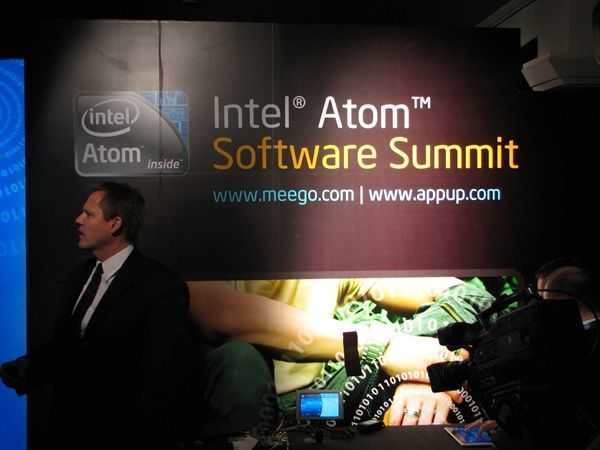
clutter For more about the browser choices on Moblin check out this part of the Moblin website. While you’re there, don’t miss the clutter user interface demo video. Clutter is the new 3D-capable UI architecture that will replace Hildon. The demo looks fantastic. Oh, one more thing I noticed. It looks like they are working on open source hardware-driven video decoding based on libva APIs. In fact the whole Moblin project is looking far more organised than it was 6 months ago and there’s quite a few exciting things to check out on the site if you’re interested in Atom-based MIDs.

Remember though, Moblin 2 is for OEMs to brand and enhance.  Its not an end-users distro.

Aigo P8860 MID first impressions. The Mobile Internet takes a Big Step Forward.

Thursday, November 6th, 2008

IMG_7489 IMG_7492 IMG_7487

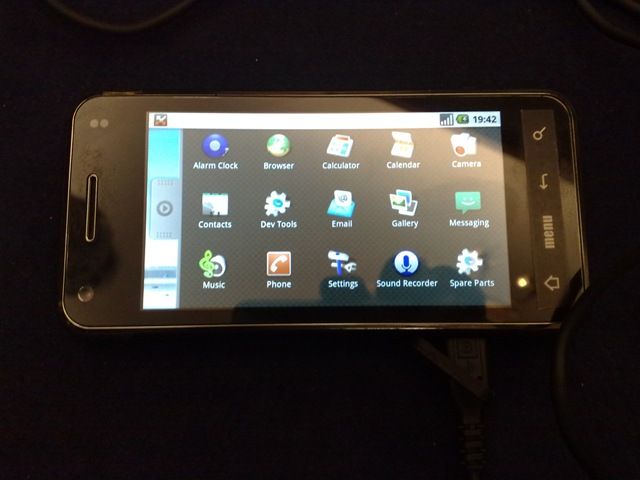
Lets not beat around the bush here. The Aigo P8860 MID is a slightly unpolished, slightly locked-down, slightly thin-app, early-adopters Mobile Internet device. Almost everything in the application suite is underwhelming and after the initial unboxing high, the experience takes a sharp dive. Thank goodness then, that the only real problems are software-related, fixable and have nothing to do with the excellent form factor and superb Intel Atom platform which make this device truly breakthrough. I can’t put it down!

IMG_7501We’ve all seen small devices before. High-end smartphones and low-end UMPCs have been around for a while but none of them have managed to combine true pocketability with acceptable battery life and a top-notch Internet experience. The Aigo does though. 4.8″ 800×480 screen, check! 3hrs online battery life, check! Useable keyboard, check! Powerful processor, check! In ‘Internet’ power-to-weight ratio terms, this is a winner. Read on…

(more…)

Ubuntu-UMPC, Ubuntu-MID 8.10 launch. Time to join the party?

Thursday, October 30th, 2008

You might not have seen the announcement that Ubuntu-mobile had a last minute name change to Ubuntu-UMPC based on the fact it was targeting mobile computers rather than the lower-spec Intel-based MIDs. Oliver Grawert, one of the lead guys on the Ubuntu-UMPC project, explains on his blog. It was just in time for the release of version 8.10 (AKA Intrepid Ibex) which was went live today.

ubuntulogo

Before I give you the links to the 8.10 versions (that I’ll be trying out ASAP) though, let me quickly give you an overview of the two distributions…

(more…)

Pocketables reviews the Aigo P8860 MID.

Thursday, October 30th, 2008

I’m going to keep this short otherwise I’ll end-up writing reams of thoughts (many negative) that are in my head about the Aigo MID I also have (thanks to Mobilx.) I’m going to save those thoughts for my own hands-on post.

aigo-kb Pocketables have posted a review of the Aigo 8860 MID.  Personally, I think she’s being too kind as, out of the box, this is like the Christmas present that wasn’t the one you asked for. The platform is fantastic but this product is not for the average consumer right now. Fingers crossed that there are some early adopters that believe in the platform (as I do) and have time and energy to start improving the basic software suite and that Midlinux take their feedback and pipe it back into the software updater. As with all of the Moblin implementations I’ve seen so far though, there doesn’t seem to be any formal channel for this which could put developers off.

More links, info, specs etc in the Aigo MID product page.

Aigo MID. Exciting! Live session later.

Tuesday, October 28th, 2008

Christmas came early this week. I’ve had three new devices in 24 hours! Yesterday it was the Everun Notes, today i’ve got the Aigo MID. It turns out I might have a new software build too (V030 5005) as there is a software updater installed that others have not got on their Aigos. Naturally i’m going through a software update as I write and myself and JKK will be putting the old and new side-by-side in the session later to see what the improvements are. I’m impressed that a new software stack has been released so quickly and it bodes well for the future.

Personally I’m very excited about the device. I’ve already declared my love for the Compal-designed form factor a number of times but had a few reservation about the software (see the M528 hands-on weekend report.) Midinux on the Aigo seems to be working well though. Coolfox is working (although FF3 would be better,) media player and IM, basic PIM facilities, BT DUN and file transfer over my N82 all with a nicely finished (although not iPhone-standard) UI but the most exciting thing are the possibilities that lie ahead. It’s really stirring ideas about how and where I can use this device and most importantly, what the growing Aigo owners community is going to do with this device. With the SFR Mi PC and the Gigabyte M528 due to launch soon and the Benq MID already out there with a similar Midinux software stack, I can see a big community of people jumping on board. Eee owners, Nokia Tablet Owners and people looking forward to the Open Pandora devices will know exactly what I mean!

Aigo MID. Live session 2200 GMT+1 (post time + 3hrs) at UMPCPortal.com/live

Ustream live recording is available if you’re thinking about buying the Aigo MID.

Thanks to Mobilx.eu for sending this evaluation device over.

Update: Mobilx now have a pre-order page up.

"The smartphone isnt that smart….They use ARM"

Wednesday, October 22nd, 2008

No prizes for guessing what company said that! ZDnet highlights it with "Intel slams ’slow’ iPhone ARM CPU.Gizmodo follows up. Engadget too (along with a lot of comments) and now it’s reached the front page of Techmeme. Oops!

I’m all behind Intel for their work in squashing the X86 architecture down to smartphone-sized levels with Moorestown and there’s an element of truth in the fact the the iPhone is underpowered for Internet apps but the way I see it is that it’s not really about CPUs anymore and as such, it comes across rather uncool to focus on it, especially when your partners are behind schedule on getting mobile Internet devices out of the door and you still have work to do to reach smartphone levels of power efficiency.

Both ARM and Intel have reached similar (consumer acceptable) territory in terms of watt/performance [*1] with their respective core architectures and yes, Intel’s solutions are probably more powerful and will definitely be attractive to the power-user but that’s a tiny part of the equation that goes together to make a thrilling consumer device. Intel’s main task now is about the integration of the CPU, GPU, controllers and radios into the smallest space possible with the highest platform efficiency. Both ARM and Intel’s ecosystem is highly capable of achieving that but there’s even more to consider. Industrial design,marketing and most importantly, software.

Intel are betting on one of the most fragmented software environments out there - Linux. They want to create a new, mobile-focused stack with it and surround it with quality ISVs. ARM’s partners want to use Linux too but they already have well-supported stacks with the same ISVs and big dev communities around them to. To drive a new Linux stack you need control, lead (in-house, paid, full-time) developers, Linux distribution partners and, if you want to take advantage of the existing application base, the skills of the people that wrote them. That means you need to be Linux-geek-cool and you need to show the dev community that you are a caring, sharing type. You also need to have an easy channel for them. An app, store. It’s critical now, not only for the developers, but to enable an important revenue stream in e-commerce for Intel and the partners. Moblin doesn’t have either of those two elements. Highlighting your advantages is one thing but making statements that attack the other side (where some of your community sits) won’t win you any hearts in the open-source world.

To be fair, I wasn’t there and haven’t been able to hear the comments in context and having interviewed Pankaj Kedia a few times, I know that he knows what he’s talking about. Add Steve Jobs’ recent comments into the mix and the stones that came from the ARM camp a few months ago and you can understand why these comments happen. Intel’s ultra mobile products are good and getting better and there may even be an Apple product in the works that gives Intel this confidence but when I hear comments like this, it just sounds cheap.

*1 The latest ARM-based devices have almost closed the 9-second penalty I demonstrated a year ago. See this article about the Archos 5.

Update. Intel has corrected its comments in a statemnet here.

Novell to develop for Moblin

Tuesday, October 21st, 2008

SUSE-Moblin for MIDs and Netbooks?

Another Linux software distributor has announced that they will contribute towards the Moblin stack. Novell, who has the SUSE Linux brand, made an announcement yesterday (although I can’t find anything on the Novell press pages.)

Novell announced today that it will participate in and contribute to the Moblin open source project. Novell will start immediately contributing to Moblin’s specific sub-projects, such as its desktop compositing manager and multimedia abstraction layer. As a result of Novell’s participation, Moblin will be able to leverage Novell’s large community of contributors and many existing open source projects. Novell will promote Moblin within these projects and continue its role in ensuring future innovations for all Linux* desktops, including Mobile and Connected Devices.

We now have Canonical, Xandros, Linpus, gOS, Wind River and Novell in the Moblin space. You could say that it’s great news and that it will make developing software for millions of MIDs and Netbooks easier but from what I’ve seen so far, every distributor, every OEM and every carrier appears to want it their own way so they can develop solutions at their own speed and put their own control on it. You could say that too many cooks are going to spoil the broth!

TradingMarkets.com

Gameloft joins Intel to bring more Entertainment to MIDs.

Tuesday, October 21st, 2008

brainpack Gameloft, the French company that develops for mobile platforms, has announced that they will be taking on the Moblin software stack and will be porting some of their games to it. The press release (not currently on the Gameloft website) states "We see the use of MIDs as a perfect platform to allow consumers to enjoy the attributes of Gameloft games to the fullest," said Alexandre Tan, Gameloft’s Business Development Director. "Intel Atom processor based MIDs offer the rich gaming experience our customers expect when on the go. Being X86 based makes it even easier and faster to port our games." Gameloft already develops for most mobile platforms including iPhone and Android.

GOS on Moblin; On a New Netbook; By the End of the Year?

Monday, October 20th, 2008

gos Intel scored 3 wins for Moblin earlier this year when Linpus, Canonical and Xandros announced that they would all move to Intels, Atom-optimised Moblin core. Then, just a month later, Intel decided to make big changes to Moblin by changing the build architecture and moving to an RPM-based software packaging system. I’m sure that didn’t please Xandros and Canonical (who both run deb-based distributions) and can’t have helped anyone because since then, the only thing I’ve heard about Moblin (V2) is that changes will feed in until the full release in Spring next year. I also heard from one Linux vendor that the process would be very slow. With OEMs wanting fast response on solid, user-friendly OEM builds for, potentially, millions of machines, its not difficult to imagine that moving to a new core build is not their top priority.

Maybe that will change soon though as gOS are announcing that they are going to have a Moblin-based build by the end of the year and that they are partnering with a ‘major’ OEM. Whether that means we’ll see Moblin on a netbook by the end of the year is open to question. A press release from Good OS states that David Liu, the founder  "will announce details of a new partnership with a major OEM using Moblin for Intel® Atom™ Processor-based NetBooks. David will be speaking from 10:20-11AM in Room 201B at the Taipei International Convention Center, and will provide more details about a gOS based on Moblin that will be available at the end of this year."

gOS aren’t new to the netbook space as earlier this year they shipped their distribution with the Everex Cloudbook. It didn’t appear to go down to well. Since then they launched gOS Space which was received well at Laptop magazine in May.

Keep an eye out for the gOS announcements tomorrow.

gOS website.

Update: gOS will be working with Mitac.

Ubuntu Mobile edition. News and First-boot Video.

Wednesday, September 24th, 2008

Update: I’m currently live on UMPCPortal.com/live testing this out if you fancy seeing it in action.

Update: Live session summary below.

Today, One of the Canonical mobile team members released details of a new distribution based on Ubuntu 8.10 (Intrepid) aimed at ‘MIDs’ with screen sizes from 7-9″

ubuntumobile

After a simple download and copy to a flash drive the Q1 Ultra booted straight into a live linux session running in RAM and everything seems to work out of the box. Touch, brightness, wifi, BT and more. This is exciting. There’s a full software suite withthe Moblin browser (Firefox + grab and drag), on screen keyboard, Open Office, Pidgin, Thunderbird and of course, through the package manager, a whole lot more. [Video after the break]

(more…)

Moblin news from OSiM. Fluendo and Qiro

Wednesday, September 17th, 2008

As the day goes on I’m sure we’re going to get more MID-related software news from Open Source in Mobile, the conference taking place in Berlin for the next three days.

The first MID-related press release comes from Fluendo, the media player software company. They’ve announced a codec pack for Moblin that will cover MPEG2, MPEG4 part2, VC1 (WMV 9) and H.264 decoding and will utilise the hardware decoding layers of Poulsbo.  "“We are so excited to see the Portable Media Player and Sub Notebook market expansion with GNU/Linux solutions. Our Fluendo codec pack, which now is a mix of software and hardware codecs, has been fully optimized" said Julien Moutte, Fluendo co-founder and CEO. That makes two media player applications in for Moblin-based MIDs now. Real Networks, who also offer a codec pack already have their application on the Gigabyte M528.

Qiro is a location based service that is already established and used by many in Germany. They’ve announced today that their service will be available on MIDs. From their website - "Qiro answers the most frequent question asked on the phone or by SMS: "Where are you now?". Qiro shows your friends in your vicinity on a digital map right in your device’s display. Find a buddy near you, contact him by call or SMS and meet up." Very similar to what Gypsii want to do. The (German) press release is available here.

Fancy pants, Orb announce products for Moblin MIDs

Tuesday, August 26th, 2008

Last week I listed 10 important ISVs that are working with Intel on Moblin-based software. Gypsii, Move Networks, Fring and a bunch of others. Today, you can add two more to the list; FancyPants and Orb.

FancyPants is a GUI development system. Announced in a press release that I missed last week you’ll see that they (that’s FST - Fluffy Spider Technologies) develop an API and software suite for implementing graphics and media-rich GUI solutions. Up until now, OEMS have had to employ the services of software houses to ‘finish’ the existing Moblin, Ubunti and Asianux stacks but this could help them turn around nice designs at lower cost and with a shorter time to market.  They’ve also produced a demonstrator running on the Compal JAX10 (Gigabyte M528, Aigo MID) which you have to take a look at here. Its smooth! I certainly wouldn’t mind having a bit of fun with this on my MID! [Article continues...]

(more…)

Moblin Open Mike session.

Wednesday, August 20th, 2008

In the open mic session, companies presented software solutions that are being developed for MIDs. Nice to see that the high-layers are being worked on. Its important!!

  • One Voice technologies - Adam Finch.  Voice recognition software. They want to enable a voice activated MID. IM, Media etc.
  • Gypsii - Jeff Lyn. Mobile, GPS-enabled social networking. Share user-created POI’s. MID-optimised UI.
  • ThunderSoft - ‘One stop software solution in MIDs.’ OS customisation, localisation etc. A software development company.
  • Fring. Mobile Instant messaging. Multi-protocol. Includes SIP support. Connectivity to common IM networks. Integration into Web2.0 networks e.g. twitter. Open API.
  • Move networks. Player for mobile devices. Apparently will be shown in keynotes tomorrow.
  • Mediacast. Delivery of non real-time media and software
  • Livecast,. Simple real-time broadcast from mobile devices.
  • Movial - Software service provider. White-label applications for re-branding. Internet browsers, media players.
  • Comverse -  Billing, messaging and voip. White label service for service providers.
  • Wind River - Operating System vendor. Creating a commercial grade Moblin/Linux OS for MIDs. Includes applications.

This is just a selection of the presentation given. Unfortunately I wasn’t able to catch the whole session due to an important showcase session that I’ll report on later.

Mobile Linux conference starts tomorrow.

Monday, August 4th, 2008

I’m still tracking as much as I can in the Mobile Linux world to try and bring myself up to a point where I can report with a respectable level of knowledge. Everyone I talk to though, seems to have differing opinions. Its an incredibly fragmented sector and I completely understand those that are simply ignoring all the fuss going on at the core level and focusing on the high-level, OS-agnostic application development environments.

Over the next three days we all have a good opportunity to learn more through the Mobile Linux Conference that is taking place within the Linux World Expo. That’s assuming that people are going to report from it but with all the hype going on about Android, Apple and others, I’m sure there’s going to be some serious focus on it. You can track Exhibitor announcements through this page where you’ll already see some news. I’ll be tracking it continuously over the next three days so if anything significant crops up, i’ll make sure I relay onto the front page here.

ram LinuxDevices.com have pulled out the important info about the keynote speakers and sessions which include one from Ram Peddibholta, the Director of Open Source Technology Center, Intel who will specifically talk about Moblin and Atom. I wonder how that will be received among the attendees, most of whom will be be coming from the smartphone world. Intel is a new player here and it’s going to be a tough sell for them.

Source:LinuxDevices.

Who’s next on the Moblin distribution list?

Monday, July 28th, 2008

Thoughtfix brings us the news (from The Register) that Moblin will be moving to a Fedora-based distribution. Thats quite a core change in architecture that is bound to upset Canonical and Xandros who have been working on Atom-optimised distributions and have also committed to make a Moblin-based version for netbooks. I suspect that Moblin will run the two builds side-by-side for a while. Dirk Hondel told The Register that "there was no falling out with Ubuntu, but the move to Fedora was a technical decision based on the desire to adopt RPM for package management."

Here’s a list of some of the current distributions running on Atom netbooks.

  • Suse on MSI Wind and HP Mininote - RPM based
  • Xandros on Eee PC - DEB based.
  • Canonical base system (Ubuntu Mobile) for MID development - DEB based
  • Linpus Lite on the Acer Aspire - RPM Fedora Based (Acer)
  • Asianux / MIDinux base system for MID development - RPM based

Only Ubuntu Mobile and Asianux are running the Moblin core so far but I’m sure we’ll hear news at IDF next month. I wonder if SuSE will make an announcement.

If support moves towards Moblin, what happens to the VIA and AMD-based devices? Can VIA and AMD contribute drivers for inclusion? Apparently Moblin supports non-Intel platforms so I guess that’s a possibility and seeing as some of VIA’s linux drivers are already open, there’s nothing stopping a Moblin distributor from dropping them in.