Tag Archive | "tablets"

Deutsche Bank to Investors: Intel CloverTrail Tablets can Compete

Tags: , , , , ,


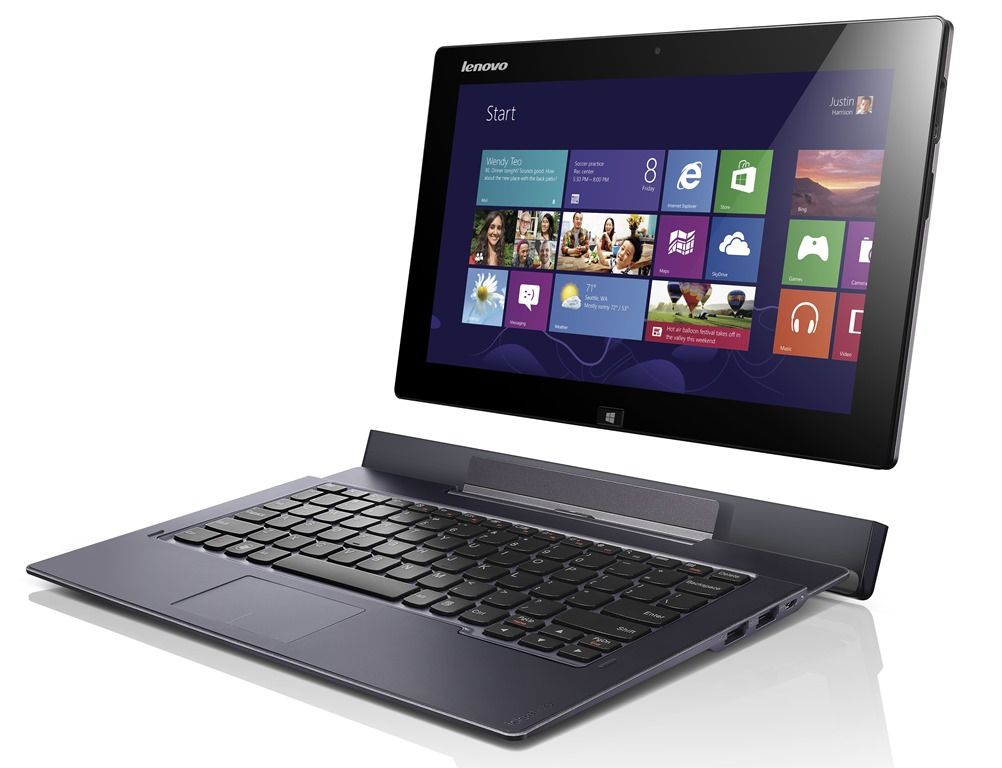
IdeaTab-Lynx-2Early reviews of CloverTrail devices are positive and that’s making investors and analysts sit up and take note. Deutsche Bank have just issued a note to their customers saying some very positive things about the platform and notes that it is competitive against ARM-based solutions.


Read the full story

Changing My Tablet Loadout, Iconia A100 is My New 7 Incher — Video Impressions and Photos

Tags: , , , , , , , , , , ,


Early last week, I received my notification that my HP TouchPad order was going to be one of the final production run we have all heard about, and that it was expected to ship in 6 to 8 weeks. This stuck in my craw for a few reasons. I had seen the charge from HP flutter back and forth between pending and then disappear for several days. I thought HP was actually trying to fulfill my order out of current stock. While the TouchPad is a case outside of the norm, my usual schtick is not to let people hold onto funding for an order for product that I am not going to receive for several weeks. When I put my order into the HP Small & Medium Business site during the TouchPad firesale, I originally received a notice of intended shipment two days later, so I thought I was ordering from stock. None of this is to say that I cancelled my TouchPad order because I felt HP had dropped the ball. I cancelled my order because I had lost interest in the TouchPad in the face of not getting it immediately, and I had other issues to deal with as well.

While I was ecstatic at getting HoneyStreak to run on my Dell Streak 7, the experience was not without its issues. HoneyStreak is a custom ROM that implements Android 3.2 Honeycomb on the Dell Streak 7. The major thing that was corrected was my Streak’s constantly dropping Wi-Fi connection, but I also received a boost in battery life. However, I lost a few things like the external SD card reader. Keeping the Streak 7 as part of my kit became called into greater question as the number of apps that I wanted to run as part of my routine were found to be broken or partially functional under the Honeycomb ROM. I experienced problems with Gallery, IMDb, and then Google Books. At the end of the day, the partial functionality of my collection of apps on the Streak 7 went beyond what I was willing to bear. My plan had been to run HoneyStreak on the device until my TouchPad showed up, then replace the Streak 7 with the TouchPad. When the HP date moved 6 to 8 weeks to the right and my problems with the Streak 7 increased, I decided it was time to make a different call.

Before I go any further, let me say that the issues with HoneyStreak were likely not insurmountable. I did not hit the XDA forums to see what issues others were having or what work-arounds had been figured out. For all I know, there was an updated version of HoneyStreak available. DJ_Steve, the code’s primary author, has been curating the build since he got his hands on 3.x earlier this year. However, the demands of school have been increasing, and, for the devices that I am going to employ, there is just not as much time to tinker. Loading the custom ROM was a cool thing to do during one soft-spot in my summer semester schedule, but I could not afford continuing maintenance and tinkering. I needed something stock, which is really where I live anyway. So my conundrum was: a Dell Streak 7 which was borderline unusable with its stock install, a custom ROM load that was not sufficiently functional when interacting with some of my more important (or at least frequent) apps, and the planned replacement suffering a 6 to 8 week delay in delivery.

The decision I made was to first cancel my HP TouchPad order. I decided I would be better off taking that $150 and  putting it towards a device I could get my hands on now. I then ordered an Acer Iconia Tab A100. I was very satisfied with my Acer Iconia Tab A500 so far, so the concept of the same device in a 7-inch form factor was appealing. While I awaited the arrival of the A100 from TigerDirect, I flashed the Streak 7 back to its stock install. Well…almost. I actually replaced some of the image files with some from the Wi-Fi stock install. I am not sure exactly how much difference there is, or if that difference even matters, but I will say that for the short time I had with the Streak 7 after the roll-back, I was no longer seeing the Wi-Fi disconnects that I had been before. I also saw a trend indicating even better battery life than I had seen when the device was running Honeycomb. I can only say that I saw these improvements as trends that hopefully prove to be truly improved functionality on the Streak 7. After the rollback to the stock OS image, I only had about 12 to 14 hours with the device before I handed it off to a potential buyer to demo over the weekend.

You can see and hear some of my early impressions of the Acer Iconia Tab A100 after the first 24 hours of use in the embedded videos below. I do some comparisons between my other two Android tablets, the Motorola Xoom 3G and the Acer Iconia Tab A500. My apologies for the low resolution  and framing. The only thing I had available to shoot video with this weekend was my Sony point-and-shoot camera. I have also dropped some pictures in for viewing. So far, I like what the A100 is bringing to the table in its 7-inch form factor. It is a huge improvement over the Streak 7, and a good compliment to my current set of mobile gear options. I will be posting later short-term and long-term reports as the device gets put to more use.

httpv://www.youtube.com/watch?v=F5qA3KBJ3w0

httpv://www.youtube.com/watch?v=7r_v3DGsS4o


Sony Lets Media Get Their Fingers on New Tablets [video]

Tags: , , , , , , , ,


Sony S1 Tablet

Some members of the media were granted access to a Sony event held in Germany yesterday. Front and center at the event were the Sony S1 and S2 Tablets (which were first announced back in April), both of which take a differentiated approach to the tablet solution. Quite a few sites got some hands-on time, so let’s go through some of the general impressions.

As one would expect, Sony seems to have nailed the hardware design. The S1 is a “full-sized” 9.4 inch tablet running Android 3.0 Honeycomb. Most of the press seem to feel that its design invokes the feeling of a folded newspaper or magazine. One item of note is that the rear of the device is textured, which should result in better grip. I think a lot of tablet manufacturers fail to recognize the importance of grip in a tablet device. Good grip can compensate for a device that might otherwise be deemed too heavy.

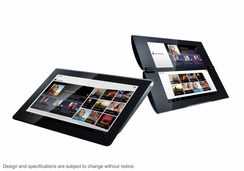
In stark contrast to the S1′s design, the S2 features two 5.5 inch screens, and folds into a clamshell position for transport. It also currently runs Android 3.0 Honeycomb. I suspect that the actual OS version at launch might be a step-up of the 3.x-series by the time the S1 and S2 ship. Sony was mum on specs today. However, they did announce that the S2 will launch running on AT&T’s 4G network. AT&T has an HSPA+ network now, and is deploying LTE networks this summer. No one from the press appeared to get specific word on which variant the S2 will support, or if it will support both.

While most 10-inch Android Tablets are deploying with 1200 X 800 displays, the S1 has a 1280 X 768 screen. Despite the slightly lower resolution, the report from Germany is that viewing angles were good from both side and overhead perspectives.

Both devices are Playstation Certified. The jury is stil out on whether or not this feature is truly value-added. It certainly has not hepled reception of the Xperia Play, which debuted to lukewarm reviews.

This Is My Next caught a solid video of the S1 and S2 in action:

All-in-all, the hands-on reports seem to indicate positive interest. Of course, the proof will have to wait until the actual launches. No one is really certain how the Sony proprietary customizations of the Android OS (Quick View and Quick Touch) will be received. Sony’s Android solutions have not been hits so far, neither have they been complete failures. We’ll definitely let you know if these devices hit the mark or not when they release later this year.

Top Tablets Together, Live

Tags: ,


This is totally unplanned so it should work out perfectly!

Update: The Live Session is over.
I’ll be writing a follow-up soon but please check out the recorded videos on YouTube – They’re well worth watching.

Late notice: Sascha has turned up in my neighborhood with the Playbook, Transformer and iPad2. I have the Tab 7, HTC Flyer, and Iconia Tab A500 in the studio so it makes sense, while we have the opportunity,  to go live!

We are live right now! Meetmobility.com/live

The chat is open already so if you’re looking at a tablet purchase in the next weeks, get over there now because this is a rare opportunity to see the best. The tablets aren’t bad either!

Spread the word.

@chippy and @Sascha_p on Twitter for latest information.

Official HTC Flyer Intro Video

Tags: , , , , , , , , , , , , , ,


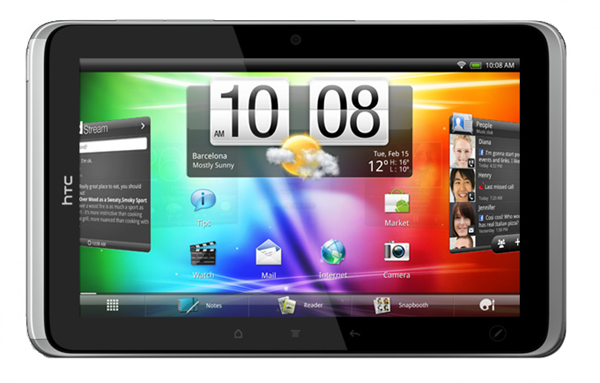
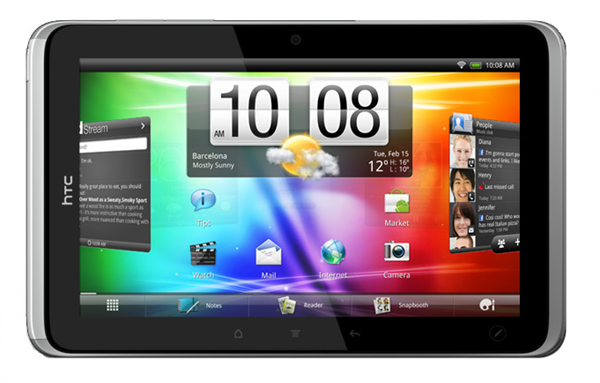
htc flyerJkk (via SlashGear) posted this video of the HTC Flyer tablet earlier today. It gives a good idea of how HTC expects people to use their first Android tablet (though we can’t forget about the HTC Shift!). None of what you’ll see in the video is footage of actual use though, it’s all proof-of-concept. Have a look at the video below, and scroll further down to see Chippy’s brief inking test with the device at CeBIT.

The video shows off the HTC well, but it’s important to look through the marketing speak. After some time with HTC’s ‘Sense’ UI on Android, I’m not looking forward to the version that’s designed for tablets. It looks like they’ve bulkified their already-chunky widgets for use with the bigger screen.

The section about gaming is very interesting but will probably go overlooked by most because the video didn’t give a lot of info about it. HTC has made a sizable investment in the cloud gaming service OnLive, according to SlashGear, and there will be a version of their controller than can connect to the HTC Flyer and allow you to play console quality games through it. There’s also a virtual on-screen controller option but that’s pretty much a joke if you are trying to play any real-time game. This will be the first Android tablet with OnLive integration and could give HTC an advantage over it’s competitors if the service stays exclusive to HTC. With the service you can be gaming on your computer, then pause the game and pick up right where you left off on the Flyer, that’s pretty darn cool.

It’s clear that HTC has taken a lot of inspiration from the LiveScribe, and they are saying that inking and notes will be integrated with Evernote which is really good news. The closer that HTC can work with Evernote, the better. Evernote has a lot of experience with (PC) tablets and note taking. I’m just hoping that the integration will be sufficient to create wholesome workflow. Without thorough integration, people are still going to have to lug their computers around to work anyway, which sort of defeats the purpose of attempting to relegate everything to a tablet. Google Cloud Print could also be an important piece to the all-in-one productivity puzzle that HTC appears to be aiming for.

As for the ‘write anywhere’ capability, it may be less useful than it seems. After looking at Chippy’s test with the inking (video below) it appears as though as soon as one writes on the screen, it immediately takes a screenshot and then annotates the screenshot, instead of actually interfacing with the content on the screen. That’s just a guess though and it’s early software, so we’ll have to wait and see how it really pans out.

One thing that I’m not happy about with on the Flyer (other than the ugly white plastic on the back) is the lack of pen-silo for the stylus. Despite how much they’d like to say that the Flyer is totally designed for inking, I don’t know how convinced I am if there is no way to store the stylus on the device. Folks are not going to want to haul that around as a separate piece, especially if they don’t use it all the time.

Here’s Chippy’s brief hands-on with inking on the HTC Flyer:

Meet:Mobility Podcast 63 – Honey Now, Fusion Later

Tags: , , , , ,


Meet:Mobility Podcast 63 is now available.

JKK (JKKMobile), Chippy (Carrypad) and special guest Al Sutton (Funky Android) talk in depth about Honeycomb and some of the tablet and netbook news from the last 2 weeks including Fusion, WebOS and Galaxy Tab 2

Listen, subscribe and download at MeetMobility here.

Does The Market Need More Windows Tablets?

Tags: , ,


The readers here at umpcportal are generally a productive bunch. Many of you have been following the swiss-army knife of mobile computing, the handheld windows pc, for years and judging by the comments here, I know that a lot of you know exactly what you want.
Given that you’re an intelligent bunch I wanted to ask you your opinion on Windows Tablets.

Intel have just announced a run of Windows tablet PC’s for 2011 and we can expect them to be on both the Pinetrail and the new Oaktrail platform. Weight is likely to be 800gm and battery life no more than 5hrs given the size constraints. Capacative  screens are likely to feature heavily and you can guarantee that there will be more than one overlay package included that is supposed to make Windows 7 finger-friendly.

My position is much as it has always been. Mobile PC’s have their place but the requirement for full desktop operating systems is going down, not up. Sure, with a marketing push there might be some sales to be had but that’s nothing to do with ‘requirement’ right?

And what about the tablet form factor? Is that the best form factor to be putting out with a mouse-driven OS?

I’m interested to hear your views and specifically, thoughts about the following questions.

– Is the requirement for Windows 7 Tablets going up or down?

– Is the tablet form factor the best for a full handheld pc?

- What features are needed to increase the requirement of Windows handheld devices?

– What are the major selling points of a Windows handheld PC?

- Will marketing Windows Tablets as consumer devices be a good long term strategy?

Looking forward to your thoughts.

A Look at the Tablet Spectrum with Shanzai.com

Tags: , , ,


shanzaitabs I like these guys, and not just because they’ve got a load of cool tech to play with! Shanzai.com appear to have some good contacts in the trade and a lot of experience with the market over there in the East. I’m almost in agreement with them on the ideal tablet size too. You may have a different opinion but check their article and video below before you make a decision.

Why There Isn’t an iPad Alternative

Tags: , , , ,


smartdevices Continued from Twitter for  @alsutton @beantin @mkearley2008 and others that were maybe a little surprised at my tweet this morning…

My current stance on iPad alternatives – There are none.”

I couldn’t answer the twitter responses in 140 chars so here’s a more detailed, and I hope, understandable explanation.

Consumer Internet device success continues to hinge on applications. It’s the reason that AppUp exists, that Nokia will invest 10m into developer incentives in the US, why Samsung is throwing money to Bada developers and why Chrome OS will have a web app store. It brings critical ‘value-add’ to a product for customers, incentivises (is that a word?)developers and provides revenue opportunities for operators. It really is a killer application and only one vendor has got it right in this space so far.

While the hardware and design for most consumer internet devices [as I write, this mostly means tablets] is the same and one could argue that there are, from a visual and usage-case perspective, many choices, only one device has the application ecosystem that gives it the ‘value-add’.’ There isn’t another stack of silicon, hardware, operating system and services that provides this and there won’t be until well into 2011.

Android is a fantastic alternative *opportunity* of course but having done more testing than most on large-format Android devices, (I cast a glance over to the Toshiba AC100) I can see that current applications are still focused on the small screen. There aren’t any compulsive large screen games, video creation, music creation or even productivity apps feeding through that consider the larger form factor, longer battery life and often, more powerful CPU and GPU of a consumer internet device. Why should there be? Android V2.x doesn’t provide the hooks for large-screen app development and Google limits the use of their Market to phones (and large phones.) I also think that AppUp is a good opportunity. There are now 1000 apps in the store that are written with a larger screen and CPU in mind. Most are monetised and there’s potential for much more to happen on MeeGo (not forgetting Ovi) during 2011 but right now, can anyone name me a ‘complete product’, from silicon, through design, operating system and applications ecosystem, that offers the same as the iPad?

We used to jokingly call the iPad a large iPhone but the application store has given it differentiation. In the Android world, that differentiation option hasn’t even been enabled yet. Android tablets with the application store really are large phones and until Android is enhanced and Google widens the doors to the market (and possibly creates a large-format application suite) the solution has a limited future and doesn’t offer an alternative to the iPad.

There’s one other point I want to make. If you’re looking for an alternative to the iPad, there isn’t one. If you’re looking for a different product that looks the same then there are some choices out there. Unfortunately, in this consumer internet device/tablet market, I don’t see many people defining their requirements before choosing a solution. I see the product desire growing through application desire (and style, of course) and not connectors and micro-sd card slots.

That’s just my opinion so feel free to ramble and rant below! We might give vendors something to think about in their next product planning meeting!

Update: I always encourage thought about personal requirements. This ‘chooser’ tool i’m working on (currently in Alpha) shows 4 leading tablet devices and allows you to set your requirements and see a ‘winner’ based on public ratings. It’s not a foolproof way to choose a device but it’s a good way to start thinking about requirements. Ipad, Galaxy Tab, Viewpad 7 and Dell Streak Chooser Tool.

Confirmed: Chrome is for Netbooks. Is Android 3.0 for Tablets?

Tags: , , , , ,


We’re getting a clearer picture of the operating system strategy from Google today as PCMag reports on Eric Schmidt’s closing keynote at IFA in Berlin. Apart from talking about the future of search, location search, fast search, personal search and the growth in mobile web and smartphones, he confirmed in a Q&A that Chrome OS is targeted at netbooks.

The next question is ‘what is a netbook’ but at least the strategy for Chrome OS aligns with what Google said on day one. If we consider Chrome OS to be a very fast way to access Google search and web applications and add the web application layer/web app store then you have a basic framework for a web-based user interface and application layer for a simple Linux-based PC. Interestingly, that Linux-based core could come from the Android space, from Linaro, from MeeGo or any of the other mobile-focused Linux platforms and could even contain an Android environment as part of the user-layer but we get the impression that Google is going it alone on this as a separate project. It will be interesting to see what netbook manufacturers pick it up and work their drivers and customisations into it because at the moment, the Intel/Nokia-backed MeeGo appears to have the better position.

With Chrome OS targeted at netbooks it would be easy to summise now that Android 3.0 is for next-gen high-end smartphones, tablets and smart-books. We need to be a little careful though because Google is also putting a lot of effort into TV and Eric Schmidt confirmed in his keynote that Android is a part of Google TV. Could this be the target for Android 3.0? Whatever the strategy here, the key point is that Google will open Android up to new screen sizes. Its a clear signal for developers to start thinking about large-screen applications.

When will this happen? Chrome partnerships will be announced later this year but Android 3.0 timescales are less clear.

With companies like Samsung, Dell and Toshiba moving real products into this space now and with Samsung pushing for 10M sales of the Galaxy Tab [That seems way too high to me – Chippy] there must be people at Google thinking about speeding up the Android 3.0 process. Major changes to Market and their app suite would be needed so this isn’t a minor task but with HP, Nokia, Intel and others breathing down their necks, it has to happen soon.

See also: Question Marks that Remain Over Q4 Tablets

Sidenote: Intel are working on an X86 port of Android for their ‘always-on’ capable platforms for 2011. These platforms are targeted at the 4-10” screen space and so clearly something has to happen with large screen support. With Intel and a key member of the Open Handset Alliance and a close Google partner (Google TV for example) we should also watch for clues from that side of the camp. Intel are likely to have X86-Android ready for mid-late 2011 and this, according to Intel, will be offered up as an official X86 Android. Some of this Intel/Android work is also likely to be part of Google TV.

The full and very interesting keynote is available here.

Via netbooknews.de

Meet:Mobility Podcast 54 – Q4 Warm-Up

Tags: , , , ,


Meet:Mobility Podcast 54 is available.

In this show recorded on Friday 20th August 2010, Chippy, JKK and guest, Joanna Stern (Engadget) attempt to round-up 6 weeks of mobile computing news and talk about the netbooks and tablet possibilities for Q4 2010

Full show notes, listen and subscribe links over at Meet:Mobility.

You can also find the podcast on iTunes (Please, please help us by rating the show on iTunes.) You can also subscribe via RSS.

Meet:Mobility Podcast 54 – Q4 Warm-Up

Tags: , , , ,


Meet:Mobility Podcast 54 is available.

In this show recorded on Friday 20th August 2010, Chippy, JKK and guest, Joanna Stern (Engadget) attempt to round-up 6 weeks of mobile computing news and talk about the netbooks and tablet possibilities for Q4 2010

Full show notes, listen and subscribe links over at Meet:Mobility.

You can also find the podcast on iTunes (Please, please help us by rating the show on iTunes.) You can also subscribe via RSS.

The Question Marks That Remain over Q4 Tablets.

Tags: , , , , ,


smartdevices Bob Morris, head of the mobile computing division at ARM, is telling us that the Dell Streak is just the first in a line of more tablets that will arrive from various vendors in time for Christmas. I guess if anyone should have the inside info on this it’s Bob so it’s a good sign.

We’re clearly looking at Android as the de-facto Q4/Q1 2011 operating system solution for most of these tablets and although Froyo with Flash 10.1 is a great starting point, there’s still a significant number of big question marks that keep me sceptical. I know Nvidia, ARM and others have talked about waiting for Flash and ‘fall’ but there’s more to it than that.

How about Google Market? This is becoming more secretive than Adsense or Google’s Search algorithm and one wonders just how much money Google are now making from it. The Dell Streak got Market by being a large well-branded company that effectively designed a Android smartphone but what about the others? Every device that didn’t have marketplace/Gmail/contacts/maps so far has been highlighted as an incomplete Android product. Sideloading and 3rd party app stores aren’t the fix either. The second problem is that there needs to be a new suite of >=WVGA, large screen (mdpi-large in Android speak) apps before the first reviews start otherwise the whole Android tablet ecosystem will be tainted with poor early reviews. Bad news never seems to fade from search engine results so Google needs to re-build their app suite for mdpi-large (or even mdpi-maxi as ‘large’ only goes to 5.8” screens.) If Android is to have a chance at getting more productive applications in the store (as Apple have already done) Google also need to give developers a chance to prepare new versions of their apps. That can only happen if Google stimulates the developers by announcing Android 3.0 or a new phase of tablet-focused work. Give us a sign Google. Apple gave some devs a three-month head start before the product was launched. Although this was a restricted program, it was instrumental in creating a good day-1, week-1 buzz.

Link: Overview of tablets available, announced and expected

If I was an Android Tablet OEM right now I’d be considering waiting for even more than the above.

  • Cheaper Cortex A9 platforms and proven Android hardware builds. Cortex A8 is still good enough but to make a serious marketing splash, dual-core A9 is now needed.
  • Clarification on what the hell is going on with Chrome OS (touchscreen support looks likely)
  • Concrete information about Android 3.0 (Apps suite, developer take-up, information about ARM-optimised kernels)
  • IDF (Sept) and MeeGo 1.1 (Oct) (To asses competing product timescales)

Racing to get a product out for Christmas sales could be too risky and the whole ‘smart’ tablet market could suffer if a big name gets it wrong. Like you, I want products NOW but i have the feeling that the iPad will be a year old before we see any serious competitors.

Intel’s ‘Tablet’ Silicon = OakTrail = Moorestown-W?

Tags: , , , , ,


There are a lot of Intel-related rumors and unqualified information that fly about and one of my jobs is to mash all that up and try and work out what’s happening so that I can ‘skate to where the puck is going to be’ as Steve Jobs would say. It allows me to do a lot of predicting. Device battery life, OS strategy, performance estimations and more.

A version of Moorestown that supports Windows will be announced in 2010 and it will allow UMPCs running desktop operating systems to shrink another 20% while gaining another 20% battery life but products using this may not appear in 2010. They could also be focused at the embedded market which puts a question-mark over price and small production runs for UMPCs. [Predictions for 2010]

There are three lose ends relating to Intel’s ultra-low-power platforms and it’s time to tie these up and make a prediction before I head to Computex (Where all will be revealed anyway. Why do I bother?)

1 – Mooly Eden announces a ‘tablet’ platform.

2 – Oaktrail will replace Menlow

3 – Rumors of ‘Moorestown-W’ that will allow standard builds of Windows and Linux distributions to run on the latest Intel ultra low-power platform.

I have two trains of thought right now. Either Intel will announce a new netbook platform or a new Menlow-like Win7-optimised platform for ultra mobiles.

New netbook platform.

Intel have to improve the video capabilities of their netbook platform. There’s no video playback acceleration at all and with flash 10.1 enabling smooth YouTube video on devices that do have video decoding, the netbooks are going to start to look dated. Battery life needs to be improved too. Smartbooks will, again, make netbooks look old and dated. Always-on battery life is also a consideration. If Intel want to unify the architecture from smartphone through embedded, TV and netbook platforms they’ll also need to drop the GMA3100 GPU and put something like an enhanced GMA500 in. GMA600 lives in the Moorestown platform, how about GMA700 with 800Mhz clock and VP8 decoding on board for 2011?

But is it too early for a new netbook platform? I think so. Cedar Trail is likely to be a more realistic thought. Late 2011.

New Win7 ‘handhelds’ platform.

Menlow has been with us in products since mid-2008. It got a refresh last year but during its lifetime we’ve gone from mainstream XP to mainstream Windows 7 and it’s time for an update in order to keep up. As with Lincroft (the CPU on the Moorestown platform) and Tunnel Creek (the CPU on the Queensbay platform) optimisations in size and performance can be made by bringing the GPU and memory controller on-board with the CPU and into a 45nm process. Interestingly, Queensbay/Tunnel Creek does this and has been already been labeled as the follow-on to the embedded (extended lifecycle) Menlow products so if we think about the similarities between that and Moorestown, it’s difficult to imagine the platform being anything other than a variation on this. What was rumored as the Oaktrail platform should look very similar to Queensbay and should be just enough for a smooth Windows 7 multi-touch performance in a handheld form-factor. In effect, another UMPC platform.

Here’s what I estimate the platform will look like: Highlights, highlighted.

  • Integrated Atom CPU (optimised to give 20% more per-clock performance than Menlow) with GMA600 graphics, Display controler, Memory controller
  • Connected to controller (USB, I/O ports) via Intels DMI bus in a similar fashion to Moorestown.
  • GMA600 will be clocked at 400Mhz (double the performance of Menlow)
  • GMA600 will include h.264 video ENCODE (720p) and up to 1080p decode. Flash 10.1 will be supported under Win-7
  • Hardware encryption/decryption for SSL.
  • 5mp camera interface.
  • Turbo Boost features will allow the system to run at higher-clock for short periods.
  • SATA 300 Interface (meaning much faster SSD speeds)
  • 4GB DDR2 RAM at 667 or 800Mhz
  • HDMI output
  • Hyperthreading
  • Intel VT support
  • TDP 5W (platform) Unchanged from Menlow.
  • Average power drain down by 30-50% (effective TDP lowered)
  • CPU speed with turbo boost to 1.9Ghz.
  • No power-gating support as on ‘smartphone’ Moorestown
  • Standard BIOS support
  • Windows 7, Linux and MeeGo support.
  • Availability 2H 2010. Products early 2011

If Intel and Microsoft have been working well together, we might even see some special Windows-7 always-on state but that’s possibly too much to hope for. I don’t expect Intel to say anything about netbooks but to me, this look like a platform that could evolve to 32nm and dual-core easily and thus would become the next netbook platform for 2011/2012. Current target markets for the product would be unchanged from Menlow. I.e. MID and UMPCs but the marketing will change and you’ll see a lot of ‘tablet’ talk. I don’t see it as a huge segment but it was something that Intel was doing anyway so it makes sense to ride on some of the hype around at the moment.

Summary:

The ‘tablet silicon’ is likely to be Oaktrail/Moorestown-W, another UMPC-style platform. It could enable 10”, 15mm tablets weighing 600gm running Windows 7 and giving 6hr battery life. Not only would it enable tablets of 600gm but it would enable very thin and light netbooks, slider and clamshell handheld devices running Windows 7 to a point where it could be a better Windows 7 experience than on a netbook (assuming 1.9GHz max clock, double GPU power) and therefore, could evolve in to the next netbook platform at higher clock rates in a 32nm process. Note that the Intel AppUp store would run on this platform. Its sister product, Moorestown will continue to be aimed at even smaller devices with ‘always-on’ capability. I.e. ‘smart’ devices. These would only be able to run Android or Meego however. All products are likely to have CPU’s in the Z6xx series and are likely to be marketed as a family that fits inside Intel’s idea of a ‘Continuum.’

Note: This is all educated guesswork. All will be revealed next week at Computex. I’m attending under the ‘Intel Insiders’ program and should get some great access to products, information and people.


Recommended Sites

  • Big Beach Our marketing advisors. Located in UK.
  • Carrypad Tablets and consumer mobile products
  • JKKMobile JKKMobile – Mobile computing and hacking – Partner of UMPCPortal
  • Liliputing Netbooks and small-form-factor laptoping – Partner of UMPCPortal
  • Ultrabook News Ultrabook products, specs and news