Tag Archive | "test"

Lenovo Ideatab Lynx Keyboard Dock First Impressions (Updated)

Tags: , , , , , ,


2013-01-22-1454

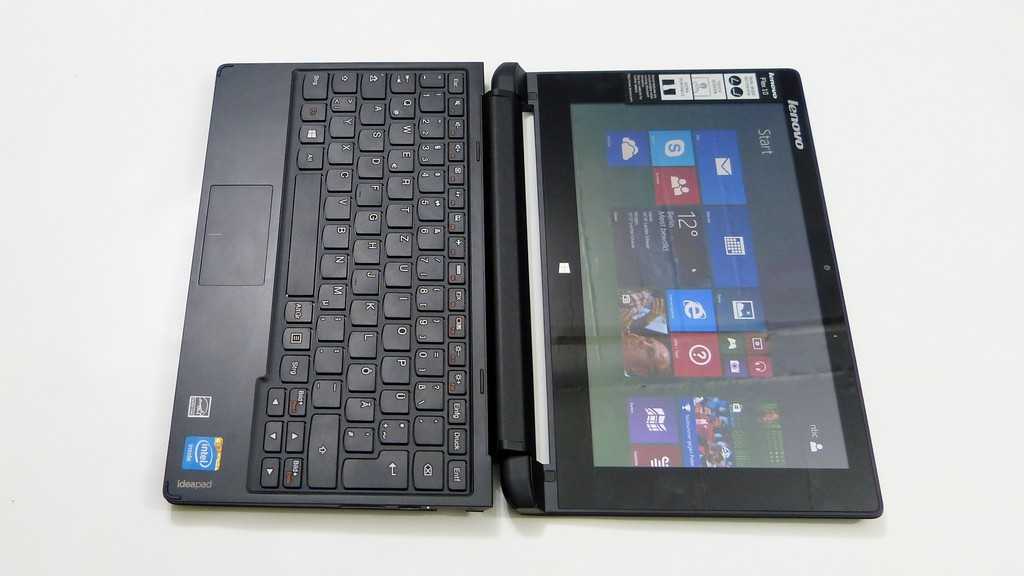
My son would like to introduce you to the Lenovo Ideatab Lynx keyboard Dock which completes the Ideatab Lynx order I placed last week. I’ve already put an early review out for the tablet but the review won’t be complete until I’ve spent some time with the keyboard.

The unit cost 150 Euro and includes keyboard, mouse, 2xUSB 2.0 and a micro-USB charging port.

This article has been updated after an extended testing session. See [update] sections below.

Read the full story

More Asus Transformer Prime Videos and Details

Tags: , , , , , , , , ,


The Asus Eee Pad Transformer Prime is shaping up to be a hot seller with its quad-core Tegra 3 CPU/GPU combo and its attachable keyboard. Just a few days ago, our pal Ritchie got his hands on the Transformer Prime and produced a great overview video of the device. Now he’s drilling down the specifics.

Ritchie has fielded a number of questions from folks interested in the Transformer Prime, and prepared a whopping 5 new videos for your viewing pleasure. We’ll drop one here, but if you’d like more, certainly go visit the post over at Ritchie’s Room.

httpv://www.youtube.com/watch?v=34REyjGuIis

Windows 8 Metro UI, Tablets and Mobility – Let’s talk about the Mis-Match

Tags: , , , , , , , ,


IMG_7659_thumb2Many of us have downloaded the Windows 8 Developer Preview to give it a test run and I think it’s fair to say that the most exciting feature to test is the Windows 8 Metro UI. Focused on touch, app-snacking, consumption and entertainment it has been an interesting product to think about in terms of mobile computing; real mobile computing. Getting the balance of UI right for both on-the-go and bum-on-seat activities hasn’t been achieved by anyone yet. Windows 8 is the big hope for that in the future.

Not only does Windows 8 introduce this interesting Metro UI and apps layer, it also approaches quick-startup and efficiency. In testing it over the last few weeks on four mobile devices, I’m not as positive as a was a month ago about the Metro UI although it’s way better than anything I’ve experienced as an overlay on Windows before and ultimately, I’m enjoying its responsiveness, sharing sub-system, full-screen Explore browser and dynamic nature. There are some serious issues to talk about though.

The first is that while Metro works on low-resolution devices, the apps won’t because they require a minimum of 768 pixels vertically. For the side-by-side snap feature, you need 1366 pixels minimum width. There are also major issues when working in portrait mode – something that isn’t really supported at all. The resolution restriction seems crazy when you consider the cost and size of 1366×768 screens. I don’t see anyone producing that at 7″ and as it’s not compatible with 1024×600, 100 million netbooks users are going to be left out.

[Ref - Screen size recommendations for Windows 8]

You might argue that we just need much higher resolution screens. I’ve tried Windows 8 on a 1280×800 screen at 5.8″ and yes, Metro apps work. Text might need a little enlargement here and there but it works. Some issues remain though. Touchscreens can’t be recessed otherwise it’s not easy to find the magic swipe that expose the hidden menus on the right and bottom left corner. Forget resistive screens. That’s not such a big deal considering the level of capacitive and digitiser deployment and it’s also not much of an issue for the classic Windows UI either as that’s the one you’ll be using who you’re docked at your desk. The other issue comes with cost and battery drain. High resolution screens are expensive to produce, especially if you want one that’s readable outdoors. There’s also the power cost in terms of the display electronics and the graphics power needed to control it. Given that most people are more than happy with 200ppi, a higher density in a 7″ frame is counter-productive, at least for large-font Metro. People with perfect eyesight may disagree with 200ppi but I regard it as a good trade-off point for screen design.


Metro-UI-Portrait-App_thumb1

Windows 8 Metro UI in Portrait Mode

It’s unfortunate that the developer preview is indicating that portrait mode isn’t encouraged. All the apps in the preview fail to work efficiently in portrait mode despite that fact that in portrait mode you get the best split-screen keyboard experience and preservation of screen real estate.

I agree with those that say portrait is useless on a top-heavy device of 2lb or more but what about 2013, 2014 when 10” Windows 8 tablets could be under 1lb and when even the 7” form factor could be possible with a hi-res screen?

To demonstrate what I mean here, I’ve made a video showing the Windows 8 developer preview on an ExoPC in portrait and landcsape modes.

Continued…

LG Revolution Unboxing and Flash Test (it handles 720p!) [video]

Tags: , , , , , , , , , , , ,


We’ve got the LG Revolution on hand and have prepared an unboxing video for you which also features a flash test. I’m happy to report (and somewhat impressed) that the LG Revolution has so far handled YouTube 720p flash video quite well. This surprised me because the Revolution is using a 1GHz Snapdragon CPU as opposed to Nvidia’s Tegra. Have a look below:

Samsung Galaxy Tab vs. Enspert Identity Tab Head-to-head Testing [video]

Tags: , , , , , , , , , , , , ,


galaxy tab vs identity tabIf you’re in the market for a 7” Slate, Samsung’s 7” Galaxy Tab is the undeniable leader in this area… but it’s definitely not the only device you should consider. Take, for instance, Enspet’s Identity Tab e201. This 7” device is nearly spec-for-spec identical to Samsung’s Tab, less a lower screen resolution, but it actually performs just as well and even beats the Galaxy Tab on some benchmarks. Have a look at the two in a head-to-head video below:

BlackBerry Playbook Goes up Against the iPad on Video

Tags: , , , , ,


playbookRIM has posted an official video on their BlackBerry YouTube channel and does a brief web browsing comparison with the Playbook [tracking page] and iPad [tracking page] side-by-side. It’s good to see the Playbook in the flesh rather than as a pre-rendered animation as it’s been seen up until now. Naturally, the BlackBerry PlayBook blows the iPad out of the water (otherwise they wouldn’t have shown it). But like a movie trailer, videos like this can make something look much better than it actually is. I’m not saying the PlayBook doesn’t appear to be performing well, but they were obviously selective about their tests. Check out the video below:

Detailed iPhone 4 vs. Droid X Camera Comparison

Tags: , , , , , , , , , ,


2010-08-09_19-29-18_983 IMG_1899

While I dropped some test images and videos comparing the iPhone 4 and Droid X myself, I wanted to highlight and article over at tnkgrl Mobile which has more comparison info and a detailed write-up of the strengths and weaknesses in the cameras of each phone. If you are looking for a phone with a good camera, you are definitely looking in the right direction with the Droid X and iPhone 4, but between those two, finding which one fits you might just depend on which type of user you are.

Droid X vs. iPhone 4 Camera Test (video and stills)

Tags: , , , , , , , , , , , , , , ,


While the Droid X [portal page] beats the iPhone 4 [portal page] in a straight-up megapixel to megapixel comparison by 3 megapixels (Droid X’s cam is 8 MP while iPhone 4’s is 5 MP), the iPhone 4 uses a fancy back-illuminated sensor, which enhances it’s ability to capture light, according to Apple.

The Droid X supports 720p HD recording, just as the iPhone 4, and interestingly, the Droid X has a mechanical shutter. The Droid X also has a dedicated two-stage camera button which focuses and captures, as well as a dual-LED flash. The iPhone has a single LED flash. Additionally, the Droid X can upload HD video directly to YouTube, whereas the iPhone 4 has to have the video put onto a computer and uploaded to YouTube for HD quality (Apple plans on updating this at a later time, so it’s a software restriction, not hardware).

Below I’ve taken some shots with both the Droid X and the iPhone 4 for comparison. The videos were both taken from the respective devices and uploaded to YouTube through a computer, just to ensure that no compression was taking place during the phone upload process.

Because this is a camera comparison post, I’ve bumped up the click-through pictures to a larger than usual resolution, so be sure to click on them for a more detailed view.

General

2010-07-20_14-58-59_401IMG_1879

Macro

2010-07-20_15-00-39_36IMG_18802010-07-20_15-02-37_611IMG_1882

High Light

2010-07-21_15-44-03_187IMG_1903

Medium Light

2010-07-21_15-44-37_101IMG_1904

Low Light

2010-07-21_15-48-05_917IMG_1908

Low Light (with flash)

2010-07-21_15-48-29_394IMG_1907

Video

If you have a powerful computer and you’d like to watch these videos side-by-side, give this link a try. Slower computers will likely stutter if you try to run both in HD at the same time.

The iPhone has somewhat of an unfair advantage as it has auto-exposure adjustment, while the Droid X requires manual adjustment in the settings menu of the camera app. All pictures taken with the Droid were at an exposure of 0 (it ranges between -3 and +3) but just for comparison’s sake, here is the Low Light Droid X shot with the exposure turned up to +3 along side the same iPhone 4 Low Light shot that you saw above.

2010-07-21_15-50-13_470IMG_1908

It’s hard to say which of the two has a better dynamic range, but the iPhone 4 seems to have more vibrant colors (not necessarily more accurate, however). The iPhone 4’s HD video also looks noticeably better than the Droid X’s in terms of sharpness and framerate, though the Droid X doesn’t seem to focus its camera before shooting HD video which is somewhat odd.

iPhone 4 vs. iPhone 3GS Camera Test, Video and Photos

Tags: , , , , , , , , , , , , ,


cam In the keynote that announced the iPhone 4 [Portal page], Steve Jobs told the world that the iPhone 4 features a 5MP camera. A decent bump from the previous iPhone 3GS’s 3.2MP camera, but still a far cry from some of the latest phones out there which are rocking 8MP cameras (see: HTC Incredible). Jobs was quick to also say that the iPhone 4 uses something called a back-illuminated sensor which is designed to capture more light than traditional smartphone sensors, to enhance low light performance. The iPhone 4 is also capable of recording HD video at 720p (1280×720) at 30 FPS, according to Apple.

Here I’ve got some comparison photos and videos from the iPhone 4 and iPhone 3GS cameras:

Video Recording

At the end of the video there is a link to the same video taken with the iPhone 3GS. Make sure you are watching in HD.

Real HD video and flash (YouTube) HD video are a bit different. The raw file is certainly of a better quality than what YouTube is showing, but you should still be able to get the gist of it.

Photos

I’ve taken a variety of shots with the iPhone 4 and iPhone 3GS. Be sure to click on photos to enlarge them for full detail. The iPhone 4’s flash is turned off in all photos. The iPhone 4 takes photos at a resolution of 2592×1936 while the iPhone 3GS takes them at 2048×1536.

General Use

iPhone 4 iPhone 3GS

Close Ups

iPhone 4iPhone 3GS iPhone 4iPhone 3GS iPhone 4 iPhone 3GS

Extreme Close Ups

iPhone 4 iPhone 3GS

Low Light

iPhone 4 iPhone 3GSiPhone 4 iPhone 3GS

Extreme Low Light

iPhone 4 iPhone 3GS iPhone 4 iPhone 3GS

For one, it looks like the iPhone 4 has better contrast than the 3GS. This is particularly apparent in shots of the pen, where there is a more broad range of blacks and whites in the iPhone 4 shot; on the corresponding 3GS shot, you’ll notice that the darkest black on the photo appears to cover more area instead of fading through a series of shades as the light and colors change.

Probably the best picture to see the difference in resolution is of the belt in the Close Ups section. This was semi-dark shot and the iPhone 3GS’s photo suffered because of it.

Special back-illuminated sensors are great, but just how much better is the low light performance on the iPhone 4? I might be able to dig up a technical answer, but let’s look at what it means in real world terms. Take a look at the first two photos in the Extreme Low Light section. On the iPhone 4 shot, you can see the lilies toward the bottom of the pond a bit better than the 3GS shot. Additionally, the pond’s surface is not as noisy in the iPhone 4 shot as it is in the 3GS’s, due to the enhanced low light performance.

Is this really a significant improvement? I would put my money on the fact that the majority of iPhone 4 users will not notice the difference between the iPhone 4 and iPhone 3GS cameras when it comes to photographs. Most user’s photos will either stay on the device, or be uploaded or sent somewhere at reduced quality. But for those who really use their camera, I think they’ll be quite please with the iPhone 4’s camera. On the other hand, the HD video recording capability on the iPhone 4 is a pretty clear improvement. The flash is also something to consider, though because the iPhone 3GS doesn’t have one, we didn’t use it in these shots (if you are interested in flash info, you’ll find it in our upcoming full iPhone 4 review).

iPhone 4 vs. iPhone 3GS Speed Test [updated: working video]

Tags: , , , , , , , ,


101_0676 Here’s a quick look at the iPhone 4 and the iPhone 3GS facing off head to head. I didn’t cover too much stuff in this video, so if there are more comparisons that you’d like to see, speak up in the comments, and do it soon; the iPhone 3GS is going away (far away) very soon.

Droid Browsing Speed Video. (And my comparison notes.)

Tags: , ,


Seeing as I’ve just declared the Archos Android Tablet as (possibly) the fastest ARM-based browsing device ever, it makes sense to show you someone else’s test on a similar platform. Engadget did a single Engadget page load test on the Motorola Droid which is running Android 2.0 on the Ti OMAP 3430 platform. (@533Mhz I understand.) The single-shot test is obviously not conclusive but it’s actually quite an accurate result in my opinion.

As you can see, the iPhone 3GS beats the Droid. 12s for the iPhone 3GS and 20 seconds for the Droid.

For the record, three cleared-cache attempts here with the Archos Android tablet resulted in a 14s average. Pocketables tested the same site and got 10.9 seconds (with 12.4 for the iPhone 3GS.) Clearly location will make a difference (Bonn to San Jose is a long way!)  but why is the Droid slower than both the iPhone 3GS and Archos Android Tablet?

The Archos Android Tablet uses the Ti OMAP 3440 which can run up to 800Mhz. 50% faster than the iPhone and Droid. That explains why the Archos device is faster. At like-for like CPU speeds though, the  iPhone browser is simply a faster browser; probably as a result of its single-tasking OS.

Intel comparison.

Here are the non-cached figures from Firefox3.5 on XP, on Intel: (Tests done today from Bonn over Wifi)

  • Menlow at 800Mhz (Flash disabled. Using Viliv S5 SSD): 12s, 9s, 10s (10.3 average)
  • Menlow at 1.3Ghz: 10s, 7s, 8s (8.3 average)
  • Netbook at 1.6Ghz (no Flash, SSD): 5s, 6s, 6s (5.6s average)

In this case, the Viliv at 800Mhz is slightly faster than the best test results from the iPhone 3GS and Archos Android Tablet but at the end of the day we’re looking at excellent browsing speeds across the board here that really should keep most people very happy indeed. I’m looking forward to re-visiting this subject with Moorestown and ARM multi-core Cortex A9 in 2010 though.

Source: Engadget.

Viliv S7 pics and battery testing

Tags: , , ,


s7r_1_12Full specs, details, news links and more at the Viliv S7 Portal page.

Pocketables.net picked up a story that has a nice cache of Viliv S7 photos from Korean site Lazion.com. In addition to the photos there are some impressive battery life figures from a few battery tests.

s7r_1_17

Viliv claims that the 2-cell 4700Mah battery can last for 9.5 hours and while that might be technically possible, some real-life usage tests have clocked in under that claimed time, but are still impressive.

Test: Video Playback – DivX 3.11 / Resolution 720×400 / bit rate 1.64Mbps / wireless – Bluetooth off / screen brightness maximum / max volume
Result: 6 hours, 13 minutes

Condition: Video Playback – XviD / Resolution 640×360 / bit rate 1.64Mbps / wireless – Bluetooth off / brightness medium / volume 20%
Result: 7 hours 28 minutes

Test: Korea@Home distributed computing client – Wireless LAN on / screen brightness maximum / sound off
Result: 5 hours 45 minutes

s7r_1_21 Check out the original article for more images.


Recommended Sites

  • Big Beach Our marketing advisors. Located in UK.
  • Carrypad Tablets and consumer mobile products
  • JKKMobile JKKMobile – Mobile computing and hacking – Partner of UMPCPortal
  • Liliputing Netbooks and small-form-factor laptoping – Partner of UMPCPortal
  • Ultrabook News Ultrabook products, specs and news