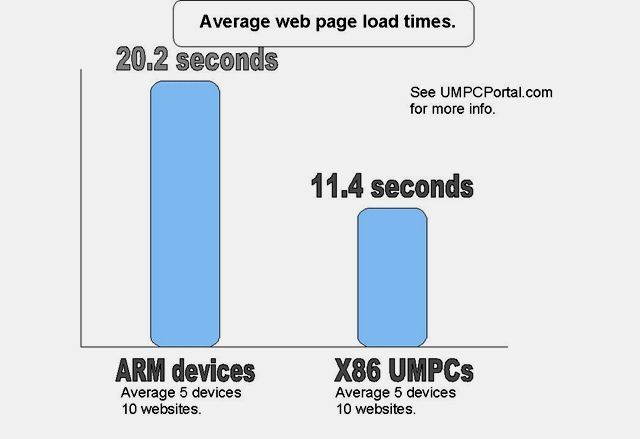
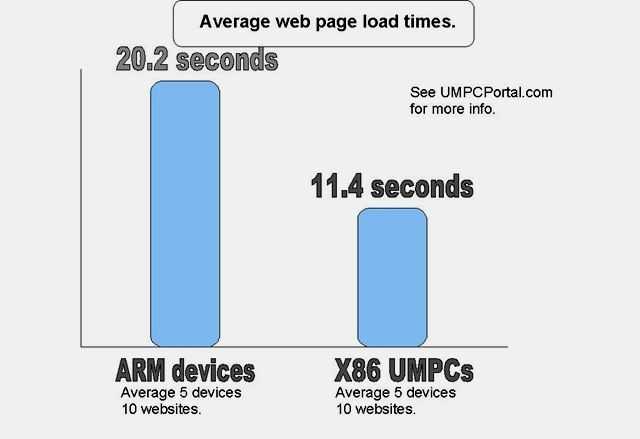
 Maybe I should have posted this article at Carrypad rather than UMPCPortal as it pertains to the progress that ARM-based devices have made in terms of browsing speed. Just two years ago I wouldn’t have given an ARM-based system a second look if I was thinking of doing an web-based work but now they are challenging low-end PC’s and enabling the sort of devices we cover here on Carrypad. So far, Intel haven’t quite reached down into this area of click consumer computing devices yet.
The question does remain though – What advantage would a 5″ or 7″ device bring over something like the Motorola Droid? Personally I want a 5″ device for an even better quality browsing experience, ebook reading, navigation, 1 meter video experience and a huge battery. It WILL be a second device but that’s fine by me be cause it means I don’t have to have a very expensive high-end smartphone as a 24/7 device.
Smartphones Break the 10-second Barrier. | UMPCPortal – Ultra Mobile Personal Computing.