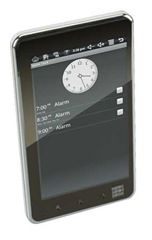
Tag Archive | "via"

VIA Mobile-ITX Product Announcement Is Re-Announced.

Tags: , ,


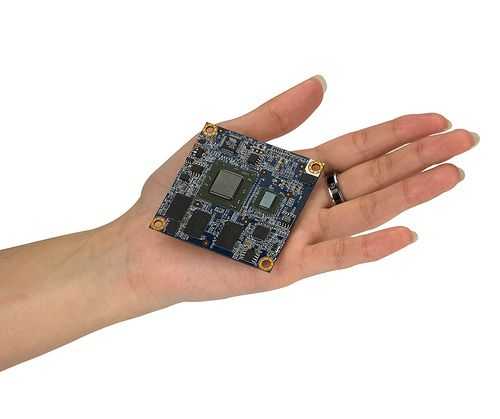
It was June 2007 when we first got excited about the Mobile-ITX platform from VIA. It promised PC-like performance in a small and efficient motherboard and it looked like it would allow slicker, more efficient UMPC designs. Since then, Intel introduced the Menlow platform which does pretty much the same thing. It allows handheld, efficient, low-power small form factor computers. Over 2 years later, VIA finally announce that the Mobile-ITX platform will….actually it’s difficult to say. If you read the press release, it’s presenting information on a product that will be announced in Q1 2010. As for availability, maybe it takes another 2 years!
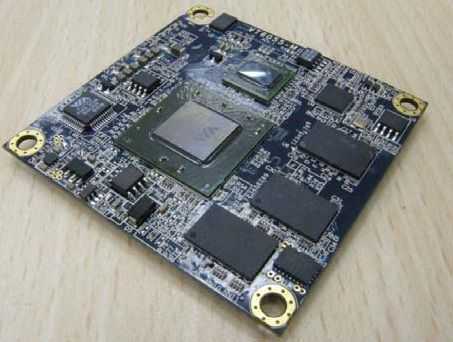
mobilx-itxmobile-itx

As least it will give Intel some competition and help to drive prices down but with UMPC operating system choices narrowing to Windows 7, this (1Ghz indicated) C7-based processing board (not complete motherboard) might be too little, too late for ultra mobile PC fans. Mobile-ITX looks like it will be a better fit in the place where VIA are aiming it; the embedded market.

via Pressemitteilung: VIA Mobile-ITX Referenzboard offiziell vorgestellt | Netbooknews.de – das Netbook Blog. [English press release and images available]

More information available from VIA  here. White Paper [PDF] here.
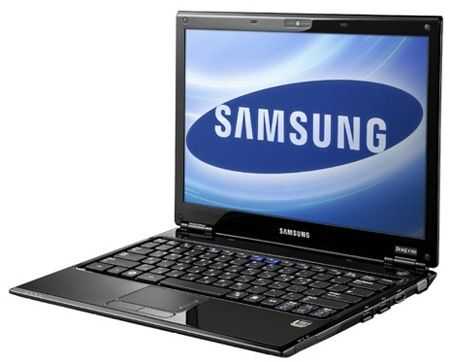
How To Be Mobile (and Win an NC20)

Tags: ,


samsung_nc20 Step 1. Go to HowtoBeMobile.com

Step 2. Highlight your favourite HD YouTube video and tell them why.

Step 3. Wait to see if you’ve won an NC20

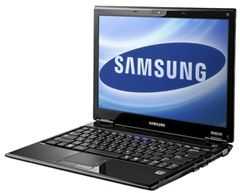
TheNC20 might not be the most ‘ultra mobile’ PC out there (at 4.7 times the weight of a UMID for example) but notebooks in this bracket can make quite a good low-cost travel option so definitely come into the ‘mobile’ bracket.

All the details are at HowToBeMobile. Good luck!
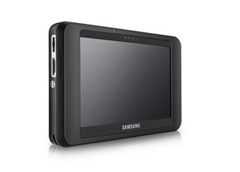
Samsung Q1EX, Via Nano Tablet, Performance Tests and Round-Up.

Tags: , , , , ,


q1ex-3.jpgThe Samsung Q1EX is due to head on to its next review appointment so it’s time for me to round-up my coverage of  it by giving you some performance test results and an overview. It should at least give a reference point for future VIA Nano-based products and an idea of where this device fits in. It’s a difficult device to position but when compared with peer devices, it offers improvements all round at a good value price.

Overall performance levels as measured by CrystalMark are in the netbook class which is good for a UMPC. I saw CPU results coming in at what I’d normally expect from a 1.3Ghz Atom Z-series CPU but similar clock-for-clock results when compared to, say, the older Pentium-M. It’s nearly twice as powerful as the VIA C7 at the same clock speed according to the results. The summary is shown below and the details can be seen here.

Read the full story

Samsung Q1-EX Video Demo from ‘How To Be Mobile’

Tags: , , , ,


Smaller than I thought it would be and looking well designed (as always with Samsung devices) it’s the Samsung Q1-EX being reviewed by VIA’s ‘How To Be Mobile’ crew.

LaptopMag reviewed this recently and weren’t too impressed that the split mini thumboard was missing but as I said before, I think this one is targeted at a specific industry segment where it will fit perfectly with dedicated software. It may not be the perfect consumer UMPC but I’m eager to test it out with my ‘business’ hat on and see how the VIA Nano and VX800 chipset perform.

Previous articles on the Q1EX here. Full spec from Samsung here.

Source: HowToBeMobile

The 15% of netbooks you don’t see; from VIA

Tags: , , ,


Netbook 3G have lined up a stack of VIA C7-based netbooks that are expected to be shown at the Lunch@Piero’s event on the 9th.

VIA are said [cached news item] to have between 10 and 15% of the global netbook market. Most of the sales are outside the western markets so we rarely get to see the big picture. This showcase halps to put some perspective on it.

Via (French): Netbook 3G » CES 2009 : VIA présente des netbooks encore avec le VIA C7-M !.

Via’s Dual-core Nano. Nano 3000. VX800 successor

Tags: , ,


PCWorld have just published an article that gives a nice overview of where the Nano is going. There’s a version ‘3000′ due for Q3 which will be that same as the curent Nano’s but will use an optimised manufacturing process. Then, in Q4, VIA will have a dual-core version ready.

In adition, Richard Brown of VIA, says the there’s a new chipset in the works and that the C7 will still be used for the current netbook market. As we thought, the Nano is really going to be for low cost laptops rather than anything ultra mobile but there’s still a chance that a low-end Nano will allow OEMs to offer higher-end versions of UMPCs.

What we really want to know is, where’s that Mobile-ITX product? It’s due for Q2 2009!

Via’s Dual-core Nano Processor on Track for Late 2009 – PC World.

Dr Mobile’s VIA Nano Freestyle Mini.

Tags: , , ,


drmobilefreestyleIt’s been known for a while that VIA would likely air their first Nano-based products at CES and Lunch@Piero’s is their traditional venue. VIA confirmed all this in a post recently and so it didn’t take much to throw all the keywords together and come up with this product that will be launched on the 8th. Its the Dr Mobile Freestyle Mini, an 8.9" screen device that you will probably recognise as the VIA Openbook reference design. 

It uses the VIA Nano (clock unknown) with the VX800 chipset with integrated video decoding which is an advantage over the Intel netbook platform. You’ll be able to get this with 3G/Wimax options. Availability is ‘now’ according to the website but we suspect, that Dr Mobile has put this page up a few days too early!

Obviously there are going to be comments about the keyboard not being optimal, battery life (the 4-cell battery appears to be very low capacity for a netbook) and questions about the 3D performance (it should be a lot better than the old VX700 chipset as it uses a new engine) but as with most of these netbooks, it will come down to price and availability.

The most interesting aspect for ultra mobile fans is to find out what sort of power drain the VIA platform has. Could it be used in smaller form factor devices like 7" slates to enable a fast Windows 7-ready platform for pro-mobility users? Could we see low-cost UMPCs performing like the Q1 Ultra Premium? Fingers crossed for some quality hands-on soon.

Dr Mobile is here (where you’ll also find an interesting 11.6" mini laptop)

You can find out more about the VIA Openbook through this page.

Another Android port – HP2133 Mini Note.

Tags: ,


hpandroid Why are we all so interested in Android on netbooks? Personally I think its the possibility that a major Linux distributor with a big ecosystem and a strong following and brand power could finally push through a useable alternative to XP on the low-end netbooks, UMPCs and MIDs. Intel are working on the same with Moblin and arguably have more resources working on it but it doesn’t have a single brand, it doesn’t have a distro-wide app store, hasn’t received the same media attention and it hasn’t passed into the hands of hundreds of thousands of, mostly very happy, owners yet.

Here’s another look at Android on an X86 platform. It’s a VIA-based HP 2133 mini note. We’ll all ask ourselves ‘why’ again but I think if Android carries on getting this much attention, it won’t be long before we say ‘when?’

Read the full story

VIA, Microsoft launch ‘Bazaar’ program for white-box netbooks.

Tags: , ,


The blogosphere tends to be fairly polarized in terms of netbook reporting. In the western world, where most of the English-speaking bloggers, readers and advertisers are, we have a slick range of style-oriented designs that are mostly based on the Intel Atom processor. In other parts of the world, the situation is rather different. The focus is on functional, simple and extremely low cost PCs.

In developing countries, where SMS’ are used to agree contracts between remote communities, the idea of a 10" screen with a keyboard alone would be something new. It wouldn’t matter what’s inside it as long as it provides a basic computing experience and that’s why many people believe (including myself) that the big wave, the big sales numbers, will be in China, India and Africa.

VIA already does good trade in these areas with simple designs based on what we consider to an be ‘old’ C7-M processor. Microsoft already does trade with starter editions of XP, again, something we consider to be an old OS but it looks like the two companies want to get together, with a bunch of others, to really optimise their products and marketing for this segment with a new initiative called the Global Mobility Bazaar.

VIA Technologies, Inc., a leading innovator of power efficient x86 processor platforms, today announced the’Global Mobility Bazaar’ (GMB), an innovative industry infrastructure program aimed at driving the rapid global adoption of affordable mobilecomputing devices.

Through the GMB program, VIA is partnering with over 15 GMB manufacturers and infrastructure partners in China on the development of a wide variety of mini-notes, netbooks, and notebooks based around VIA’s ultra low power processor platforms.

Equipped with the Microsoft Windows XP operating system, these systems will deliver an optimized mobile computing and Internet experience across a variety of form factors with screen sizes ranging from 7" to 15".

[full press release. Website]

There are two things to note here. 1) XP looks like it will live on and in this program, you can bet that its being given away for next to nothing. 2) This looks like an X86-only initiative that will be used in positioning against ARM-based netbooks.

I spoke to VIA about this program yesterday. They are obviously excited about it and rightly so. They’ve seen what happened with sales of cheap mobile phones into developing countries and they want to stimulate the same thing with low-end portable computing devices. Sandisk, AMI (BIOS) and other partners are involved and we should be seeing the first netbooks becoming available at the end of December, they tell me.

Digitimes: Nano in HP, Mobile-ITX before Q2 2009.

Tags: , , ,


Article 1 – Digitimes reports that HP ordered 500,000 VIA C7’s and also placed an order for Nano CPUs.

Article 2 – Mobile-ITX is on target for Q4 2008 or Q1 2009.

I’m afraid the source trace ends at Digitimes for this story and there’s really not much detail here. The Nano order could be for Notebook PCs or it could be for a new HP2133. It’s anyone’s guess. As for the Mobile-ITX news, it’s just another target date. Sit-back and keep waiting with your fingers crossed!

Gigabyte M704 after 3 days. Unboxing, hands-on, happiness!

Tags: , , ,


It looks like Engadget had a slow news day on Sunday as they highlighted the full-fat video presentation I’d prepared for the visitors here. “Gigabyte M704 unboxing video excites reviewer, may put you to sleep” was the title. The cheeky monkeys! Fortunately, people that are actually interested in UMPC’s appear to have got something out of it and see that it’s quite an interesting UMPC. The refresh over the U60 has turned this tiny 7″er into a rather useful and good-value device. Where the 1st-gen Gigabyte U60 had an 800×480 screen, this one has a far more useful and much brighter 1024×600 screen and where the mouse pointer on the U60 was difficult to use, this one is far more useable. Add the noticeable performance improvements that the 1.2Ghz CPU brings over the former 1Ghz version and the device has turned from borderline option to serious top-5 ultra mobile computing choice.

IMG_6559.JPG

I’ve been using the M704 non-stop for the last 3-days and can’t really find any show-stopping problems with it. The fan could be quieter, the keyboard could do with a backlight, a little more styling would help and a weight reduction down to sub-600gm would help with the long-term two-handed use that is often the case due to the nice split-keyboard but that’s about it. The XP-based system (it’s a special Gigabyte build optimised with larger font sizes and pre-installed software which, as I understand it, means it can be sold until Jan 2009) is swift enough for all browser-based work and most media files. I was surprised to see a 6mbps WMV file playing with very few frame drops in the Nero8 demo software. Battery life is a true, working, 3 hours. The slider mechanism seems to be tighter than the one I tested on the Medion UMPC (version) the WiFi is strong and with the docking station, it turns it into quite a nice low-end home PC. I’d even argue that the M704 is more suited to netbook-style operations than netbooks themselves as it’s half the size, 75% of the weight and is far, far more fun although that really depends on how much typing you want to do.

m704-1
Old and new. Gigabyte U60 and Gigabyte M704. Note the control key changes.

In Europe, the pricing seems to be very competitive. Certainly in Germany, if you buy an M705, you’re getting a device that’s more useful than a Q1 Ultra for about 75% of the cost but it’s double the cost of most netbooks here Sure, you get the touchscreen, 60GB disk, XP, Bluetooth and ability to add the GPS and DVB-T modules and docking station, but you’re still paying a few hundred Euros for the extra portability and niche nature of this device. As for U.S. pricing, we’ll have to wait and see what the local pricing is.

I’m continuing to add my testing notes and thoughts to this forum thread but the video, while long, probably gives you a better overview. [Click through to full article]

Read the full story

VIA OpenBook. Inside the Cover.

Tags: , ,


Tim Brown of VIA’s marketing group shows the insides of the OpenBook in this video and explains one of the important features, the dual PCI-Express Mini slots. Having two slots means that it’s easy for OEMs to offer multiple versions of the device with very little effort. Wifi, Bluetooth, GPS, 3G and even Wimax cards can be added to offer customers exactly what they need in different parts of the world.
 

TongFang first with Nano-enabled mini-note.

Tags: , , ,


tongfang10.2 is just out of the UMPCPortal coverage range (yes, the ASUS 1000 won’t get coverage here either) but this is worth noting due to it being the first device we’ve seen that will be using the VIA Nano processor.

Aving snapped the pic but there’s no hands-on or word on price or availability. I’m a little confused as to why they have the old VX700 chipset in there though. A man’s Nano-based PC requires VX800 and no less!!

Images of the device, which doesn’t look bad at all, over at Aving. Take it from us, the translation is hardly worth reading!

Sony, VIA, Mininote. Marketing cock-up?

Tags: , , ,


This could be a major marketing cock-up!

A prototype of the laptop, based on the open-source Via OpenBook reference design announced last week, was shown by contract manufacturer Quanta Computer at WiMax Expo, an exhibition being held alongside the annual Computex show in Taipei.

The laptop will begin shipping during the third quarter, Quanta said.

A check of the laptop’s properties confirmed the laptop is based on a 1.6GHz C7-M processor from Via and listed Sony as the manufacturer. When the existence of Sony’s name on the machine was pointed out to a Quanta executive manning the booth, he quickly closed the properties window and declined to explain why Sony was listed as the manufacturer.

Sony executives were not immediately available for comment.

Update: PC Advisor has the image of the Sony Manufacturer tag.

Source: PC World.

VIA Openbook Mini-Note. Detailed Report. Images. Q&A.

Tags: , , , , ,


VIA_OpenBook_3_M (Small)With a launch obviously timed to coincide with Computex next week and positioned to take advantage of the incredible growth in the low-cost mobile notebook market, the OpenBook Mini-Note, on first look, seems to be a much better product opportunity than the Nanobook was. While the Nanobook and Eee PC launched together one year ago, it was the Eee PC that stole the show based largely on price indicators but also on looks. With the OpenBook Mini-Note, VIA appeared to have attended to the important issue of aesthetics and using what looks like it could be a masterstroke in the pin-compatible Isaiah CPU, extended the market placement from low-cost netbook right up into an area of the market that neither Intel’s Atom or Core can currently operate in. Low cost, highly mobile Vista notebooks. Read on for images, video, Q&A and analysis.

Read the full story

Via launches OpenBook mini-note Reference Design

Tags: , , , ,


Its Nanobook version II! Bigger, more powerful, more stylish, using an open-source hardware design and aimed right where Intel have left a gap. The VIA Openbook reference design that you might recognise as the Cloudbook Max, has just been launched.

openbookopenbook2

The VIA OpenBook mini-note reference design introduces a host of new innovations, including the next generation of VIA Ultra Mobile Platform, based on the VIA C7®-M ULV processor and the new all-in-one VIA VX800 digital media IGP chipset. Together, this ultra compact, power efficient platform delivers richer computing and multimedia features, including a stunning 8.9” screen and greater video playback support, in a compact and stylish clamshell form factor that weighs just 1kg.

The VIA OpenBook features a flexible internal interface for high-speed broadband wireless connectivity that provides customers with the ability to select from a choice of WiMAX™, HSDPA and EV-DO/W-CDMA modules appropriate to their market. In addition, under a unique collaborative approach, the CAD files of the external panels of the reference design are offered for download under a Creative Commons Attribution Share Alike 3.0 license to give customers such as OEMs, system integrators, and broadband service providers greater freedom in tailoring the look and feel of their device to meet the diverse needs of their target markets.

There’s three important things to take note of here.

  • The CAD files for the hardware design will be available to OEMS which will really help reduce cost and time to market.
  • There are two internal module options. This provides excellent flexibility for radio options. Just slot in a new module and you have a 3G-enabled product for your market
  • Not mentioned in any of the launch materials – the Isaiah upgrade path. You can bet that this was designed with Isaiah in mind and that it will scale to desktop-replacement speeds when Isaiah CPU is available as a CPU option

I see a device that can compete in the ULCPC space (XP Home, sub $500) with the VIA C7-M and the enhanced VX800 chipset and very importantly, a device that can create a brand new space for low-cost premium Vista and 3G-enabled devices when combined with an Isaiah CPU in the near future.

More analysis coming up on this later but in the meantime, you can read more information at VIA new website – www.viaopenbook.com

Update: Specs and links now being tracked in the OpenBook product page.

VIA moves to 45nm late 2009

Tags: , ,


The news broke a few days through Digitimes that VIA are set to migrate their CPU’s to 45nm production by late 2009. Moving to a smaller production process means watt usage should decrease or that processing power can be increased without increasing watt usage. This move is remarkable because their first 65nm CPU (Isaiah architecture) is yet to ship.

The Isaiah CPU is said to be introduced with a 2Ghz clock speed which makes it unlikely this will be a ULV CPU, as we already speculated before. When a ULV version will be available has not yet been announced but it is not expected before the end of 2008.


News Discussion

Commenting continues long after an article has left the front page. Keep up with the latest updates on our discussions page

Become a Member of UMPCPortal

Join the forum and join us for discussion about all aspects of ultra mobile computing. Ask questions about devices and usage scenarios and learn from owners and experts. Join up here. If you're already a member, login here.