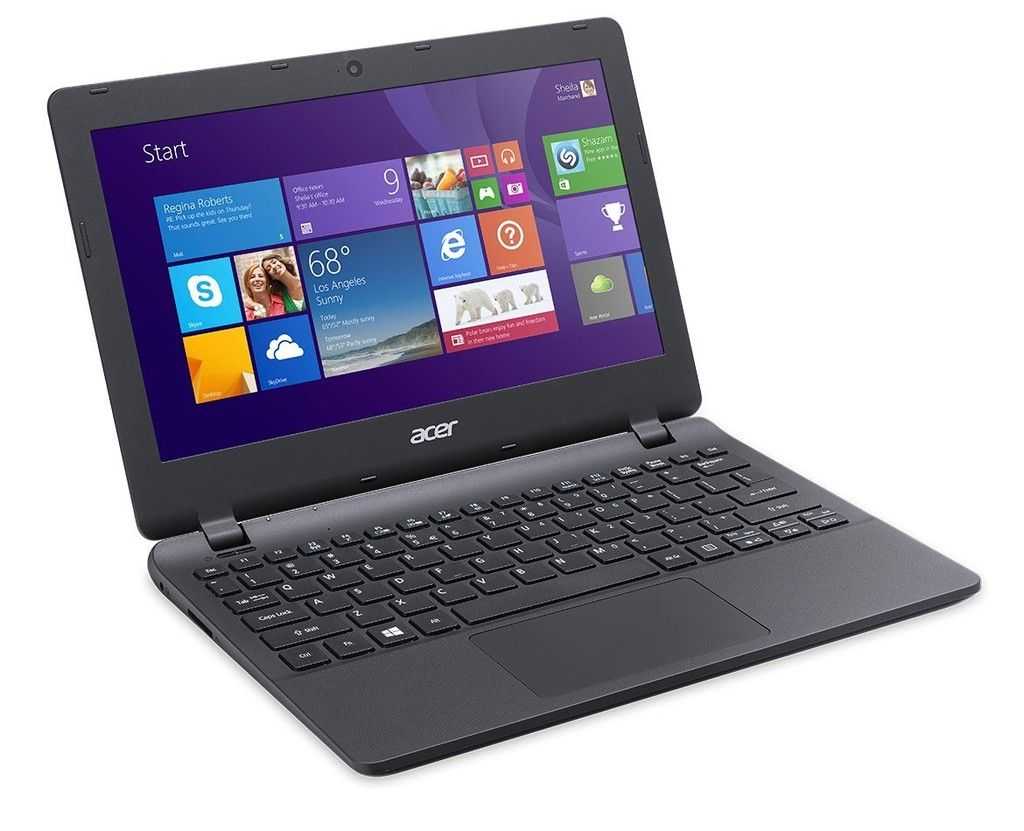
A few days ago I highlighted July 3rd as an important one on the netbook calendar. Aldi Süd, an important supermarket chain will have the Alkoya Mini in stock as part of one of their Thursday offers.
MSI-Wind.de now reports that not only Aldi Süd will be carrying the product. Aldi Nord has 2000 shops and will also be offering the device. If that wasn’t enough, Aldi’s Austrian chain, Hofer, will also be carrying the device.
I’m starting to wonder just how many devices are going to be available in each shop. An average of 10, which would be around 40000 units, is probably not going to be enough but even with 10 per shop it seems like quite the production-run challenge. My advise to anyone in Germany is that you’ll need to be among the first through the Aldi door to stand a chance of picking one up. I’ll be in SchwarzeWald on July 3rd and am planning to be in the Freudenstadt (Peace-town!) Aldi just to see what’s going on. I’ll probably pick one up if I see one.
The Akoya advertising is now up on the Aldi Süd website. Image from ComputerBild who have a review of the Akoya Mini
I dropped a quick line about the upcoming Panasonic Toughbook UMPC the other day, and now that more details are available it looks as though the device is actually shaping up to be a very well rounded piece of hardware. Before I start listing specs, lets keep in mind that this is a rugged ultra mobile PC that Panasonic says surpasses military specifications for hardware of this class, meaning that it can withstand a decent amount of punishment in the areas of shock, temperature, moisture, and others. Now to the good stuff.
The device is called the Toughbook U1, and is running a 1.33GHz Atom CPU. The only storage options are SSD flavored with your choice of 16GB or 32GB. The SSD only option makes sense enough; no moving parts in your storage medium means less components that could potentially break. The unit can also be equipped with 3G, either EV-DO or HSDPA. GPS is an option and of course there is the obligatory Wi-Fi and Bluetooth as well. Now for some of the more interesting features. Apparently the U1 is fan-less and will rely entirely on passive cooling to vent heat. Having an SSD surely cuts down on thermal output so this may be another reason that there is no HDD option. The efficient Atom CPU also contributes (or depending on how you look at it, doesn’t contribute) to the levels of heat that enable the U1 to forgo the fan all together. Probably the most interesting feature of the U1 is its dual batteries. Two battery slots which each hold a 2-cell battery enable the device to stay running while you swap out the battery that isn’t being utilized. This mean you could keep the machine running while swapping in as many batteries as you have. Panasonic says 3-4 hours of use for each battery which makes for a very nice 6-8 hours of use across both batteries. Expect to pay a premium price of around $2500 USD for this rugged UMPC.
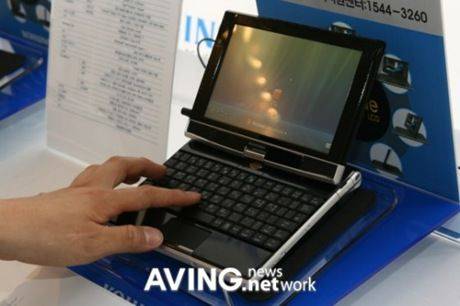
Kohjinsha will launch the S130WG, a slightly modified SC3 (DMB receiver instead of 1-Seg) in Korea.
Local price for the GPS version will be just under $1000. For more information check out our Kohjinsha SC3 coverage and the SC3 datasheet. We should have one of these a few days after they are launched in Asia (expected 2nd week July) so check back for hands-on news.
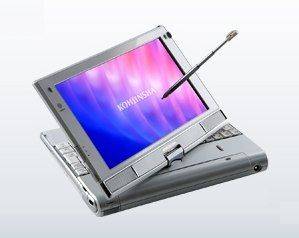
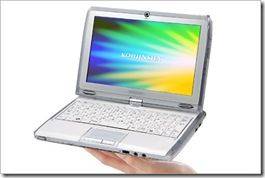
Aiming for features rather than price are the new Kohjinsha SX and SC convertible mini-notebooks that build on the Inventec/KJS convertible designs that came before with an upgraded screen, new CPU and chipset and a badly needed re-style. Rather than use Intel’s low-cost platform as seen in netbooks, they will use the low-power Atom Silverthorne CPU at 1.33Ghz and ISH (Poulsbo) chipset to provide long battery life rather than low price.
The SC model (image left) is a 1024×600 7″ screened device with a very small casing (smaller than an Eee PC 701), 798gm weight and 2-cell battery giving a 3.2hrs battery life. (average 7W drain), single camera, GPS. This is an interesting option for Ultra Mobile fans. Full SC specs through this translation link. [read on…]
Despite my definition of a ultra mobile PC reaching up to 10″ devices, I never call the netbooks UMPCs! Maybe it’s because the term ‘netbook’ say something about the low-end features rather than the size. In the podcasts, we’ve been talking a lot about how small the 701, 900 and 901 are compared to the other netbooks but it’s not until you see an image like this that you realise the real difference. To most people it’s nothing. Both require a bag. But if you’re on a plane, in a train or the back of an automobile, those mm’s could make an important difference.
The other problem with all this sizing talk is that if you really need to be ultra mobile, then wait a while. MIDs are coming and could be an even better solution for you. Granted, with 3G, GPS and miniature keyboard mechanisms on board, they won’t be as cheap but it might pay to be able to use the device in even more locations, without any sort of bag.
Forward Concepts, the company that last week produced one of the first detailed studies on a ‘Mobile Internet Device’ product category have been interviewed by Electronics Supply and Manufacturing about the report and have brought some good questions and information about the segment to the surface. For example, I didn’t know (or had I forgotten?) that HP are developing a MID, that Qualcomm are working on 15 products and that TI are working on ‘at least a dozen.’ I don’t expect that all of these designs will reach the market but even a handful from each company will knock Intels ecosystem back a step or two. Forward Concepts also predicts that the MID market will grow to 40 million units in 2012 with North America, Europe and Japan each generating roughly 20% of the sales.
What is a MID? What is a UMPC?
Forward Concepts puts this proposal forward for the definition of a MID and UMPC: [after the jump…]
Expansys have just put up their Aspire One prices in the UK (and for delivery EU-wide) with the Linux version plus 512MB and an 80GB HDD going for just 244 pounds. There’s no mention of the SSD version yet but with the 80GB version going for that price, only those looking for ruggedness or the best possible battery life will be waiting. Prices are also available for XP and 1GB versions here. (affiliate link)
As for delivery dates, neither Acer or Expansys can fill me in on that one yet but I’m working hard on it, if only for my own order! (I’m probably going for the 1GB, 8GB Linux version when it turns up.)
A number of Acer Aspire One articles came to my attention last week that I have only just got round to reviewing. The first article from PC Professionale includes a video showing the internals of the Aspire One. There are a couple of important points to note (that come from a translation by Blogeee.net) which are the SIM card reader and easy-to-access 3G slot module slot. The 3G module slot definitely raises the interest level for me.
The second article is a fairly detailed in-depth review from Laptop Magazine who appear to be impressed.
Keyboard big enough for comfortable touch typing. Bigger keyboard than Eee PC 900.
Good low-light web cam. A web-cam that doesn’t work in low-light situations is quite often, useless for most people so it’s good to see this.
Two SD cards slots. One adds memory to system storage in a seamless way. A great idea.
‘One of the thinnest and lightest we’ve tested.’ For Ultra-Mobile folks, this is important.
The Aspire One is not only the favorite on the Portal here but it’s fast becoming my favorite netbook too. The design looks good, size and weight are more ultramobile than most netbooks and the Linpus Lite build is getting very good feedback.
Finally, if you’re thinking about the Aspire One and want a final thumbs-up, check out this fairly simple overview video from ShinyMedia. Its all thumbs up from them!


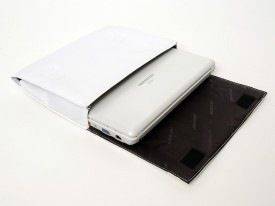 A few days ago I highlighted July 3rd as an important one on the netbook calendar. Aldi Süd, an important supermarket chain will have the Alkoya Mini in stock as part of one of their Thursday offers.
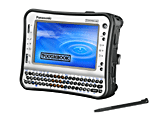 as though the device is actually shaping up to be a very well rounded piece of hardware. Before I start listing specs, lets keep in mind that this is a rugged ultra mobile PC that Panasonic says surpasses military specifications for hardware of this class, meaning that it can withstand a decent amount of punishment in the areas of shock, temperature, moisture, and others. Now to the good stuff.