Tag Archive | "video"

chromeTouch Brings Touchscreen Inertia Scrolling to Google Chrome [video]

Tags: , , , , , ,


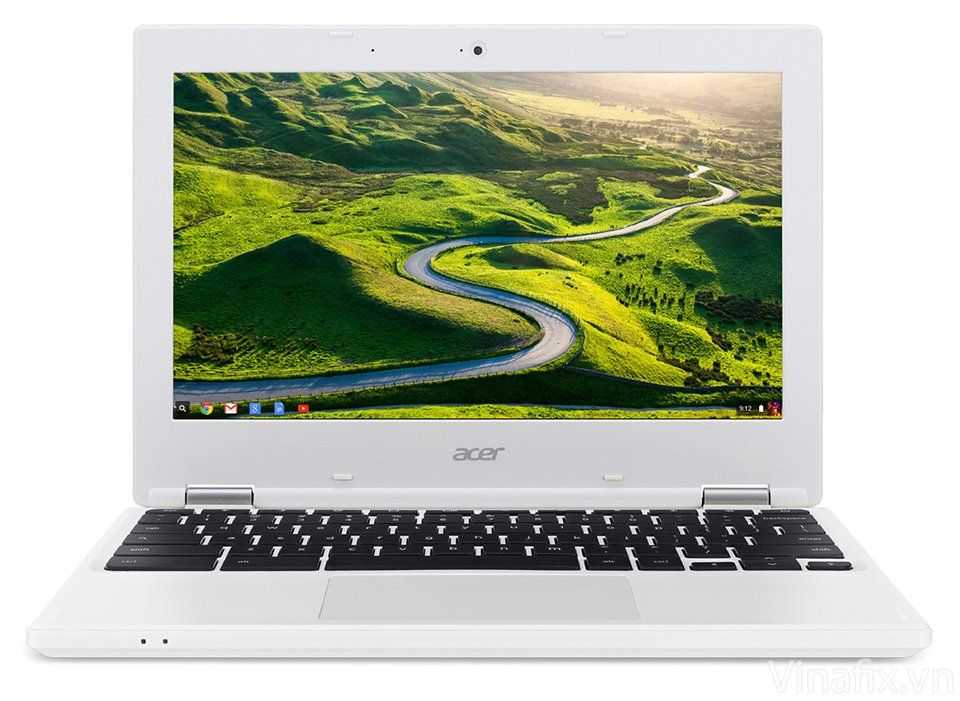
Here is a short demo of chromeTouch, a Google Chrome extension which enables touchscreen and inertia scrolling within Google Chrome. Works great if you’ve been waiting to find an alternative to Firefox and the Grab and Drag addon!

Find chromeTouch here.

I also mentioned another extension that I added to increase the smoothness of the scrolling, that is called Chromium Wheel Smooth Scroller.

Resistive vs Capacitive screens for Writing. (Video demo)

Tags: , , ,


Many of you know this already. Restive screens don’t require a conductive path to register an object on the screen which means you can use plastic styli, nails and other objects to write on the screen. Capacitive screens require a conductive area, like a finger, in order to register anything on the screen making handwriting, annotations, mark-ups, photo editing, drawing, sketching, digital painting and the like almost impossible. You can’t use capacitive screens with gloves either so come the next ice age, the iPhone sales are going to suffer ;-)

What better way to see what I mean than by watching a video. Here’s a nice, jolly one from Maraderz that demonstrates the effects perfectly.

Of course there are other options. Digitiser screens use a special, active pen and can detect pressure and hovering and eliminate ‘vectoring.’ The LS800 tablet had one and is was cool to use. If you’re interested in this area, also check out multi-touch resistive screens (the Viliv S10 has one) and ‘palm rejection.’ Also remember that resistive layers on can get easily scratched because you can’t cover them with hard glass.

Screens are covered in detail in the Mobile Computing Buyers Guide.

Lenovo IdeaPad S10-t3 Multi-Touch Convertible Unboxing

Tags: , , , ,


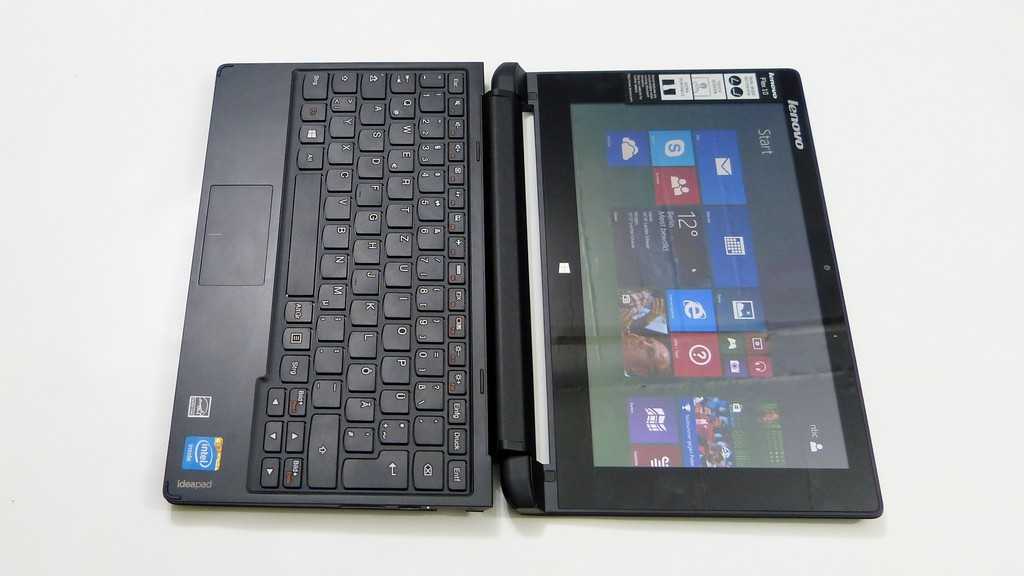
lenovo Netbooknews.de has the IdeaPad S10-t3 [Product page] and pops the box open to let us all have a look. This multitouch convertible looks quite slick and comes with a massive battery. They were even kind enough to include an English unboxing (embedded below) in addition to their usual German one.

Spotted at Intel CES Keynote. (Nokia, Tablet, 3-way Video)

Tags: , , ,


Capture_00004 At Computex in June 2009 I had a press meeting with Anand Chandraseker and one thing he mentioned as the press challenged him about netbooks and smartbooks was the fact that Moorestown could make a good platform for smartbooks. If I remember correctly, the words he used were ‘a better smartbook than ARM-based products.’ (Analysis here)

ARM platforms are scaling well and in mid-2010 a multi-core ARM processor will be able to reach processing power levels that are close to what we’re seeing on Atom (with a single core.) The power envelope of a Moorestown-based tablet or smartphone won’t be significantly higher either so when you think about Moblin, its stability, its brand and potential for a lot of Intel-backed marketing, the code-sharing that’s happening with Nokia and its Maemo teams, its ‘appup’ store, its roadmap, and the support it’s getting from leading computer manufacturers you can see a lot of advantages over skinned WinCE, non-existent Chrome OS and re-hashed Android open-source models.

Proof that tablets and ‘smart’ devices are possible was given in the keynote speech and I’ve included the relevant 5-min segment below. You’ll also here a very interesting line in the first 20 seconds. Paul Otellini specifically mentions that Nokia is in partnership with Intel ‘around’ the Moorestown platform. That could be the software development work that’s going on (Nokia and Intel are sharing a lot of software across Moblin and Maemo) but it could be something else too!

Skip to the following segments for specific information on the key elements from the Ultra Mobile section of the keynote.

00:21 ‘We’ve announced partnerships around Moorestown with leaders like LG and Nokia’

02:00 Multipoint (3-way) video conference on Moorestown smartphone. (from Vidyo.com)

03:40 HD movie demo (720p)

04:30 Open Peak tablet demo. (Note e-reader application)

Next stop: Mobile World Congress, Barcelona.

Kohijnsha DZ series on video

Tags: , , , , ,


dz We are actually rather intrigued by the Kohijnsha dual screen DZ series netbook as a pro-focused mobile productivity device and hope to be bringing you some first hand coverage soon. For now you can take a look at some good videos from Wow-pow-blog which has a three part DZ series video review. We’ve got the first embedded below, and you can view the other two parts by jumping over to Wow-pow.

[NewGadgets.de] via [Liliputing]

Kohjinsha PA3 Unboxing Video

Tags: , , , ,


pa Here’s an unboxing of the UMPC that might just get an award for ugliest device of the year!

It looks to be more usable than the UMID M1 that we think it is based on which puts it in that category of devices like the WiBrain which sometimes turn out to be very useful devices indeed!

Via

Source: Wow Pow.

Slashgear unboxes a MIDPhone. The HTC HD2

Tags: , , ,


hd2video

A very warm welcome to the HTC Touch HD2 into the MID/Phone crossover category of devices. It coincides nicely with the work I’ve been doing today to update the product database with all the WVGA phones out there. I’m trying to write a summary article too but this unboxing video from Chris at SlashGear is keeping me away from doing that right now!

The HD2 is due to launch this week with availability in the following few days. Pricing is already available in Germany too with latest prices hovering around the very expensive 599 Euro mark.

Clearly though, a multitouch capacitive touchscreen with Opera Mobile 9.7 on a 1Ghz Snapdragon CPU is something rather special and with the Windows Mobile 6.5 OS and Sense UI adding to the experience, I think it adds up to make it of the most exciting ‘slate’ style high-end phones out there and definitely one that readers here should check out.

Chris will be getting into some more testing with the HD2 over the next few days and it will be interesting to see where he thinks this one fits in. Unlike the (240 Euro) Archos Android Tablet that I use as a secondary device, this (600 Euro) tablet is targeted at being a primary device. Is it really going to slot into the 24/7 usage scenario or is it designed to be used as part of a two-smartphone strategy?

More details on the HD2 here.

Slashgear have written an article that accompanies the video. Check it out here.

Preparing for my session at MDC09. (Video)

Tags: , ,


I’ve just packed 13 mobile devices for Mobile Dev Camp and uploaded a video that introduces what I’ll be talking about at MDC. Hope you can make it.  If not, stay tuned here for updates from the event tomorrow. More details here.

My MDC coverage is sponsored by the Intel Insider program. Many thanks to Intel.

mobiledevcamp

[As I post, the video is still being processed by YouTube.
If the video doesn't show, please drop back later.]

MID vs. Netbook dicussion from IDF [video]

Tags: , , , , , , ,


netbook vs mid Sascha Pallenberg from netbooknews and our very own Chippy had a nice little debate about the advantages and disadvantages of the MID vs. the Netbook, and they also touch a bit on the Atom Developer Program which will cross both device groups.

Testing Fennec beta 3 on the Viliv S7 [video]

Tags: , , , , , , ,


fennec Fennec is Mozilla’s mobile device browser. They have been working on it for some time. Last time I looked at Fennec on the VAIO UX, it was in beta 1. They’ve moved on to beta 3 now and I gave it a quick test on the Viliv S7:

If you’d like to give Fennec a try on your own device, you can download beta 3 for Windows, Mac, Linux, Windows Mobile, and Maemo (the WM version is still in Alpha 3).

4Mbps Video playback on the N900 (video)

Tags: , , , ,


IMG_1013

The N900 is a real power-house. An open power-house. Not only is the browsing speed improved greatly over the previous generation of devices (to bring it up to class-leading speeds) the video payback performance is great too. I see missing support for H.264 at the moment but as this is not a final production build, those codecs may not be included yet. I tested a 720×400 4Mbps DivX video today though and it worked perfectly. The quality is the playback on the screen and through the analogue TV-out (PAL, composite) was really impressive. This little baby needs a digital output. My VGA-quality video doesn’t help either!

NOTE: The Live session on Monday evening (approx 2000hrs Central Europe Time) will go more deeply into video playback. Join us for live video with overview, comparison and Q&A.

Streaming YouTube HD on the Archos Internet Media Tablet. (Video)

Tags: , , , , , ,


IMG_0912 Before we start on the topic of video performance I have to highlight how complex the subject is and how difficult it is to present performance figures. Digital video is a complex matrix of multiple wrappers for multiple encoding types (video, multi-track audio and multiple subtitles) with different encoding profiles, options, resolutions and bitrates. Format conversion, phsycovisual optimization, buffering and on-the-fly resizing is another set of complex topics. Speak to anyone in the video streaming business and they will take pleasure in telling you how extremely complex it is. For example, at IDF I spoke  Envivio, a company that specialises in video streaming.  Because of the complexities and ever-changing capabilities of client devices they’ve chosen to do all their encoding in software on general purpose X86 CPU’s rather than in dedicated silicon.

As consumers, we tend to use a number of benchmarks. YouTube streaming, DVD and camcorder files.  YouTube quality is determined by how smooth LQ, HQ and HD versions are in windowed and full-screen mode. DVD is a tighter standard based on MPEG-2. Camcorder files have already reached high bitrates and there are even 1080p (1920×1080 resolution) consumer cameras out there. I tend to talk in terms of codecs and bitrates rather than 720p/1080p because those expressions are often used incorrectly but for online video, the simplest way to do it is just to demonstrate it using what most web-based customers are moving to. HD-quality YouTube.

YouTube HD quality is based on MPEG-4 Part 10/AVC  (H.264) and offers 720p resolutions (1280×720) at an average bitrate of 2Mbps. (See good Wikipedia entry here for more info) Netbooks and UMPCs running XP can not play this file format but by installing the Adobe Flash player, you get access to this format via YouTube and their embedded Flash content. Unfortunately, the Adobe Flash player is heavy on CPU usage so on these low powered devices the quality is terrible.  There are ways to improve this. YouTube download tools allow you to play content in a separate video player which works in an efficient way. I’m able to play downloaded YouTube HD files on my netbook right here. In the near future, the Flash 10.1 player will be able to access hardware video decoders (not currently on most netbooks although the next generation of netbooks will be able to support this) making it even easier for consumers but there are already a few devices out there that can give you the YouTube HD experience out of the box.

I’ve been testing one of those devices. The Archos5 Internet Media Tablet running Android and many people have been asking me about the video performance so I thought I would answer most of the questions by way of a video demo. Some of the details get a bit technical and of course, the video is not representative of the actually quality of video playback on the Archos 5 but the demo gives you a good idea of what you can expect.

Just one note, this was shot in VGA using M-JPEG encoding at about 15Mbps, converted to 1.5mbps WMV  and you’re watching it via the flash decoder after conversion by YouTube to the H.264 (or Sorenson) codec. See what I mean!

Break out into a full-screen window and hit the ‘HQ’ button for the best quality possible. The original WMV version is available at Blip.tv.

For completeness and attribution, here’s the original video on YouTube.  Hit the ‘HD’ button and see how it streams on your device.

Flash 10.1 and smooth online video coming to…everything?

Tags: , , , ,


It has been clear for some time that Adobe were working with the ARM and Intel community and would eventually acknowledge that there are components on many devices that can decode H.264 better than a CPU. The Menlow platform has always supported H.264 decoding in hardware but the YouTube experience has been extremely poor because Flash doesn’t known about DXVA (Direct X Video Acceleration.) The same applies to many smarphone platforms too. OMAP 3 for example (as seen on N900, Archos 5, Palm Pre) has the silicon dedicated to this process but it’s not used. The CPU is left struggling, draining battery and giving the user a very poor experience.

Adobe finally made the official announcement today that Flash 10.1 is coming…

Adobe Systems Incorporated today unveiled Adobe® Flash® Player 10.1 software for smartphones, smartbooks, netbooks, PCs and other Internet-connected devices, allowing content created using the Adobe Flash Platform to reach users wherever they are. A public developer beta of the browser-based runtime is expected to be available for Windows® Mobile, Palm® webOS and desktop operating systems including Windows, Macintosh and Linux later this year. Public betas for Google® Android™ and Symbian® OS are expected to be available in early 2010. In addition, Adobe and RIM announced a joint collaboration to bring Flash Player to Blackberry® smartphones, and Google joined close to 50 other industry players in the Open Screen Project initiative.

Windows Mobile, Palm, Windows, Linux and Mac get the public beta first with Android and Symbian getting betas in 2010. As for full releases, expect the desktop to get it first with handset manufacturers and carriers feeding it in later in 2010. The iPhone platform isn’t mentioned in the release so maybe Apple will double their efforts on HTML 5 and native video support.

You can bet that GPU-accelerated flash will be included in Moblin 2.1 in 2010 for the Pineview and Moorestown platform but Intel do lose a big advantage when the smartphone platforms get the same software. After that point it’s all about design and software.

Via Engadget.

Viliv S10 hands-on video.

Tags: , , , ,


Update: Viliv S10 Specifications and latest information.

I’ve had some hands-on with the Viliv S10. It’s slick, well designed, well finished and impressive. Viliv are talking about a 10-hour battery life on this which would probably translate to around 6-8hrs on-net usage. The big question is of course, price. Are we going to see it come in below the Gigabyte Touchnote T1028? And what about the T91?

Here’s a video I took during my MIDMoves IDF tour this week.

One correction on the video. The S10 is due to be launched in Q4 2009, not 2010.

Source: MidMoves

Overview Video. Viliv S10 ‘Blade’ Convertible Netbook

Tags: , , ,


Here’s the new Viliv S10 ‘Blade’ convertible touchscreen netbook.

Great build quality and looks. Certainly better than my Gigabyte Touchnote!

Available before the end of the year.

Crayon Physics Deluxe video demo [touchscreen friendly game]

Tags: , , , , ,


crayon physics I know its been a while, but I’ve been waiting to get my hands on a full tablet PC so that I could do better demos than simply using my Sony VAIO UX180 and showing you what’s happening using a monitor as I have done in the past. Hopefully you will agree that the format of this video demo is better than those that I did previously!

But beside all of that, have a look at the Crayon Physics Deluxe video demo.

The game works great with touchscreens and there is even a demo that you can try before purchasing:

The idea of the game is that you are drawing with a crayon, and your drawings become physical objects that interact with the rest of the crayon based levels . The goal is to get the red ball to touch the star, then you get to move on to the next level. There is more than 70 levels to complete in the full game. The game was also the grand prize winner of the Independent Games Festival in 2008!

Viliv S7 detail photos and Shuffle UI video

Tags: , , , ,


The Viliv S7 [Portal page] is still on its way out the production door, but that hasn’t stopped a Korean blog from getting their hands on one and taking plenty of good images.

viliv s7 mouse pad viliv s7 screen buttons
viliv s7 keyboard

The same site also produced a video of the rather underwhelming Viliv Shuffle UI that comes included with the device:

Check out the original article for more images of the Viliv S7.

via [jkkmobile] and [UMPC Fever]


News Discussion

Commenting continues long after an article has left the front page. Keep up with the latest updates on our discussions page

Become a Member of UMPCPortal

Join the forum and join us for discussion about all aspects of ultra mobile computing. Ask questions about devices and usage scenarios and learn from owners and experts. Join up here. If you're already a member, login here.