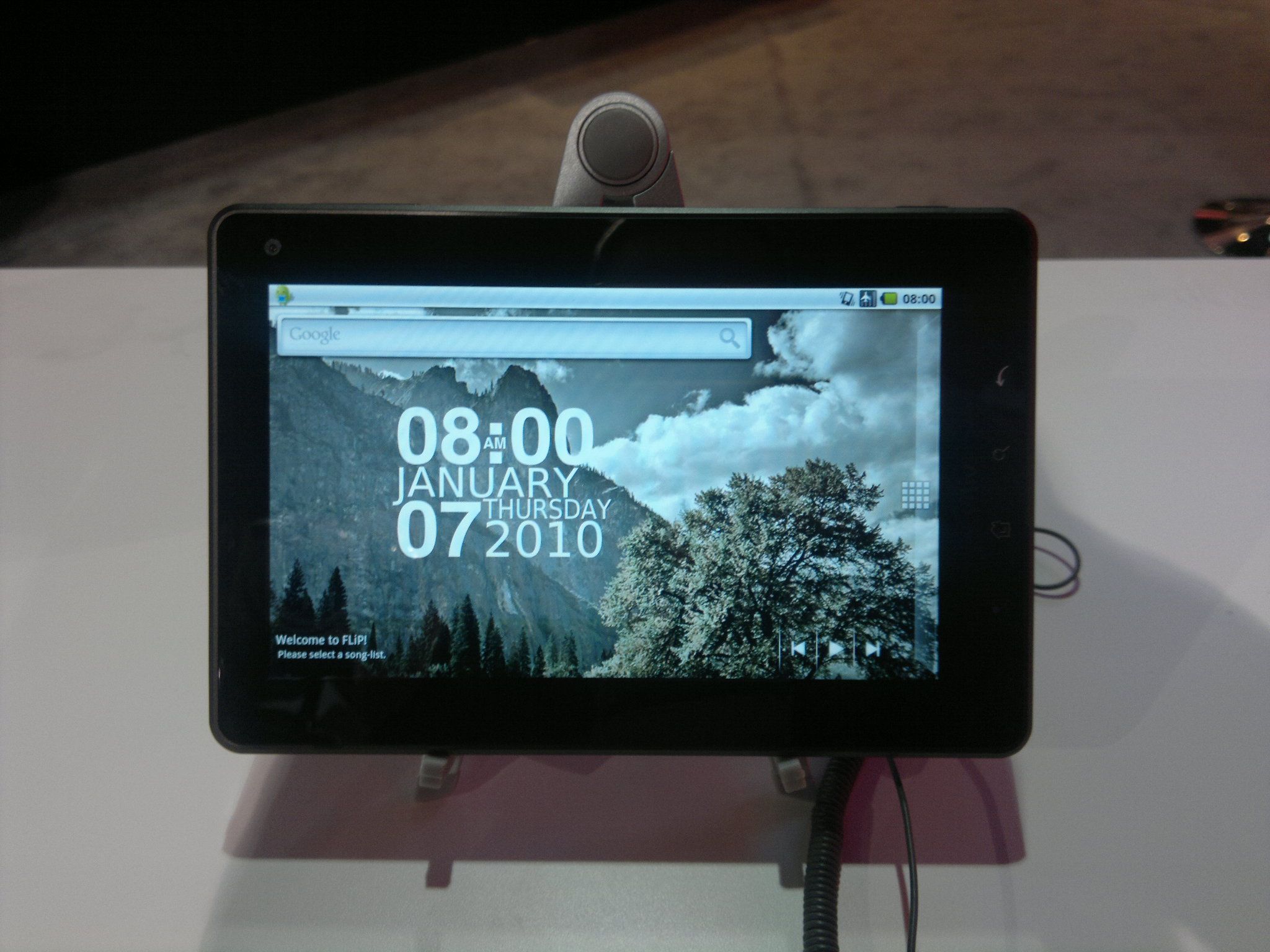
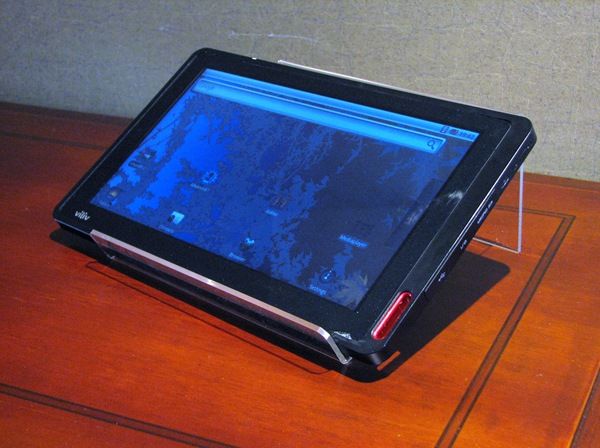
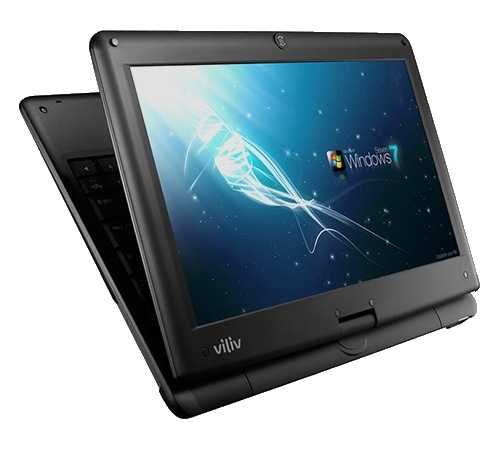
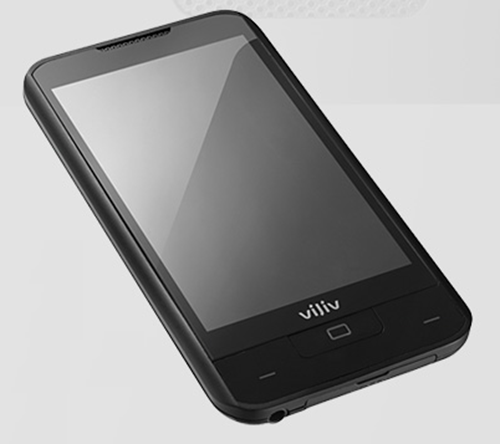
If this is true, I won’t be surprised because there’s been a trail of hints over the last few months that have already led me to put warnings out about Viliv.
According to not one, but two of our business contacts, Viliv is just about ready to shut up shop. Our sources tell us that Viliv have been in receivership for a while and despite trying to find a buyer for some of their unique ultra-mobile computing solutions, have failed to secure a future for them. It looks like its the end of the road for Viliv and we’re just waiting for formal, public confirmation.
The clues started back at the end of March when one of our contacts at Viliv announced they were leaving. A short time afterwards, Viliv abruptly called stop to their long-term banner advertising with us. No amount of discounting could win them back. Considering their positive feedback in the past, it was a surprise. Then, at the important Computex trade show in June, Viliv were a no-show. Since then we’re seeing summer holiday announcements on their myviliv website and have also heard that their US support number has been closed. We’ve also been unable to get any contact with Viliv for comment or update on their products.
Interestingly there’s one large reseller in the UK that has just started to take pre-orders on the new Viliv X70 Slate . Let’s see if any action is taken to close that channel over the next weeks. Given the information we have, we don’t expect those pre-orders to be fulfilled.
As for support and sales of stock, we susupect it will be spotty from now on. At this stage, it would be prudent to buy from a reputable dealer but do bear in mind that parts, accessories and return-to-base repairs may be difficult.
Viliv were a pioneer and a true believer in the pro-mobile space. Their products were always class-leading in terms of quality and features. To us this sends an important message out to everyone. Developing and selling pro-sumer mobile products is a tough business. Buying them is almost as hard but as always, we’ll keep you updated on solutions as they appear. Fingers-crossed that someone else picks up the X70 Slate design as it could have been a unique Windows 8, Meego and Android tablet.
Let’s say you need a UMPC. It’s not as uncommon as some people think. It might not be the consumers cup of tea but in industry, mobility counts for a lot. Logistics, amateur pilots, health industry, blue-light industry, traveling geeks and other situations where full capability, compatibility and flexibility in the smallest package is key. The problem is, if you need a UMPC today, what the hell are you going to buy?
Lets put down a little wish-list for the sake of the argument.
Sub-1KG, Windows 7 support, 5hrs battery life 5-8.9” screen, easy conversion to keyboard/screen device. Price under $1000.
The shortlist I would recommend right now would be the following but they are all ‘last-gen’ UMPCs, at least a year old and going out of stock, and probably entering the end-of-life phase.
UMID mbook SE – Thx to Gearsguy for the information on the availability and videos. I’ve included one of the videos below.
If you need a keyboard, the mbook SE, UH900 and N5 are worth a look. The Archos 9 is good value at under 450 Euro right now and the X70 is a great performer. Isn’t it underwhelming that these devices are all over a year old though.
One device I took a second look at was the Toshiba Libretto W100. Originally this device was available for 1100 Euro. Today, it’s under 600 Euro in Europe making it an interesting option because of its CPU – Pentium Dual-Core U5400 with 2x 1.20GHz that comes in at about 130% the processing power of a high-end dual-core Atom part. It also includes 2048MB Ram and a 62GB SSD. This is certainly an ultra mobile workhorse but the design and battery life are going to be issues for some. 3hrs isn’t that exciting. Interestingly this could make a super ultra-mobile video editing platform.
This dearth of options in this space is because of two things. Firstly, Menlow is out and Oaktrail isn’t yet in. There isn’t really another platform to think about right now although I’ve got my eye on AMDs Z-01 We’re going to have to wait for a set devices on Oaktrail for another few months. The other issues is the 10” tablet craze. It puts designs at around the 1KG mark and limits usability. The Viliv X70 is one to keep an eye out for but based on the silence from Viliv, I’m guessing it’s not close to being available yet.
Widening your choices
Netbooks, starting at about 1.2KG (2.6lb) and large-format Windows tablets (again 1.2KG when a keyboard is added) along with 5~ and 7~ Android tablets and the iPad2 all need consideration. Even the >4” Android phones with the latest CPUs. As Meego filters in, keep an eye on that too as it spans mobile and desktop environments. Finally, Honeycomb and WebOS are operating systems to watch. Personally I have high hopes for Honeycomb as one of the more flexible operating systems to cross-over into a productive and flexible environment and that could happen on either ARM or Intel.
Choosing a platform for 2012
Oaktrail – Intel’s Z6xx series. We’ve seen it running Windows, Android and Meego already, it will run Chrome OS and there should be forward compatibility with Windows 8 making it, in my opinion, one of the most interesting ultra-mobile platforms out there right now. Intel builds of Honeycomb and Meego should be able to squeeze more battery life out of it too. There’s a 2X graphics improvement over Menlow (GMA600 vs. GMA500) and even hardware 720p video encoding which could speed up video rendering. At 1.5Ghz, it’s not the most CPU-powerful platform but Intel have already talked about 1.8Ghz versions and I’m sure, if the platform becomes popular, we could see dual-core versions too. Why Oaktrail and not Cedar Trail? Because it’s got power management capabilities that Cedar Trail hasn’t got.
Waiting for Sandy Bridge.
Sandy Bridge in ultra-low-voltage guise is very interesting. I recently tested an AMD-E350 based Lenovo S205. It was good. It’s TDP (CPU+GPU) is 18W and the CPU performance is high-end Atom level. Sandy bridge, on the other had also comes in 17W TDP variants but the CPU performance on these simply blows Atom, E-Series Fusion and even first-gen Core parts out of the water. with around 5x the CPU performance of an Atom CPU along with some good GPU performance. Price is high as we’ve seen with the Samsung Series 9 but that devices comes in at 1.3KG with 6hrs of battery life and serious compute power. It’s a sign that Ultrabooks could push down in to even smaller and lighter designs.
My plan. What’s yours?
Today I sold my last netbook / laptop. Over the last few months I’ve been having a clear-out and now I’m left completely without any sort of mobile productivity device. It’s a nice position to be in but it’s going to be a tough decision. Right now I’m favouring the Samsung TX100 / Gloria / PC7 Slider on Oaktrail because I’m interested in Oaktrail performance and multi-OS scenarios. I’m worried about the CPU performance though. I’m also looking carefully at that Toshiba W100/W105 show above. I think I can run PowerDirector video editing suite on that and get some usable 720p rendering speeds that should be 2x what the Oaktrail platform can produce. Finally, Samsung have another very interesting product in the Series 9 laptop on Core i5 Sandy Bridge. It’s an expensive item but a real mobile workhorse. And why am I looking at all these laptop-style devices? Because after spending 7 months with the Galaxy Tab I’ve found that there are fewer things I need to do on a laptop now and those things generally involve high-productivity working with Video, Images and multiple windows. The 7” tablet has filled a great position but along with my new requirement to product 720p videos, has pushed up my requirements for a laptop.
As promised, here’s the video over view of the Viliv X7 Android Tablet.
Key feature here is the big, 21wh battery and of course, that good quality Viliv engineering. They are ‘targeting’ $399 with 3G but we’ll have to re-visit that nearler launch in March/April
I have been predicting a 20-30% all-round improvement in battery life with Oaktrail. I might be wrong. Viliv are showing their new Oaktrail-based X70 UMPC and it’s coming in at 420gm, with 6.5hr battery life. The previous X70 was about 650gm so that’s a great improvement. I’m hearing the same message all over.
It appears that all Oaktrail devices are going to be available earliest in March 2011 and the X70 is no different. I’ve got a video for you later so stick around for that.
The X70 runs Windows 7 out of the box and Viliv claims that it’s the “slimmest and lightest” Windows tablet in the world, but I’m certain that there’s some subtext to that claim. The 7” 1024×600 screen has been upgraded to a capacitive touchscreen which will certainly improve the input experience. Viliv says that the X70 will use “Intel’s next generation mobile CPU”, but we’re still waiting for specifics on that front. For the time being, we do know that the device will have 2GB of RAM and weigh 0.926lbs (420g).
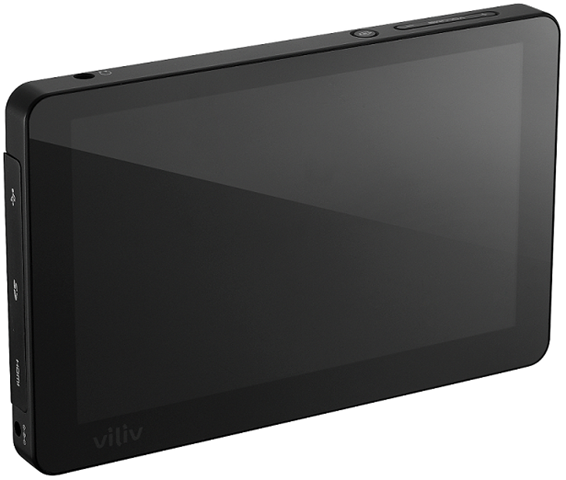
You can keep an eye on up to date specs, links, and additional info at our Viliv X70 tracking page. I’m sure Chippy will do his best to get some hands-on time with this device at CES 2011, so stay tuned! Here’s another press shot for the road:
What would CES be without a good tease? We don’t have any more information than in the pictures but we’re definitely meeting with Viliv at an early stage at CES to find out more about the X7 ‘Anywhere Connectivity’ Android tablet and the X10 and X70. We suspect the latter is a re-design of the original X70 EX using Oaktrail and Windows 7 but as we said, there’s no information available at the moment. The X70 EX was UMPC of the year for us over at UMPCPortal in 2009 so we’re expecting good things. The X10, a 10.2” Android tablet is touted as having ‘longest’ battery life and is likely to be a development of what we saw at Computex.
All will be revealed in the first few days of CES so keep it tuned to Carrypad.
For those looking for the perfect handheld PC for road-warrior and productivity work, the Viliv N5 has to be near the top of the list. Sliders and tablets are great but nothing beats the clamshell format for practicality in terms of usage and ruggedness. Very similar to the UMID BZ, the Viliv N5 offers a desktop operating system on a very efficient Intel Menlow platform with long battery life, an excellent video playback experience (up to 1080p tested successfully without any modifications) fast SSD and, in the version we’re testing here, the convenience of built-in 3G. The optical mouse really helps navigating round Windows where sometimes, a small touchscreen isn’t the best solution and, like the Fujitsu UH900, the N5 goes for a keyboard size that works for both touch-tapping and thumb usage although as always with keyboards that try and do both, it’s not optimal for either scenario.
In testing over the last 4 days I’ve been impressed with the multitasking performance of the device. Compared to the UMID BZ it offers a smoother experience with none of the SSD-overload that is all too easy to experience on the BZ. The finish of the device is fantastic and represents Vilivs usual attention to detail.
On the downside there’s no analogue video out (the VGA, composite, S-Video port is blanked-off) and the screen touch-layer is heavier than a lot of modern UMPCs. The brightness, too, is noticeably less than on other devices, especially the BZ. Windows 7 Home Starter limits how you can change your desktop (setting the display DPI to 125% really helps though and the video below was taken before I had made that adjustment.) The 32GB SSD is partitioned for a recovery installation and you end up with just 11GB of user disk space.
A note about battery life.
As I type this I’m seeing 25% battery left after 2.5hrs of use which equates to over 3hrs online usage. The screen brightness has been at 100% during this period and both Wi-Fi and 3G have been on concurrently for about 1 hour of this. Unfortunately, the battery life indicator on the Viliv N5 only shows remaining capacity in steps of 5% and it can be inconsistent and non-linear. With careful set-up, I expect users to be able to get 4hrs out of the device but not much more than that. The battery has only 15Wh capacity so with Windows 7 on the Menlow platform, don’t expect anything more than this.
All the important points are covered in the video below but as I write this, a second video is uploading which compares the Viliv N5 to the UMID BZ. There are advantages on both devices and as we learn about the UMID SE, maybe there’s a third option coming soon. Stay tuned for a second post focusing on the differences between the UMID BZ and Viliv N5.
Just as we expected, the Dynamism pricing details for the Viliv N5 that we did our Open Review on last night are now available. Dynamism have sent the details over and as with previous Viliv launches, are including a special offer. If you order between July 6th and July 15th you get a free battery worth $50. That’s worth having because the N5 battery is tiny and yet appears to offer 3-5 hours of usage.
As we already know, there are only two models of the N5 available and both are Atom 1.3Ghz based with a relatively fast SSD. The 3G model also has voice capability.
Event Date: July 6th 1PM EST through July 15th
Shipping Date: July 19th and fulfilled based on order date
Promotion: Free spare battery ($50 value)
32GB SSD $649
32GB SSD with 3G $799
Details and pre-order will be up at Dynamism later today.
We would have liked to have seen cheaper pricing of course, especially considering the similar UMID BZ is only $499 but the N5 does look (and perform) slightly better than the UMID BZ. With more RAM and faster SSD it’s more of a multi-tasker and definitely Windows 7 capable. Remember though that there’s no video-out and you only get Windows 7 Home Basic.
JKK and I will continue testing the N5 over the next week or two so keep an eye out for more content from us and if you want to discuss the N5, i’ve opened a new sub-forum. As usual, all the specifications along with links and comparison devices are in the UMPCPortal database.
First things first, Pocketables have a full review of the Viliv N5 up. They seem to be very happy with the device although there’s confirmation that there’s no video-out port. It’s been blanked-off. Click-through for the full review.
After you’ve read the review, don’t forget that despite the high possibility that my N5 won’t turn up in time, JKKMobile is getting his and we’re planning a live session. This will happen today (Monday 28th) at 2130 CEST (1230pm San Francisco. Other times here.) on the UMPCPortal and JKKMobile live channel.
There will be a live video and audio feed along with a chat channel for questions and discussions. I hope you can make it. I hope my Viliv N5 can make it too! If not, my UMID BZ will be there as a comparison. We’ll try and include comparison thoughts about the UH900 too.
We will try to record the main part of the session.
Viliv have just shipped an N5 to me (and I suspect other bloggers) for long-term testing and it’s expected here on the 25th. (Friday) so if all goes to plan, you should be seeing an unboxing video on Friday afternoon. I’ll try and sync up with JKK to get a live session going too.
As for availability, I’m expecting the delivery here to coincide with an announcement of pricing and availability at Dynamism so stay tuned over the next few days.
The N5 has been the #1 device on the UMPCPortal product list for a long time now so obviously a lot of people are interested in it. You can find out more, see videos and view additional information from other websites through our Viliv N5 tracking page.
This rendering is actually looking quite nice, but we won’t necessarily see this design. Viliv says that, while the X10 (Android) Slate will be shipped by them, this X10 (Windows) Slate is a design that may or may not be sold to other manufacturers that will apply their own branding.
Interestingly, Viliv’s specs sheet mentions that the screen is capacitive with “pen input”. It’s possible to do multi-touch on a resistive screen and thus “pen input” would simply mean using a stylus. However, because the screen is capacitive, the only way to get pen input would be with an active digitizer (or a capacitive stylus, but that’d be a gimmick on Viliv’s part) – which would mean a pretty awesome digital notetaking experience on this device – unlike some of the other slates we’re seeing. It’s possible that the wording on the spec sheet was a mix-up for this early concept, though it’d be great to see an active digitizer on this device.
It’s slim and interesting but don’t get too excited about the X10 with Windows because the Windows version a trial design by Viliv who are looking for someone else to manufacture it. While we were discussing the device though it was interesting to hear that Viliv are confident they can transition on Menlow, the Intel platform they are currently using, to Oak Trail in 2011. It brings hope that we’ll get a number of ‘refresh’ devices with lighter, slimmer designs and better battery life. Thanks to Viliv for the invitation to view these behind-the-scenes devices at Computex 2010.
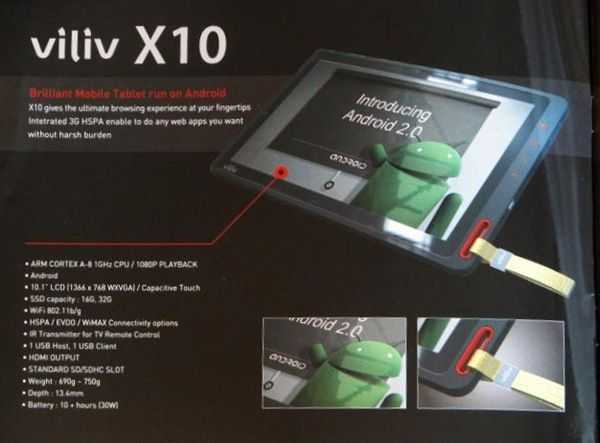
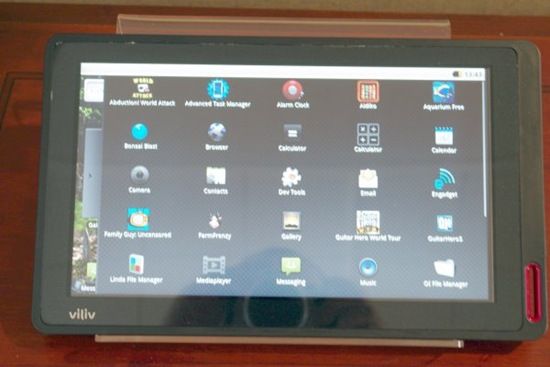
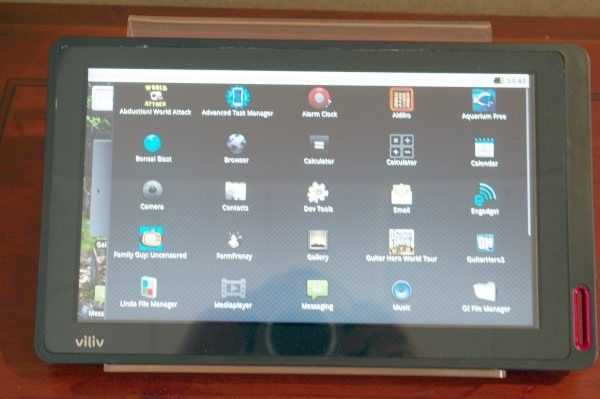
We caught a sniff of a hint that an Android device was in the works when we met Viliv at CS in Jan and here it is. A 10” Slate-style device with the usual high quality Viliv design and materials that turns out to be one of the best we’ve seen here at Computex. (It’s in the running with the MeeGo tablet and the Huawei S7 for me right now.)
The X10 runs on a Samsung 1Ghz Cortex A8-based CPU and, even in the early stage of the software build looks fast. Check out the brochure image for a few more tech details. The X10 is being penciled in for Q4 and Viliv appear confident that they will get marketplace and Google applications onto the device for launch. I asked about price and the only hints I could get were that it would come in at a price below the Viliv S5. We’re looking at the sub $500 bracket here which of course, is a figure you could probably work-out yourself!
Viliv have also worked on a Windows 7 version of the X10 and I’ll have some information about that in a later post.
Check out the video below where I take you round the device, demo a fast racing game which looks great on the 1366×768 screen, show you the Aldiko book reader and talk about some of the specifications.
I just put an article up on UMPCPortal’s sister site, Carrypad, about the Viliv X10 — a 10” Slate running Android. Interestingly, the source article from LaptopMag mentions that they’ve spotted the same X10 device running Windows 7 at Microsoft’s booth:
There’s also a Windows 7 version of the Viliv X10. Though Viliv was not showing the Windows 7 version of the X10 in their suite, we spied a demo unit working under glass at Microsoft’s booth and took a few pictures.
The Atom sticker can clearly be seen on the device (as well as the Windows 7 task bar). The unit looks identical to the Android X10 that we covered at Carrypad. This is somewhat confusing, because the Android version is surely running ARM architecture. Perhaps the Windows 7 X10 under glass is simply a mockup by Viliv? I guess time will tell, and if Chippy has anything to do with it, it’ll likely be sooner rather than later.
The X10 is your familiar Slate form-factor and has a 10” capacitive touchscreen running at 1366×768. Avram Piltch of LaptopMag points out that the 1366×768 screen size is a 16:9 aspect ratio, meaning it’ll be better shaped and more detailed for your widescreen movie collection than the iPad’s 1024×768 screen which is 4:3 and is subsequently quite poor for widescreen movie viewing.
No word on exactly what is powering the X10, though it was shown playing smooth 720p playback, and Viliv says it’ll do 1080p as well – this could be Tegra 2 hardware. 1080p playback would be pointless on the X10’s 1366×768 screen if it weren’t for it’s HDMI out port. Along for the ride is an SD card slot, USB slot, and front facing webcam as well. Piltch reports that the device is running Android 2.1 at the moment, but that it’ll be running 2.2 by launch, according to Viliv. The unit shown had WiFi, but there will purportedly be a 3G option. Battery life is being quoted as on par with the iPad at 10 hours – Viliv has been pretty good about keeping their battery figures realistic in the past.
8/16/32GB storage options with Micro SD slot for expansion
WiFi b/g, FM radio and DMB receivers
TV-out and mini-USB ports (specs sheet says mini, but that may be a mistake — would presumably be micro), accelerometer
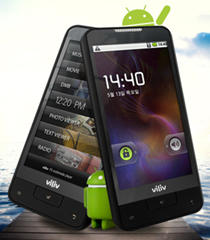
Option of Windows CE or Android OS
105 grams, 9.8mm thick
31 hours of audio / 11 hours of video playback
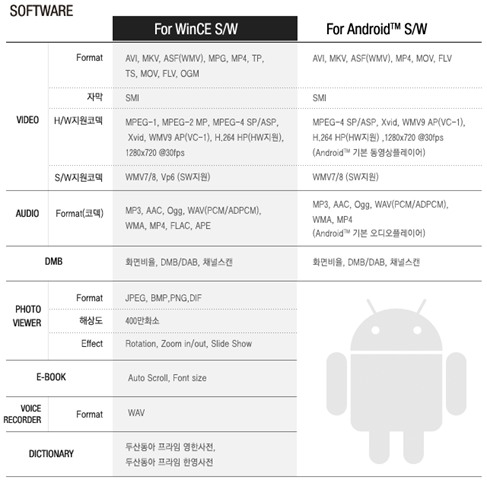
There is also a handy chart of supported file types, depending on which OS the device is running:
No word on pricing, or if you’ll be able to get your hands on one through an official channel, in the US.
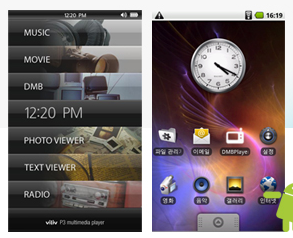
Looks like Viliv is working on a slick custom shell to go on top of Windows CE to make it feel like a DAP, though all information at the moment is pointing to a choice between Viliv’s custom Windows CE interface and straight up Android.
Good work, Pocketables! The team over there have picked up two news items on the Viliv N5 today. Together, they give us a good indication that the product is ready for pre-sale.
News item number 1 shows the Viliv N5 being advertised in Japan with XP (Standard Edition) and Windows 7 (Premium edition)
News item number 2 shows the Viliv N5 advertised by Dynamism in the latest Laptop magazine with 3G and 4G options.
We’ve also spotted the ‘Standard’ edition at GeekStuff4U, indicating a mid-June availability but given the fact these availability always slips, we’re still expecting July availability.
We will be meeting with Viliv at Computex early next week so we’re expecting to hear full details, prices and availability. Finally! We’ve got our fingers crossed that we can walk away with a review sample too so stay tuned for news of a live open review when we get back after Computex.