Tag Archive | "cedar trail"

Post CES 2012 – Ultra Mobile Computing Solutions Remain Limited

Tags: , , , , , , , , ,


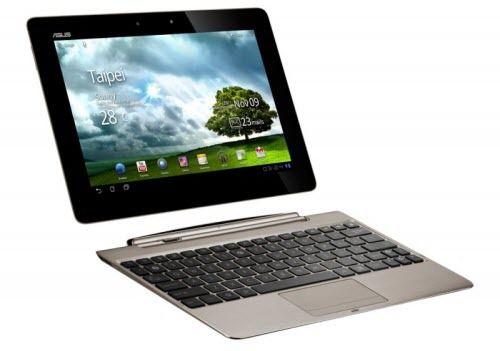
ASUS-Transformer-PrimeYou know what you want in an Ultra Mobile Computing solution. You want a rich spectrum of quality desktop applications with security, flexibility and processing power wrapped up into a handheld device. Unfortunately, after a busy CES, your options remain limited.

Computing at CES this year was all about Ultrabooks and Ice Cream Sandwich and while both of these topics are interesting, neither of the sectors produced anything that can be used today as a handheld PC.

Android devices continue to be crippled by low-quality and restricted software despite some amazing hardware solutions. The ASUS transformer Prime shows what can be done but is the same disappointment as the ‘smartbook’ devices I was testing in 2010. Just try using the Web Browser for a suite of web-based apps, try to write an article in the web-based WordPress back-end or try to book a flight. It’s actually quite embarrassing to see how little the software has moved on. Look for an office suite, a set of security tools, audio and video tools and a good quality image library and editing suite. It seems the only thing the Android ecosystem is working on today is gaming and that’s largely because of the attention that Nvidia have managed to drum up for the Tegra platform.

The fact is that the number of Android tablets out there doesn’t translate into any sort of business-case for porting and developing quality apps. Why bother investing $200K in a high-quality application port for a 7” or 10” screen when the market is an estimated 20 million customers and the average app purchase cost is under $4. The risk is not worth taking.

What the Android market needs is a huge boost in numbers. Fortunately, the Kindle Fire and the newly announced Asus Eee Pad MeMo with Android 4.0 operating system and a price of $250 could help. Although the Kindle Fire only runs V2.x Android software the chances are that newer versions of the Amazon product will get an upgrade and boost the ICS customer base. The Eee Pad MeMo at $250 speaks for itself. By the end of 2012 I estimate there will be well over 50 million Android tablets in the market and the numbers will be accelerating. At that point it makes sense to sit down with your developers and talk about an Android tablet application, albeit for a 2013 launch.

As I look across the other platforms and operating systems, I don’t see any major solutions rising up. The iPad continues to dominate mobile productivity apps but the form factor and operating system flexibility are limiting. The current Windows/Oaktrail pairing is disappointing too in terms of both battery life and performance.

  P1020239P1020241

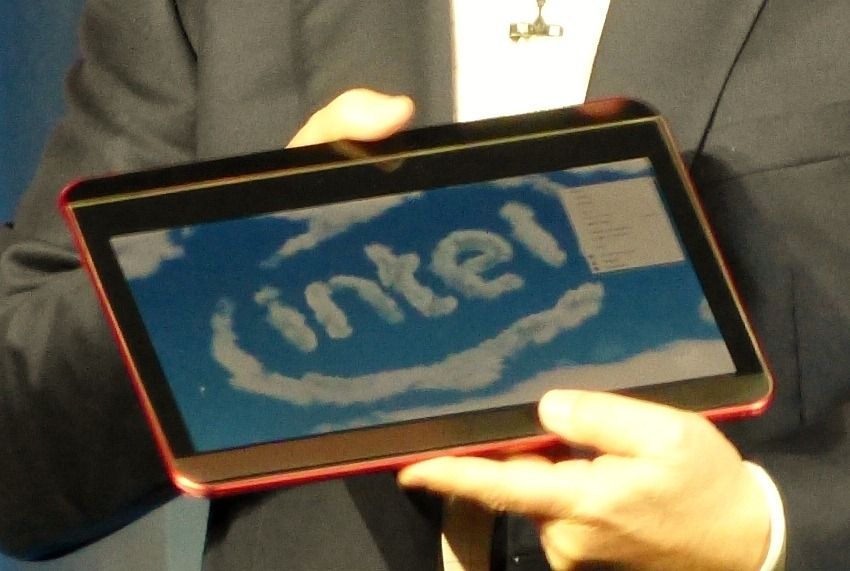
Intel held up the next-gen 32nm, re-architected ‘Clover Trail’ Windows tablet platform at CES which could provide the best chance of a quality handheld Windows experience and with Windows 8, this is probably the one to watch out for. Clover Trail is due in the second half of the year.

Cedar Trail netbooks and tablets provide an intermediate solution though and with the EeePC X101CH coming in cheap and light, it might be something to look at more closely but if you’re really looking for a handheld solution, I just can’t give you any news right now.

We’re at Mobile World Congress next month and at CeBIT in March so with Windows 8 looming, there’s a chance that UMPCPortal will come alive again. In the meantime, I can only advise buying a 7” Android 4.0 tablet and experimenting as soon as you can. While it can be frustrating for productivity, there’s a whole lot of good stuff that can still be done and I’m still not going anywhere without my Samsung Galaxy Tab. Paired with an Ultrabook, it’s a great solution.

Cedar Trail Netbook Delays. Are You Waiting?

Tags: , , ,


image

Despite all the fuss about Ultrabooks and Tablets there’s still a significant market for netbooks out there as small, low-cost ‘just enough’ laptops. Developing countries, students, secondary laptops, travel laptops or simply the lowest cost laptop possible, the Netbooks are a valid choice. With the next generation, using Cedar Trail as the CPU cplatform, it gets even better with significant improvements to 3D graphics that should smooth-out quite a few Windows 7 and application experiences. There are improvements in efficiency too that could enable some lighter 10″ tablet formats and thinner netbook designs. Expect Ultrabook-style devices too with SSD’s, sealed designs and of-course, a much lower price than the current Ultrabooks.

But Cedar Trail is delayed. . .again, apparently because the graphics driver certification hasn’t been completed. In the meantime AMD  Fusion netbooks push further into the market.

With Oaktrail-based devices not quite hitting the mark where consumer experience is concerned, [where are those 1.8Hz Oaktrail options?] it’s important that Cedar Trail reaches the market as soon as possible.

Anyone waiting to buy a new Netbook? Would you like to see more Netbook coverage here? We will be at CES in Jan so we’ll get some details of new models, performance and availability then. In the meantime, check the related links below for some more Cedar Trail background.

http://vr-zone.com/articles/intel-s-cedar-trail-mobile-atom-pushed-back-again/14051.html

Posted from the Galaxy Tab at Droidcon NL.

MSI Windpad U120W. Video Overview, Cedar Trail N2600 Test.

Tags: , , , , ,


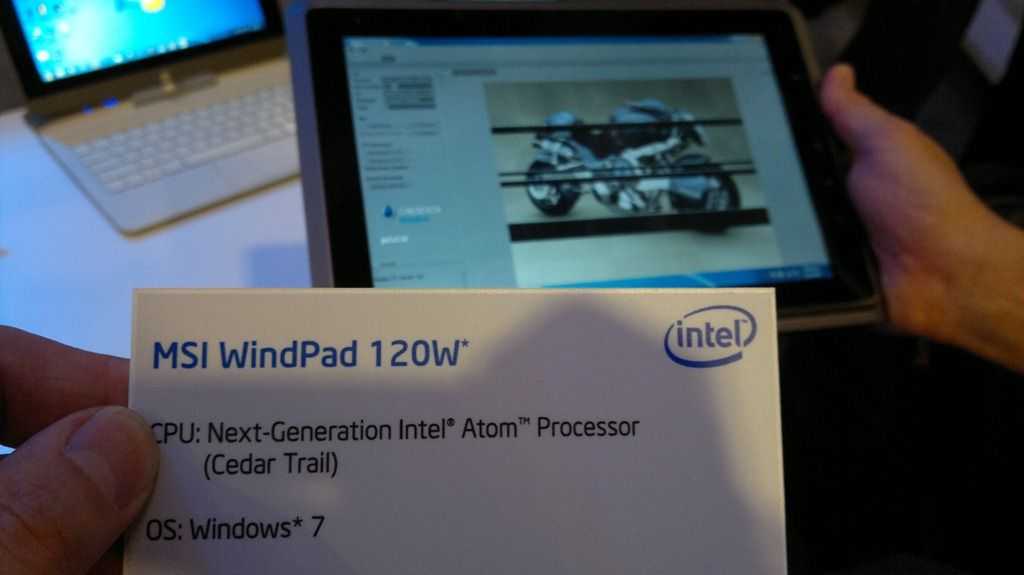
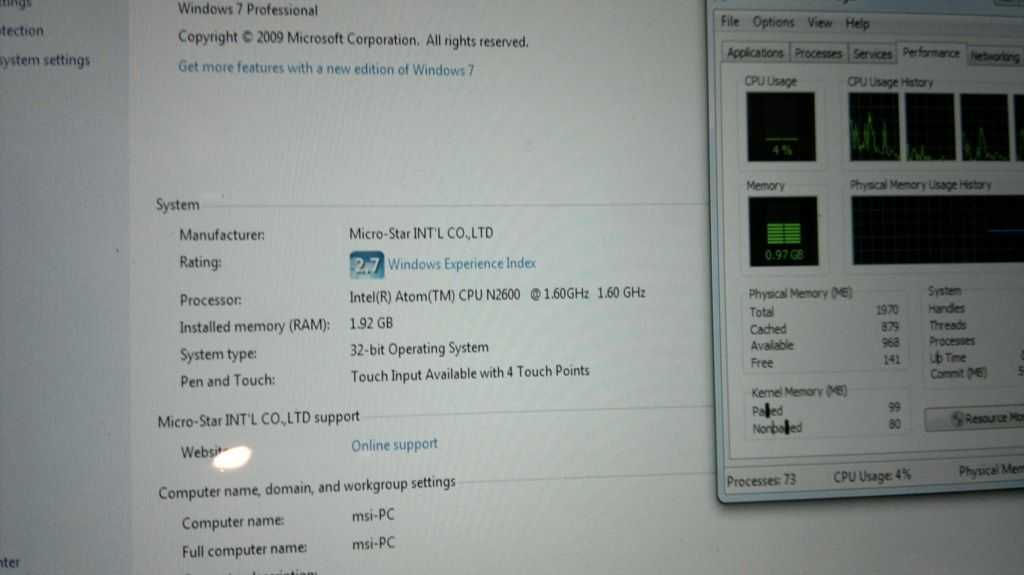
The MSI Windpad 120W is the Cedar Trail version of the Windpad U110W – an AMD Fusion device.  We reported on the 120W in June where it showed at IFA with a Cedar Trail 1.86Ghz CPU. We saw it at IDF a few weeks ago and it had a low-power platform inside. We had the chance to give it a few tests.

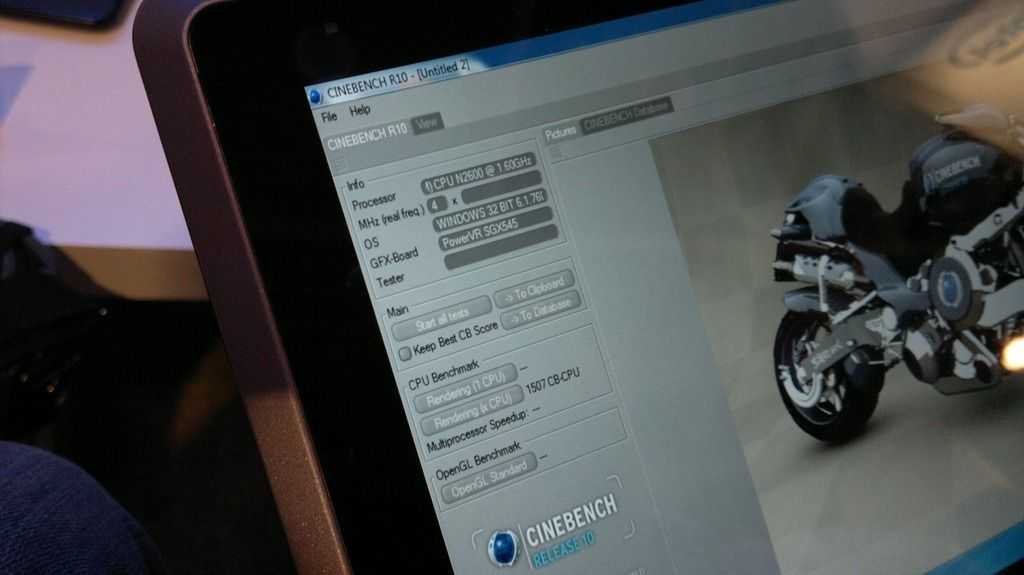
The Windpad 120W shown at IDF used the Intel Atom N2600 with 32nm CedarView-M with dual-core, 2-threads per core (contrary to specs) and 1.6Ghz clockrate. The PowerVR SGX545 graphics operates at 400Mhz and forms part of the GMA graphics unit. The TDP is 3.5W and it is coupled with a communications chip (NM10) that uses 1.5W.

13092011744

We only had time to do some CPU and battery tests but in Cinebench R10 we get a good idea of the CPU performance. A multi-core result of 1507 matches Atom N550 and very closely.

13092011749


The 120W comes with 2GB of RAM

13092011751

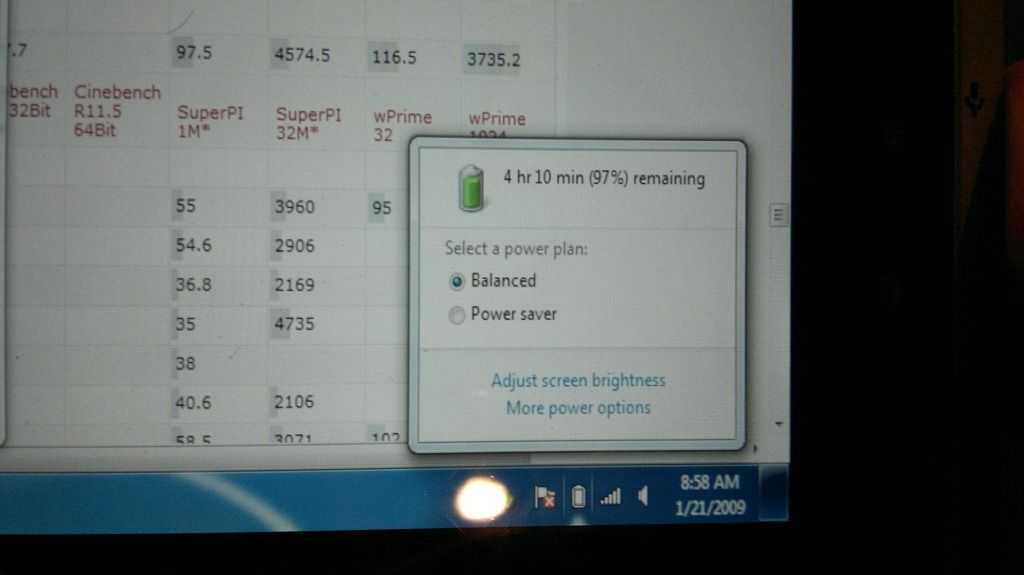
And after a good 10-15 minutes of testing, we saw over 4hrs left on the battery (97%) which is an indicator of working time. Given the low TDP of the Cedar Trail platform we expect it to idle down well to add a few hours to that.

13092011752

One thing we still haven’t worked out is the screen resolution although the 110W has 1280×800. If that’s the case, this could make the perfect entry-level Windows 8 tablet.

MSI WIndpad U120W–Cedar Trail Tablet

Still outstanding from Cedar Trail tests are definitive 3D graphics performance tests. We’ve seen an indication that the N2800 with the graphics clocked at 650Mhz will be twice as good as the graphics on the Pine Trail generation but remember, the N2600 graphics are clocked lower. Don’t expect anything ground-breaking here.

Cedar Trail – GMA3600 Handles 27Mbps, Blu-Ray

Tags: , , , , ,


cedar trail videoI remember physically sighing when Intel announced a dual-core Atom as the answer to video playback issues on the netbook. It’s not that way to do it at all which is why I’m very please to have confirmation that Cedar Trail, the latest netbook platform, will have hardware decoding support. The GMA3600 graphics core is based on PowerVR technology from Imagination and while I didn’t get full specs,  (it’s said to be SGX 545 at 400Mhz) I did get visual confirmation.

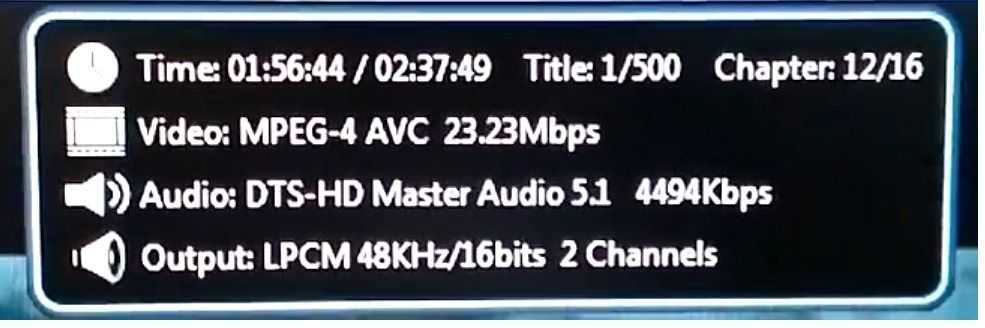
In the video below you see up to 23Mbps of H.264 and 4.5Mbps of DTS-HD audio being decoded with a Cedar Trail CPU level of under 20%. It’s a Blu-Ray disk that’s being used as the source. The player is Cyberlink PowerDVD I think. For reference, the Menlow platform used the GMA500, the Oaktrail platform uses the GMA600. Medfield and Clover Trail graphics units are unknown to me at this point but I do know that Clover Trail is supposed to be more powerful than Medfield.

There are no hardware encoding capabilities in Cedar Trail.

MSI Windpad 120W – Bring on the Cedar Trail USPs

Tags: , ,


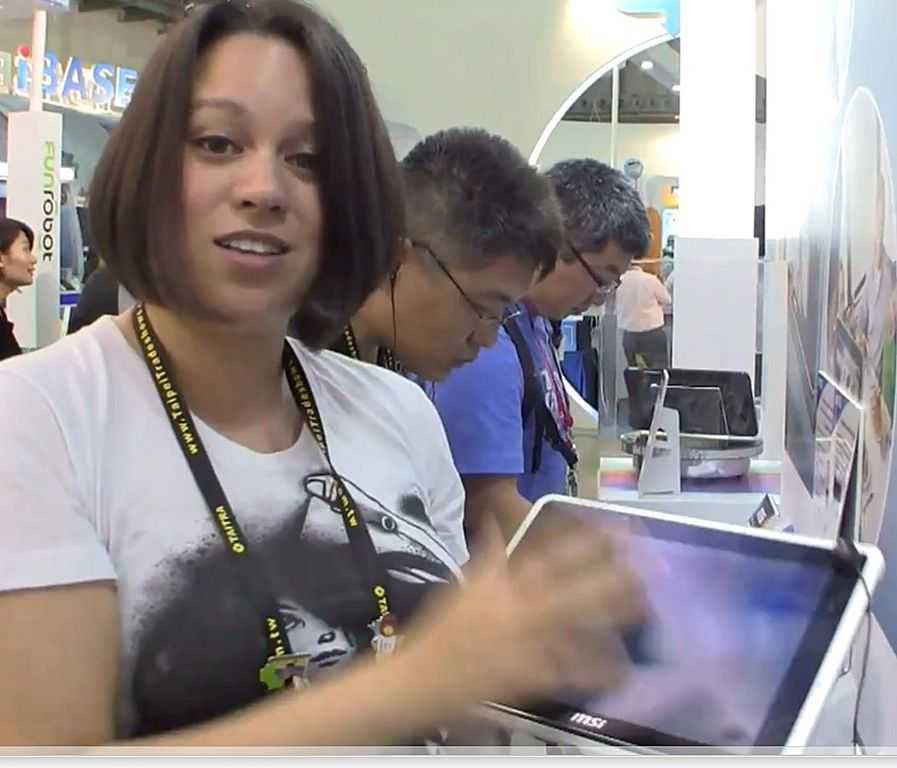
Windpad NicoleThis is the way it’s going. You’ve got a CPU and a GPU but it isn’t enough to differentiate as power envelopes, battery life and processing power from all vendors converge. You’ve got to provide more than just a CPU and GPU and that’s what Cedar Trail is all about. WiDi, wireless audio, Fast Flash Standby and integrated 3G.

The Windpad 120W could be one of the first to feature these USPs and although I’m sure they will come at a price premium, they will certainly set the 120W apart from the AMD based 110W and if executed well, provide some real value. What will also be interesting is to see how the dual-core, dual threading 1.86Ghz CPU performs. It should turn in scores 20-30% better than the Z-01 based Windpad 110W. Battery life will be a figure to compare too. I’d really like to get both of these under the cameras for a live session as soon as I can.

Netbooknews have again done a good job with the video and in the article here you’ll find specs and a couple of pictures. The video is embedded below and we’ll try and get the Windpad 120W in the database later today.

Intel’s Canoe Lake Proto Coming to Market with Cedar Trail CPU

Tags: , , , ,


canoe lake

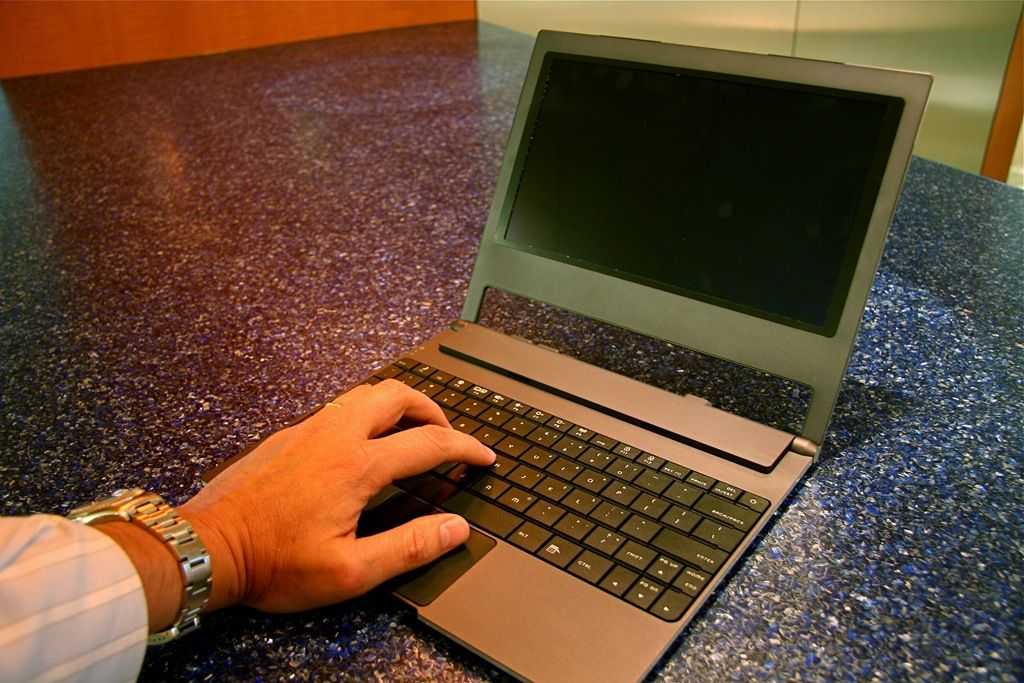
A year ago, Intel teased us with a reference design build on top of a PineTrail CPU. Canoe Lake was a stunning looking netbook but alas, only a reference design. This year though, that could change. Malata are offering it up to their customers.

malata canoe lake

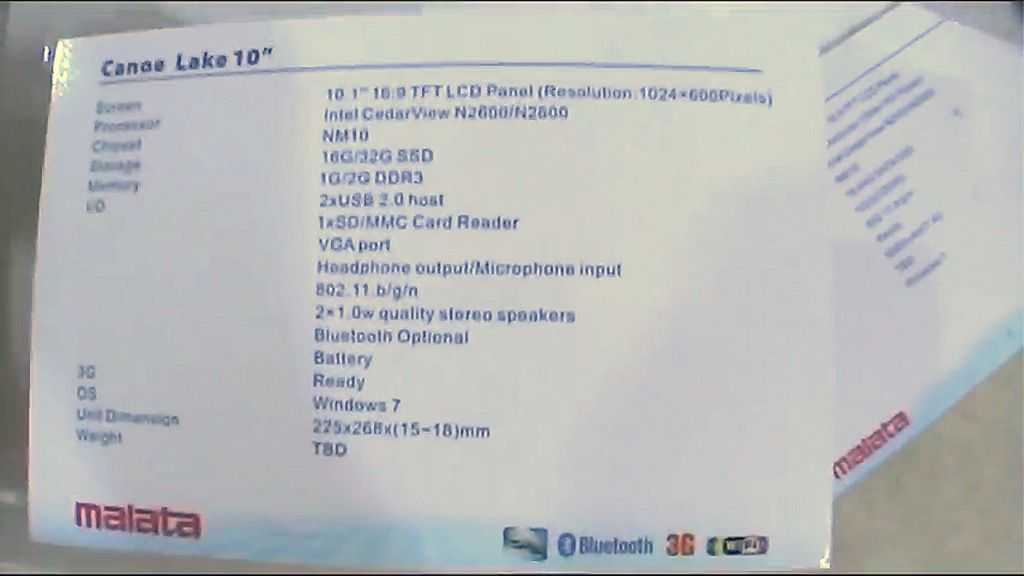
As you can see though, Malata will build it with the new Cedar Trail platform using the N2600 and N2800 CPU parts. The price, weight, timescale and finer specification details are still unknown but we’ll be tracking this and bringing you the latest soon.

Expect a tracking page up in the product portal later today.

JKKMobile spotted this and has a video, embedded below.

Press Release Reveals Intel Plans Ahead of Keynote. Ultrabooks and Android Feature.

Tags: , , , ,


While not too surprising in terms of content, this leaked press release, a few hours ahead of Intel’s Computex Keynote, highlights a big shift towards ultra mobile and Atom-based solutions.

Key points of the press release are the accelerating Atom program, a Medfield tablet running Honeycomb, Ultrabooks, Cedar Trail and 10 tablets based on Oaktrail. We suspect these tablets will be included in the demo but we’re interested in the missing items!

Update: The tablets shown on the Intel booth are from: Fujitsu, Lenovo, Motion, MSI, Open Peak, Toshiba, Viliv, and WeTab and ODM customers – BYD, Clevo, Compal, CZC, ECS, Foxconn, Inventec, Lengda, Malata, Pegatron, Quanta, Topstar and Wistron. Not all of these are running the Oaktrail platform.

We’re in contact with a few teams on the ground at Computex and will bring you their news, images and videos later.


Intel’s Maloney Talks Mobile Growth, Industry Opportunities at Computex
New Roadmaps Across Intel® Core™ and Atom™ Processor Families to Usher in Next Wave of Laptops and Connected Mobile Devices
NEWS HIGHLIGHTS
Intel defines new category of mainstream thin and light mobile computers, called Ultrabook™.
Intel aims to shift 40 percent of consumer laptops to the Ultrabook™ by end of 2012.
Separately, Intel is accelerating the Atom™ processor roadmap to a one-process-generation per year cadence to enable a wider range of optimized solutions for multiple market segments.
Intel highlighted its next-generation, fanless netbook platform, codenamed “Cedar Trail,” a range of new Atom processor-based tablets available today, and a “Medfield” tablet reference design for sub-9mm designs, weighing less than 1.5 pounds and supporting a choice of operating systems.
COMPUTEX, Taipei, May 31, 2011 – Intel Corporation Executive Vice President Sean Maloney today said that by the end of 2012, 40 percent of the consumer laptop market segment will encompass an emerging new breed of no-compromise computers, called “Ultrabook™,” which will increasingly combine best-in-class performance, improved responsiveness and security in thin, elegant form factors.
During the opening keynote speech at Computex, one of the world’s largest technology trade shows, Maloney provided further details on the significant changes Intel is making to the Intel® CoreTM processor roadmap to enable this new category. He also reiterated Intel’s push to accelerate the pace of innovation for Intel® AtomTM processor-based system-on-chips (SoCs) for netbooks, smartphones, tablets, and other companion devices.
“Computing is taking many forms,” said Maloney. “Technology innovation is a catalyst, and we believe the changes Intel is making to its roadmaps, together with strong industry collaboration, will bring about an exciting change in personal computing over the next few years.”
The “Ultrabook™”
Intel’s vision is to enable a new user experience by accelerating a new class of mobile computers. These computers will marry the performance and capabilities of today’s laptops with tablet-like features and deliver a highly responsive and secure experience, in a thin, light and elegant design. The Ultrabook™ will be shaped by Moore’s Law and silicon technology in the same way they have shaped the traditional PC for the past 40 years.
Maloney described three key phases in the company’s strategy to accelerate this vision, which begins to unfold today with the company’s latest 2nd Generation Intel® CoreTM processors. This family of products will enable thin, light and beautiful designs that are less than 20mm (0.8 inch) thick, and mainstream price points under US$1,000. Systems based on these chips will be available for the 2011 winter holiday shopping season and include the UX21, ASUS* Ultrabook™. ASUS Chairman Jonney Shih joined Maloney on stage to showcase the company’s new ultra-thin laptop based on the latest 2nd Generation Intel Core processor.
“At ASUS, we are very much aligned with Intel’s vision of Ultrabook™,” said Shih. “Our customers are demanding an uncompromised computing experience in a lightweight, highly portable design that responds to their needs quickly. Transforming the PC into an ultra thin, ultra responsive device will change the way people interact with their PC.”
Building on the latest 2nd Generation Intel Core technology, Maloney outlined the next generation Intel processor family codenamed “Ivy Bridge,” which is scheduled for availability in systems in the first half of 2012. Laptops based on “Ivy Bridge” will bring improved power efficiency, smart visual performance, increased responsiveness and enhanced security. “Ivy Bridge” is the first high-volume chip based on Intel’s 22 nanometer (nm) manufacturing technology that uses a revolutionary 3-D transistor design called Tri-Gate announced in May. Maloney also highlighted complementary USB 3.0 and Thunderbolt™ technologies which are part of Intel’s ongoing work to drive the PC platform forward.
Following “Ivy Bridge,” planned 2013 products codenamed “Haswell” are the third step toward achieving the Ultrabook™ and reinventing the capabilities of the laptop in ultra thin and light, responsive and more secure designs. With “Haswell,” Intel will change the mainstream laptop thermal design point by reducing the microprocessor power to half of today’s design point.
Accelerating the Intel® Atom™ Processor Roadmap
Maloney highlighted key milestones and additional details on upcoming generations of Intel Atom processor-based platforms for tablets, netbooks and smartphones. The Atom processor will outpace Moore’s Law, accelerating from 32nm through 22nm to 14nm within 3 successive years. Having a cadence of a new-process-generation every year will result in significant reduction in transistor leakage, lower active power and an increase of transistor density to enable more powerful smartphones, tablets, and netbooks with more features and longer battery life.
Reaching its 100 million-unit milestone this month, Intel is preparing its next-generation netbook platform, codenamed “Cedar Trail.” “Cedar Trail” is the first netbook platform based on Intel’s 32nm technology, and will enable ultra-thin, fanless designs with new capabilities such as Intel® Rapid Start technology which provides fast resume, Intel® Smart Connect Technology which enables an always updated experience even during standby, Intel® Wireless Display and PC Synch, which let users wirelessly update and synchronize documents, content and media across multiple devices. In addition, the new platform is expected to enable more than 10 hours of battery life and weeks of standby. “Cedar Trail” will support leading operating systems, such as Microsoft Windows*, Google Chrome* and MeeGo*.
In addition, Maloney showcased more than 10 tablets, running on three different operating systems, that are available today based on the Intel Atom processor Z670. The platform already has more than 35 design wins since its launch in April, with several convertibles, sliders and other innovative designs on shelves now and more coming through the rest of the year.
Maloney also discussed “Medfield,” Intel’s first purpose-built 32nm platform for smartphones and tablets. “Medfield” has been optimized for both low power and high performance and will deliver long use-time, rich media and gaming, and advanced imaging capabilities. To illustrate this point in tablets, Intel showcased a “Medfield” design running Google Android* 3.0 (“Honeycomb”) for the first time. In production later this year, the platform will enable sub-9mm designs that weigh less than 1.5 pounds for tablet designs in market the first half of 2012. It will support a range of operating systems including Android and MeeGo.
According to Maloney, “The work Intel is doing with the Intel® Atom™ processor roadmap, coupled with the significant changes we are making to our Intel® Core™ processor roadmaps, will continue to enhance Intel’s ability to deliver complete hardware solutions with a choice of software platforms across a full spectrum of computing — from back-end servers that power the cloud to the billions of devices that access the cloud.”
The Cloud’s Rapid Expansion
More people and devices connecting to the Internet will lead to unprecedented growth in cloud-based services for storage, synchronization and entertainment, according to Maloney, and Intel is poised to grow with it. He said that one new Intel-based server is needed for roughly every additional 600 new smartphones or 122 new tablets connecting to the Internet. He also reiterated the company’s “Cloud 2015″ vision of a world of interoperable “federated” clouds that allow enterprises to share data securely across public and private clouds; “automated” networks that allow the movement of workloads between servers in the data center for better utilization and energy efficiency, and “device-aware” clouds that know what types of applications, commands and processing.
In closing, Maloney stressed the critical role of the Taiwan IT industry in the next transformation of computing. He called for collective innovations that will lead the industry into the next era as computing takes many new forms and becomes ever more pervasive and affordable. “The Taiwan IT industry will be instrumental in realizing this vision,” said Maloney.
More information about today’s announcements is available at www.intel.com/newsroom/computex/index.htm
About Intel
Intel (NASDAQ: INTC) is a world leader in computing innovation. The company designs and builds the essential technologies that serve as the foundation for the world’s computing devices. Additional information about Intel is available at newsroom.intel.com and blogs.intel.com.
Intel, Intel Core, Atom, the Intel logo and Ultrabook are trademarks of Intel Corporation in the United States and other countries. * Other names and brands may be claimed as the property of others.

Keeley Lake. Another Reference Design that Intel Should Produce

Tags: , , ,


Is it Oaktrail or is it Cedar Trail. Given that Cedar Trail is likely to be a big component of Intel’s keynote in about 4hrs (with netbook and tablet details scheduled for another keynote tomorrow) then that’s where I would but my money.

Notebook Italia got a glimpse of the ultra-thin device which has ports re-located to the rear due to the thinness of the chassis. Remember the Cedar Trail is rumoured to have a PowerVR graphics core and WiDi support. The power envelope should be around 4-5W TDP for the platform and that matches the thermal limitations I’m seeing in that design, even if I can’t go and touch it from here! Also keep an ear open for ‘always updated’ which is something that would require new hardware and software.

The other interesting thing is that the designers have squeezed in a convertible screen without bulking the design out as central hinges tend to do. Still, this is only a reference design; practicalities often get ignored for those!

keeley lake

Notebook Italia have another image here.

Cedar Trail Summary, Architecture, Features.

Tags: , , , , , , ,


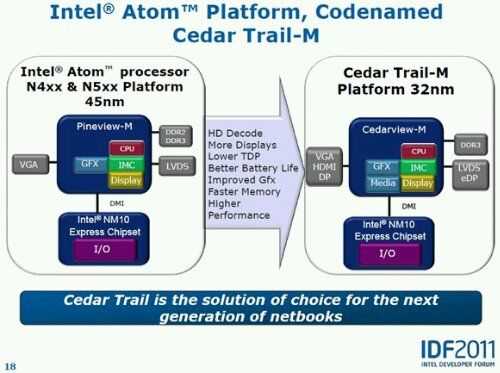
Technical sessions at Intel’s IDF in Beijing have all finished now so it’s time to go through some of the presentation material, the press releases and interview information from various sources to put together a summary of what Intel are planning with Cedar Trail in the netbook market. some details are still misssing but at this stage we can put together a fairly complete picture.

Intel’s netbook strategy comprises two platforms. The first, and the one that appears on most netbooks, is the Pinetrail platform. That is due for an update later this year and the new platform will be known as Cedar Trail, the one we’re discussing here.

The second platform is a more specialist, low end [performance] platform that grew out of the Menlow UMPC platform. Oaktrail, which uses the Z6xx Lincroft cpu is shipping now and offers a lower TDP with refined graphics and enhanced power-saving features. Oaktrail is for embedded, tablet and thin, light and rugged netbook solutions. Information on Oaktrail can be found here.

atom roadmap

Netbook market predictions.

While excitement in the netbook sector has cooled off somewhat and most commentators agree that some parts of the market are seeing competition from tablets, the sales numbers remain significant.

netbook tam

Note that this is the total addressable market. AMD Fusion, ARM and VIA-based devices will be competing for this market too. For Intel to compete it needs to address the top, bottom and specialist segments of the market.

Meet:Mobility Podcast 68 – Dynamic Discussions + Special Iconia Hands-On!

Tags: , , , ,


Meet:Mobility Podcast 68 is now available along with a special first hand-on report from Sascha with an early release of the Asus Iconia Tab A500

In the podcast we discuss some limitations of the AMD Fusion platform the Cedar Trail Netbook platform, attack the pricing of high-end tablets and talk about ‘High Dynamic Range Computing’ Listen in to find out more.

Don’t forget to give us some feedback on iTunes or a tweet to @meetmobility We’re still ad-free!

Listen, subscribe and download at MeetMobility here. The Iconia Tab A500 Special is here.

Four more features revealed in Intel Cedar Trail presentation video.

Tags: , ,


Information on Cedar Trail is being tightly controlled this week at Intels IDF event in China. Launch isn’t expected until the second half of the year with devices being ready for the Oct, Nov buying season so clearly the platform isn’t final yet.

We’ve learnt that the video decoding hardware is on-board which indicates a new GPU and we’ve been told that Intel Wireless Display (with no mention of 1080p by the way) will join Wireless Audio and wireless syncing.

If you pay close attention to the video you’ll hear about four more features that haven’t been mentioned in press releases.

First, Doug Davis talks about a ‘frequency’ improvement for the CPU. This could mean a useful boost into 1.8 or 2.0Ghz territory which we already know Atom is capable of from the Atom Z500 series cpus. Combined with dual-cores and the process improvements we could see quite a significant jump in cpu power of 30% or more.

Secondly, you’ll hear a mention of a 50% lower thermal design point. That would bring the platform down to around 4 watts which is a huge improvement that would save significant battery life when used in high load working conditions. Possibly 30% again.

Listen to the mention of ‘Always Updated’ which will allow applications to get updates when in standby. That’s interesting wording be cause it doesn’t say ‘always on.’ This could be linked with the fourth feature mentioned to provide quick wake, poll, sleep cycles.

Quick boot is the fourth feature. If this is to work with Windows it could be a trick that allows very quick standby state recovery. Perhaps an on-die memory cache? I don’t know but it could be very useful, especially when coupled with a boot-and-poll sequencer.

video from Netbooknews.

Posted from WordPress for Android with the Galaxy Tab

IDF Beijing: Oaktrail to run 3.75W TDP. Next Gen Netbook Platform to get HD Video Acceleration

Tags: , , , , , , , ,


p_atom-z6xx_with_sm35_express_chipset_front_2

Z670 and Z650 Launched with 3W TDP

Details of two Oaktrail parts have been revealed by Intel today confirming pretty much everything we knew already! Availability of the Oaktrail parts are ‘now’ but as I mentioned in a tweet a few days ago, the first products shipping with Oaktrail won’t appear until at least May.

Two part numbers have been confirmed. The Z670 and Z650 (1.5Ghz and 1.2Ghz)  are both 3W CPUs and will be paired with the SM35 chipset at 0.75W. Remember that on the previous Z-series generation, codenamed Menlow, the two-chip solution came in at around 5W for the same capability. Both parts are manufactured on the 45nm process.

We’ve been fairly sure that the graphics core would be another PowerVR design for a long time but Intel finally confirmed that it’s the GMA600 clocked up to 400Mhz. That’s twice the speed of the GPU on Menlow and it should provide a noticeable boost. We’re not sure of the core design yet.

Importantly, the memory controller is now on-die with the GPU and CPU and this should also provide a noticeable boost as it did on Pinetrail in 2010. Other features include Intels ‘Deeper Sleep’ , ‘Enhanced Speed Step’ and, as on the previous generation, 1080p hardware decoding.

The SM35 chipset provides a new SATA interface USB is limited to V2.0 only. HDMI ports are supported.

Z6xx details
This slide refers to the Z6xx series in embedded, long-term-support versions. Apparently the consumer version of the Z670 is shipping ‘now.’

We’re working with a couple of OEDs to get a sample of an Oaktrail Tablet in the studio soon for more testing. We’re confident of good battery life on Oaktrail but need to test more on the performance side of things. Here’s our ECS Oaktrail Tablet hands-on at CeBIT.

Intel are talking about 35 Oaktrail design wins. Some of them are shown below.

p_asus-eeepad_slider_frontp_evolve

p_fujitsu-stylistic_tablet p_lenovo-ideapad_slate_frontbackp_motion-cl900tablet_pc_stylus

Asus Eee Pad Slider, Evolve III, Fujitsu Stylistic Q500, Lenovo Ideapad Slate, Motion Computing L900

Next Gen Netbook Platform – 2H 2011 – to Include hardware video decoding.

Intel will be leaking various details of the new Netbook platform over the next 24hrs but have already confirmed some of the Cedar Trail predictions I made last week. Wireless Display and Wireless Audio will be included on the platform along with a 1080p hardware decoding. Either this indicates a shift to a Z-series style GPU core or a totally new GPU design. I suspect the latter in order to include much needed 3D enhancements.

Fanless designs are mentioned in the early press teaser although Joanna Stern managed to get an interesting quote out of Intel. Apparently the Cedar Trail platform will get a ‘big boost’ in performance. Are they going dual-core across the range or is this just a reference the a new GPU that could compete with AMD’s Fusion APUs?

Expect more on Cedar Trail over the next 24hrs.

Source: Intel Press

What are You Looking for in The Next Ultra Mobile Personal Computer?

Tags: , , ,


Ignore the old Orgiami-related UMPC term and take it for what it stands for. What do you want from your next Ultra Mobile Personal Computer?

Next week at IDF Beijing, Intel will be revealing what we suspect to be Cedar Trail, the next generation netbook platform. The problem is that there have been big changes in this market in 2010 and 2011. Netbooks have changed thanks to AMD, the user has changed, the internet has changed and there are now 3G-enabled, always-on tablets available for the price of a netbook. Intel may not have had time to build that market change into their new product so lets take  look at what it could reasonably achieve and then ask the question, what do you want in an ultra mobile personal computer?

umpcs

Cedar Trail predictions here are based on personal knowledge and experience.

Cedar Trail is unlikely to be a major step forward in processing, graphics or video power but is likely to use the latest technologies and process to offer smaller dies which also means cheaper prices and lower power. In previous netbook platform generation changes we’ve seen 20% performance improvements couple with a 20% improvement in efficiency. Cedar Trail is unlikely to beat that so it would make sense that Cedar Trail is aimed at pushing the size and cost down. In the developed countries it is unlikely to make a huge difference but it could make a difference in developing countries.

Processing – Cedar Trail will be based around the Atom core and is likely to remain a 2-chip solution with CPU, GPU and Memory Controller on the same die. A change in the process to 32nm will improve efficiency and allow for a reduction in die size. Single and Dual-Core versions are likely to be available and clock rates are likely to remain in the 1.5-1.8ghz range. Hyperthreading will of course be included but we’re not expecting any surprises in terms of processing performance. No Turbo Boost, 2Ghz or quad-core versions…yet.

Graphics – This is an area where the Pinetrail platform has been hit hard in the last few months and Intel will either need to turn round something that matches the AMD C-50 APU or offers another angle. I don’t suspect a move to Power-VR cores and I don’t expect a huge boost in 2D/3D acceleration.  Don’t expect any GPGPU-related enhancements either. Cedar Trail is unlikely to compete with AMDs APUs in that respect because Cedar Trail is likely to be aimed at lower cost, smaller size, lower power.

Video – HDMI out is a must along with HD decoding. I expect that to be the major enhancement in Cedar Trail which will link with Adobe Flash to finally offer a smooth 720p YouTube experience and a 1080p experience via HDMI cable.

Restrictions – Microsoft is likely to continue to offer netbook-level licensing but that doesn’t mean that the platform itself can’t be used for other purposes. Expect Cedar Trail to be the simplest route to designing a Windows 7 Tablet which means you’ll see it with Windows Home Premium and MeeGo meaning 2GB and larger screens.

Pricing – Platform pricing will reduce slightly but the main cost advantages come in sizing and power budget. The smaller size and lower power dissipation means less time and material needs to be spent on the enclosure and motherboard. A fanless design could mean sealed-units which means a major saving in design and production costs. Smaller batteries can considerably reduce cost, especially when they are sealed-in units. Sub $200, 5hr units should be possible.

Power Envelope – With video decoding moving to a dedicated chip there will be improvements in the battery life claims from netbook manufacturers. The 8W TDP figure is likely to shrink to 7W to reflect this but be aware that these advantages may be offset by manufacturers as they enable lower cost or smaller batteries, again, meaning lower-cost products. Video playback battery life is likely to be the only truly noticeable change.

Features – Intel may choose to offer a wireless subsystem that includes support for Wireless Display and Wireless Audio. These ‘value-add’ features will be used in developed markets on higher-end products. USB3.0 is unlikely.

Always-On? One of the game-changing features for a netbook would be always-on. That means idling down to 100s of milliwatts of pwer usage. unfortunately, the basic PC platform is not built around this concept. The Cedar Trail platform is likely to adhere closely to the PC platform architecture and thus is not likely to offer any always-on features. That’s the value-add for the Z-series platforms (Oaktrail, Moorestown, Menlow)

Mcafee in silicon? Not for this time round. Like ‘Intel Insider’ and other premium silicon features, we’re likely to see these in high-end notebooks and desktops before the feature becomes cheap enough to put in a netbook.

In summary, Cedar Trail will bring two things to the market:

  • Cheaper netbooks for developing markets. Possibly sealed-unit low-cost 3-cell netbooks for the first time.
  • Thin, light, fanless, HD video, wireless display, HDMI features to high-end netbooks. Claims of battery life will increase but the average in-use battery life is likely to stay around the 7hr mark for advanced 6-cell netbooks.

Boring? Unfortunately, for most readers of this site that I know live in developed countries, yes. Cedar Trail isn’t going to be the marketing-fest that AMDs Fusion was although Intel and their partners will certainly try. There will be no major gaming performance advances. No GPGPU features and no high-end connectivity through USB3 or LightPeak. There will be no always-on features either but that’s largely the fault of the PC design itself. (And the reason why Moorestown and Medfield can’t run Windows!)

Asus Eee Pad TransformerViliv X70

Eking M5 UMPCHTCShift00a

What do you want from your next Ultra Mobile Personal Computer?

Key features I’m watching for this year are:

  • High Dynamic Range Computing (ultra low power to high-power computing in one unit)
  • Controlled Always On feature (not wild multitasking always on as with Android)
  • GPGPU features for accelerated browsing, image and video processing.
  • Modular Design
  • Fun, dynamic user interfaces
  • Attention to sharing in the operating system
  • Controlled standby with restricted multitasking / use of silicon. (To provide the ultimate always-on battery life)
  • Application store
  • Touch and Keyboard
  • Location support subsystem
  • Multi-user
  • Phone and Desktop devices in the same family running the same operating system.
  • Cloud-based applications (Like Google services)

What i’m talking about is a modular netbook that spans the world of mobile features and desktop features. You could also see it as a smartbook that breaks out of the cheap software mould and offers rich working applications such as office suites, a/v production and developer environments. It’s a device that spans the two Full Internet Experiences. Or maybe it’s two, that work together. We’ve seen attempts at this before but so far we haven’t seen the processing platform or operating system that has been able to drive it. Android and MeeGo are moving in the right directions and we should also expect Windows 8 to embrace this. Think of devices like the Asus Transformer.

Related article:  Social Netbooks and ARMs Lock-In Opportunity

Related article from GigaOm -  The Big Mobile and Desktop Platform Merge Is Underway (Written recently by Kevin Tofel)

I’ll be speaking about high-dynamic range computing and bridging the mobile / desktop gap at Mobile Monday next week in Munich.

The related IDF keynote will be on the 12th April (time on your location)

So fire away in the comments below – what are you looking for in a 2011 Ultra Mobile Personal Computer?

Intel to give First Looks at ‘New Generation’ Netbook platform at IDF Beijing

Tags: , , , ,


IDF Beijing is the first Intel Developer Forum of 2011 and it starts on 12th April. While it’s not as big as IDF San Francisco in Sept it serves an important event for Intel in Asia because it is about now that ODMs will be looking at platforms for the Q4 market. IDF Beijing could provide us with important clues as to what advances will be made and how Intel want to market their platforms and software solutions in 2011.

In previous Beijing events we’ve seen…

IDF Beijing 2010 – Tunnel Creek. Next-gen embedded Atom platform

IDF Beijing 2009 – New Mids

IDF Beijing 2008 – Intel Atom products – first availability info.

IDF Beijing 2007 – MIDs are the new UMPCs

IDF Beijing 2011 includes a raft of Atom and mobility-focused sessions. Digitimes also say that Intel are encouraging notebook manufacturers to develop Android/Intel solutions for demonstration at IDF.  Doug Davis, General Manager, Netbook and Tablet Group will be giving a keynote so that’s the one to watch. I suspect that the Android Tablets won’t be the big news from his keynote though.

Taking a detailed look at the session catalogue there’s one session that stands out and having just put my thoughts down about the next generation netbook platform [extract below] this is one session I will be watching carefully.  Cedar Trail needs to make more than just an evolutionary step – critical architecture changes are needed to put value-add and GPU performance into the platform.

Here’s the detail from the session catalogue:

Designing a New Generation of Netbooks with the Intel® Atom™ Processor Based Platform

This session will introduce a new set of platform features and innovations that will allow HW manufacturers and developers the opportunity to build the next generation of exciting netbook designs that will delight the consumer. In addition, attendees will get first looks at the next generation Intel® Atom™ processor based platform.
Topics covered in this session:
• Platform capabilities enabled by Intel® WiFi solutions that deliver new netbook usage models
• Features and benefits overview of the next generation Intel Atom processor based platform
• Thermal solutions for cool and quiet fanless netbook designs
Exciting demonstrations

I’ve highlighted the important lines but also take note of the Intel Wifi note. In my opinion that relates to Wireless Display and Wireless Audio. That’s exactly what needs to happen to create a unique value-add. The new netbook platform is currently known as Cedar Trail.

Here are my thoughts on Cedar Trail:

I confess that I didn’t have a lot of faith in AMD’s Brazos solution but they did it. They’ve made a classic disruptive move which will change the face of the netbook forever and, unless Intel repond quickly, take share away from Intel in the low-cost computing market. Well-known features/keywords like ‘HDMI’ and ‘1080p’ that are recognizable to the man on the street will differentiate AMD from Intel and where the price is the same, there’s little to think about. Games are also possible on AMD netbooks and it leaves little room for Intel to play in when it comes to Cedar-Trail.  They’ll have to increase the CPU power (1.66ghz dual-core is a nice figure that looks better, and performs better than the AMD 1.0Ghz solution) and add their thermal monitoring to allow overclocking on a core-by-core basis. 2.0Ghz ‘Turbo’ will be worth seeing. They’ll also have to add the 1080p capability from their Menlow and Moorestown platforms. To beat AMD they will need Wireless Display and hardware-accelerated H.264 and WMV encoding features to help with video format conversion. Longer battery life is a must and this is something Intel is highly likely to deliver with amazingly low quiescent states and very tightly-coupled wireless solutions. Given the likelihood that they will have a lower platform TDP and enable a smaller motherboard size, Intel solutions are likely to be thinner and lighter.

A convergence of the Oaktrail and  Pinetrail platforms into Cedar Trail (in terms of GPU architecture) is also needed in order to unify the platform for other software stacks but what would also be interesting would be Intels ‘power island’ or ‘power gating’ technology brought to netbooks. That could bring ‘always-on’ with compatible operating systems such as MeeGo, Android or even Chrome OS.

Intel need to deliver something special with Atom at IDF Beijing. Smartphones based on their technology are still missing from the market; Intel-based tablets are largely Windows-based and still not being delivered with Oaktrail; MeeGo is still unproven and the Intel netbook platform is being challenged by AMD.

Other Sessions planned for 2011

  • Developing Intel® Atom™ Processor Based Tablets
  • Optimizing Touch Experience on Intel® Atom™ Processor Based Platforms
  • Intel® Atom™ Processor Power Optimization Guide

The complete session guide is here.

IDF 2011 website is here.

If you’re at IDF Beijing and are interested in reporting for us, please get in touch via the contact form.


Recommended Sites

  • Big Beach Our marketing advisors. Located in UK.
  • Carrypad Tablets and consumer mobile products
  • JKKMobile JKKMobile – Mobile computing and hacking – Partner of UMPCPortal
  • Liliputing Netbooks and small-form-factor laptoping – Partner of UMPCPortal
  • Ultrabook News Ultrabook products, specs and news