Tag Archive | "Tablet"

Windows 8 – Is the UI really That Hard to Understand?

Tags: , , , ,


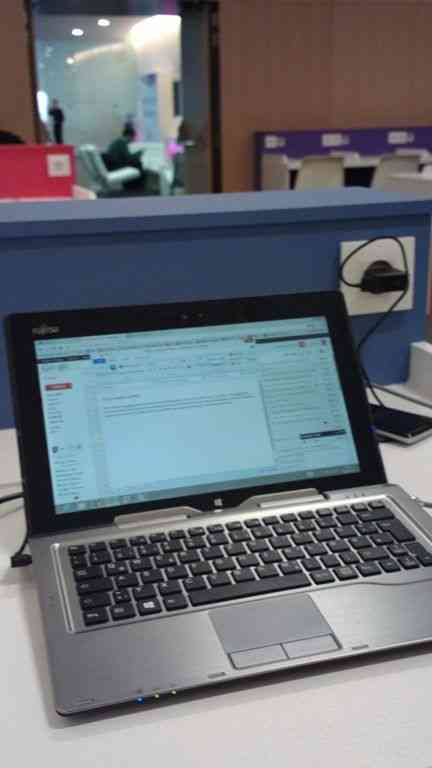
P1040109I’ve read a lot of negative press about the Windows 8 user experience recently which seems to focus on a ‘problem’ created by having two user interfaces that will confuse users. I just don’t see that issue. Sure, there will be some new things to learn, every new system has a learning curve, but I don’t see huge barriers in Windows 8.

Today I’m working on a Windows 8 Tablet. I’m working, which means I’ve got a keyboard, a mouse and a large screen in front of me.

Windows booted quickly on this Atom-based tablet PC (ExoPC) and because I just wanted to do some Chrome work and write this post I went straight to the desktop by clicking ‘Desktop.’ It works like any laptop or desktop.

I’ve been in ‘desktop’ all the time I’ve had my bum on my seat (apart from taking a few images) and as you would expect, Metro is not causing me any problems. I can switch to it very easily by dragging the mouse to the top left, bottom left corner or pressing the Windows key, Alt-Tab and other methods that didn’t take me too long to work out. If you want to use Windows 8 like you used Windows 7 there’s no issue.

If you end up in Metro through inquisitiveness or accident you can either hit the ESC or Windows key to toggle to the last application, Alt-Tab to see a list of running programs, use the programs list accessed from pointing to the top-left corner of the screen or I can hit that big icon in front of me that says ‘Desktop.’

Desktopdekstop tasks

On my keyboard I even have an Alt-Tab button that looks like a set of Windows, a media button that starts Media Player (in the Desktop) or I can even just start typing “desktop” and I’ll be shown the shortcut to hit. If in doubt, press the Windows key and start typing. Word, Desktop, Mail, Photo, Music, Help. You can even type the name of a file or a setting. They all work! If you don’t have a keyboard, swipe from right and press the search button.

How simple do people actually need this to be to be convinced that if you want the Desktop it’s there and if you want to do stuff when you don’t have a keyboard, there’s a new interface that can really help. You can get going on day 1, and start discovering after you’ve read your email!

Windows 8 is not a Fischer Price toy or a gaming console, it’s a rich operating system that can help you get things done like few other operating systems can, either with keyboard and mouse or with a finger. Some people may take a few minutes to understand this idea but isn’t that just normal, and worth the time, for a rich operating system?

MSI thinking carefully about Pro Tablets and Windows 8 (+Video)

Tags: , , , , , , ,


MSI WindpadAs I tool a look at the MSI booth at CeBIT yesterday I couldn’t stop myself from getting a little hands-on with the Windpad 110W. AMD Fusion-based and equiped with a nice optical mouse pointer and full SD card slot it’s a tablet design that could rally benefit from the next-gen OS and platforms.

The MSI rep nods and smiles and I talk about 1366×768 and Windows 8, as we discuss the reason for having a mouse pointer in a 1KG tablet and how Windows 8 + Clover Trail W with a fast SSD could really bring usable low-cost productive tablets to end-users.

MSI won’t say anything about new products but they’re clearly thinking about this. In tact, I got the impression that they’re more interested in Windows tablets than in Ultrabooks which they tell me are not going to be broguth to the market until they have taken a longer term look at the Ultrabook market.

It’s a blast from 2011 to play with the Windpad again but I think that we’re going to see more of this later this year. Tablets, convertibles and, my favorite, the detachable Atom-powered Win8/Android screen and Intel Core-driven keyboard base station, all in under 1.5KG!

XPPhone V2 Coming With Intel Inside. Enjoy the Press Release

Tags: , ,


image

It looks like the XPPhone guys are at it again with their ultra-converged solutions. This time a 4.8″ mini Slate ‘phone’ running on a 1.6Ghz Atom platform.

Not much information is given in the press release regarding specifications but given that all the Images are renders, this is likely to be something for 2012, and a rather niche market given that the weight and active standby time on this ‘phone’ is going to be restrictive.

We doubt its a Medfield phone but we’ll keep an eye on this one as a Viliv S5 alternative. In the meantime, enjoy the press release!

http://en.xpphone.com/news/kuaibao/114.html

Ocosmos OCS9 Windows 7 Slate, Get $50-off from Dynamism [video]

Tags: , , , , ,


ocosmos osc9The elusive company is back with the Ocosmos OCS9 — Ocosmos has tantalized us with awesome UMPC concepts for years, but the devices have always turned to vaporware seemingly just prior to release. Well, it seems Ocosmos is at it again, but this time, we’re certain that they’ll actually be bringing a product to market, thanks to the folks at Dynamism.

Surprisingly, Ocosmos actually showed up at last month’s IDF, only after Chippy, Avram Piltch (of LaptopMag), and I chatted about how unlikely it would be! The Ocosmos OCS9 was on display as well as the Android powered “Smart O-bar” controller. Here’s our hands-on (unfortunately we lost the first 50 seconds of audio to technical difficulties!):

The Smart O-bar has a 3.5” 320 x 480 touchscreen as well as two hybrid D-pads (they move like a joy stick, but have individual directional buttons as well) and shoulder buttons. The Smart O-bar is designed to be complimentary to the Ocosmos OCS9, allowing you to connect it for keyboard input and for use as a game controller.

According to the company, the Ocosmos OCS9 is the world’s thinnest Windows Slate, and at 11.9mm, that might just be true. Here are the specs:

Processor
Intel Atom Z670 (Oak Trail) CPU (1.5GHz)Memory
DDR2 2GB RAMDisplay
10.1″ MVA-TFT LCD Display
1280×800 Display ResolutionIntegrated Ports
2x USB 2.0
1x microSD Card Reader (up to 32GB)
1x HDMI (via Docking Station)Power
Li-Polymer (3650mAh)
Up to six hours battery lifeOperating System
Windows 7 Home Premium (32-bit)
Motherboard Features
Intel SM35 express chipsetStorage
16 / 32GB SSDCommunication
802.11 WiFi b/g/n
Bluetooth 3.0
GPSInput/Output
Front-facing 1.3MP WebcamPhysical Features
267 x 173 x 11.9mm

There’s also a few accessories available for the Ocosmos OCS9, including a nice looking dock, a keyboard folio, and even a bag. These will run $70 for the first two, and $90 for the latter. The Smart O-bar is optional as well and is offered for $140.

And the price for the Ocosmos OCS9? Actually, a rather reasonable $699. Dynamism is taking pre-orders for the unit and is giving an additional $50 off for those who order before November 18th, bringing the price to $649. They expect the unit to ship on the 30th of November. We’ll have one on hand for review in the coming weeks.

Windows 8 Metro UI, Tablets and Mobility – Let’s talk about the Mis-Match

Tags: , , , , , , , ,


IMG_7659_thumb2Many of us have downloaded the Windows 8 Developer Preview to give it a test run and I think it’s fair to say that the most exciting feature to test is the Windows 8 Metro UI. Focused on touch, app-snacking, consumption and entertainment it has been an interesting product to think about in terms of mobile computing; real mobile computing. Getting the balance of UI right for both on-the-go and bum-on-seat activities hasn’t been achieved by anyone yet. Windows 8 is the big hope for that in the future.

Not only does Windows 8 introduce this interesting Metro UI and apps layer, it also approaches quick-startup and efficiency. In testing it over the last few weeks on four mobile devices, I’m not as positive as a was a month ago about the Metro UI although it’s way better than anything I’ve experienced as an overlay on Windows before and ultimately, I’m enjoying its responsiveness, sharing sub-system, full-screen Explore browser and dynamic nature. There are some serious issues to talk about though.

The first is that while Metro works on low-resolution devices, the apps won’t because they require a minimum of 768 pixels vertically. For the side-by-side snap feature, you need 1366 pixels minimum width. There are also major issues when working in portrait mode – something that isn’t really supported at all. The resolution restriction seems crazy when you consider the cost and size of 1366×768 screens. I don’t see anyone producing that at 7″ and as it’s not compatible with 1024×600, 100 million netbooks users are going to be left out.

[Ref - Screen size recommendations for Windows 8]

You might argue that we just need much higher resolution screens. I’ve tried Windows 8 on a 1280×800 screen at 5.8″ and yes, Metro apps work. Text might need a little enlargement here and there but it works. Some issues remain though. Touchscreens can’t be recessed otherwise it’s not easy to find the magic swipe that expose the hidden menus on the right and bottom left corner. Forget resistive screens. That’s not such a big deal considering the level of capacitive and digitiser deployment and it’s also not much of an issue for the classic Windows UI either as that’s the one you’ll be using who you’re docked at your desk. The other issue comes with cost and battery drain. High resolution screens are expensive to produce, especially if you want one that’s readable outdoors. There’s also the power cost in terms of the display electronics and the graphics power needed to control it. Given that most people are more than happy with 200ppi, a higher density in a 7″ frame is counter-productive, at least for large-font Metro. People with perfect eyesight may disagree with 200ppi but I regard it as a good trade-off point for screen design.


Metro-UI-Portrait-App_thumb1

Windows 8 Metro UI in Portrait Mode

It’s unfortunate that the developer preview is indicating that portrait mode isn’t encouraged. All the apps in the preview fail to work efficiently in portrait mode despite that fact that in portrait mode you get the best split-screen keyboard experience and preservation of screen real estate.

I agree with those that say portrait is useless on a top-heavy device of 2lb or more but what about 2013, 2014 when 10” Windows 8 tablets could be under 1lb and when even the 7” form factor could be possible with a hi-res screen?

To demonstrate what I mean here, I’ve made a video showing the Windows 8 developer preview on an ExoPC in portrait and landcsape modes.

Continued…

WeTab Will Migrate to Tizen for 2012

Tags: , , , ,


wetabThere are a couple of things I want to bring to your attention about the WeTab 11.6” Atom-based Tablet, currently available in Europe. Firstly, they’ve obviously got to migrate everything from Meego to Tizen now. They’ve released an up-beat statement saying they’ll be ready for the release in 2012 but my heart goes out to this company that put many eggs in the Meego basket. Yes, others have too but they had the first Meego product and have worked hard over the last year to bring updates to the users. I just hope Intel will support them with this move.

Meego, Tizen announcement from yesterday.

We assume that the planned upgrade to a Meego 1.2 based OS is now cancelled while all effort is put into the Tizen migration. We’re waiting for confirmation on that.  Confirmed. There won’t be a new Meego 1.2 update now.

Secondly, the WeTab might be an interesting product to buy right now. Not because of Meego and Tizen but because of Windows 8. There are few tablets out there that offer the screen resolution needed for the Windows 8 Metro interface and if you’re looking to write and test Metro apps or do some testing with Windows 8 on Atom in general you can pick up a 32GB version, with 3G, for just 349 Euro. Even more interesting is the fact that it’s being sold under the German Medion brand as the MEDION MD 98512. Medion have just been bought out by Lenovo. There’s hope for some funding there! Maybe they can take the Lenovo P1 and do something with it too?

Alternatives for Windows 8 testing would be the MSI Windpad 110W (AMD, €500 without 3G) and MSI Windpad 120W (Cedar Trail, not yet available) or the Samsung Series 7 at around €1000, expected at end of October in Europe.

WeTab – Tizen announcement (German)

Fujitsu TH40/D Slider Tablet Hands-On

Tags: , , , , ,


image

You’ve probably seen plenty of previews of Windows 8 over the last 12 hours or so given that its just gone publicly available as a preview. The operating system offers multiple usage scenarios for touch, mobile and productivity. Devices like the Fujitsu TH40 will benefit highly from Windows 8 as they too offer multiple usage scenarios.

I was really quite impressed with the device after my hands on at the Intel Atom Showcase here at IDF. Of all the Oaktrail devices I’ve tried, this has been the best experience yet. I was left wondering why this is only available in Japan.

image

Look out for the optical mouse pointer. Given my experience with other Oaktrail devices I would put the working battery life, screen on, at about 4-5hrs. Two points I would have to think carefully about are the longevity of the slider mechanism and the processing power which, on Oaktrail, is never really going to impress anyone.

BUILD – Windows 8 Tablet with Intel Inside says CNET News. But which one?

Tags: , , , , ,


image

Update. We’ve just heard that Intel gave out 5000 Samsung Series 7 Tablets at BUILD. We were right!

Many are predicting that an ARM-based Windows 8 tablet will be shown to developers at the Microsoft BUILD event next week. I’m sure it will. CNET is telling us, however, that there will be an Intel tablet running Windows 8. This could be huge opportunity for Intel but it comes with a huge risk. If either Windows 8 fails to impress or the device is built on hardware that doesn’t seriously outperform an ARM based equivalent, Intel could be left with egg on its face.

In thinking about the existing hardware platforms I’m left a little worried about performance.

Current netbook platforms are too hot and heavy as are the ultra low voltage Core platforms. Oaktrail, Medfield and Moorestown are in the same league as Cortex A9 in terms of processing power so it leaves just one option if Intel really want to make a splash – a tablet-optimized version of Cedar Trail. With low tdp, small die size and the possibility of a dual-core 1.8Ghz version it could be just right for driving an uber-tablet, semi-productive consumer experience.

image

There is one alternative though – go big!

We’ve seen the Samsung Slate PC over the last week and have been very impressed at its size, weight, amazing speed and processing power. Funnily enough CNET believe the tablet at BUILD will be made by Samsung.

There are two problems with this theory though. Firstly, Intel don’t believe Core processors are best positioned for tablets. Secondly, it’s an expensive device and too expensive to give away to developers as CNET suggest will happen.

If it really does have the Samsung badge on it then perhaps the Samsung TX100 slider is an option. Oaktrail-based with a 1.8Ghz version of the CPU and with all Samsungs best engineering and components along with a dose of Windows 8 optimization for Oaktrail and yes, it might just cut it. The form factor is perfect as a differentiator too. We may even see the first always-on Intel tablet!

http://m.cnet.com/Article.rbml?nid=20104104&cid=null&bcid=&bid=-64

Kupa X11 offers 54Wh Capacity Dual-Mode Tablet in under 1kg

Tags: , , , ,


image

At IFA next week. Kupa will be showing the Kupa X11, a 10″ Oaktrail (1.5Ghz Atom) based tablet that is said to offer 10 hours of battery life.

Always suspicious of battery life claims, I checked out the specs and after seeing the huge 54Wh battery am fairly confident that it could indeed reach 10 hours of light usage. The battery doesn’t bring major weight issues either as the product is coming in under 1kg.

Pressure sensitive digitized and 10-point capacitive multi-touch brings the best of pen and touch input options. There’s a hi-res 1366×768 screen and 2GB Ram driven by Windows 7 Pro.

The basic model with 64GB SSD is going to retail for $699 which isn’t bad given the hi-end screen and battery. Adding 3G, GMS and storage up to 128GB takes the price to $999

We’ll keep an eye out for the Kupa X11 at IFA.

http://www.kupaworld.com/en/product/kupaX11

[ Posted via the Galaxy Tab. Ultra-Mobile at IFA 2011. For more IFA coverage, follow me on Twitter. @Chippy ]

Screen Size Analysis (Sub 12″) August 2011

Tags: , , , , , , , ,


This is the seventh report on sizing trends in PCs below 12” screen size (and above 5”) appearing in the German market through the popular price comparison engine, Geizhals.at (*1) The last one was done in Feb 2011. Once again we’ve seen a big jump in overall numbers. The 7″ segment and 10″ segment have grown while the 11″ segment has shrunk. The 10″ market dominates more in this report than it did in the report of Feb 2011 although there is a clear trend occurring in the 7″ space where growth in products has occurred in all of the last 4 reports.

Number of SKUs in the market

The number of choices in the mobile screen space (above smartphones) has grown over 2x from approx 240 SKUs to over 630 SKUs.


Screen size distribution

The big jump in numbers is clear to see from the top graph. Total numbers jumped by 115 with most of that growth coming from the tablet form factor and the 10″ netbook/notebook sector. Big increases in the 7″ tablet sector (now the biggest number so far) and a reduction in the numbers of 11″ devices mean that  percentage distribution has changed a lot. The iPad2 introduction caused the growth in the 9″ segment.

In the 10″ netbook space which accounts for 75% of the 10″ category there are now 18 AMD C-Series SKUs and 315 Atom SKUs. 64 of the Atom-based devices (20%) use the high-end N570 version.

In interesting statistic is that 1 in 5 devices on the market in the 5-11″ segment are from ASUS.

Across all categories, ARM-based CPU designs account for  23% of all devices, almost exclusively in the tablet sector. It will be interesting to see how that changes over the next 2 years with the introduction of Windows for the ARM processor.

In terms of weight, the tablets mean that the average weight of a device has gone down.  28% of the devices weigh under 1KG.

Meego appears for the first time along with the cheapest and lightest netbook ever launched. The ASUS Eee PC X101.

Chromebooks did not enter the sub 12″ screen space yet. (Acer 700 not available in Germany)

Sandy Bridge (2nd Generation Intel Core CPUs) enters the sector with 14 SKUs from 5 devices.

Total number of tablet form-factor devices:  193 (30% of total)

Cheapest devices:

  • X86/Windows Laptop – Eee PCR101D at 199 Euros. (Was: Samsung N145 at 228 Euro)
  • Non-Windows Laptop (X86-CPU) –  Eee PC X101 (Meego) at 169 Euros
  • ARM Tablet – Debitel One Pad  (Android 1.5) at 59 Euro
  • X86/Windows Tablet – Archos 9 at 370 Euros (was 402 Euros)

In terms of netbook trends, the search and news volumes seem to be steady after their large drop in Q1 (see Google Trends.) Numbers of devices in the market have increased and obviously the introduction of Cedar Trail in Q4 will create news, products and searches in the netbook category. The trend for netbook products, news and search is going to be level-to-rising for Q4 That may, or may not, relate to sales numbers.

In terms of handheld PCs, our focus here at UMPCPortal, it’s a sad story. The online market is now almost totally clear of 5-9″ X86-based Windows devices. It will be interesting to see how the Windows 8 market affects this in 2012.

Warning: Please remember that this is a single data-source analysis of what is happenning today, in the German market. This is not a complete market analysis report. You may use the data and images but please also reference this article which includes this warning.

*1 Based on SKUs, not model families. Data taken from Geizhals  An English language (and UK market) version of Geizhals is available at Skinflint.

Cisco Cius. Video Review and Hardware Analysis

Tags: , , , , , , , ,


It’s clear that tablets are moving to the enterprise. The iPad has already infiltrated many markets (pilots are getting iPads to carry  manuals for example) and you’ll find them in many media companies. Android is moving that way too with Honeycomb leaning towards touch and mouse input methods. The operating systems are moving forward quickly (although there are still many limits) and the apps are following. What about the hardware though? Can you plug a keyboard and mouse into an Android tablet and get to work in a corporate fashion? Cisco seems to think so and on analyzing some more information and hands-on with the Cisco Cius, I’m liking what I see. This is a very flexible thin-client and mobile computing device that could show the way for true pro-mobile computing solutions of the future.


Cisco Cius (2)


Android, Intel, Tablet are three words that many wouldn’t really expect to go together but it’s no secret that Intel have been working on Android for well over a year. They’ve been working on core items like power control and trying to dovetail the software with their new ultra-mobile platforms. The version of Atom inside the Cisco Cius is unique in that it can’t run Windows – another surprise from Intel. I also note that we’re seeing an non-Windows Intel tablet from a major brand here. Isn’t that what Intel wanted to do with MeeGo and Nokia?

Cisco Cius specifications, links, gallery available through our Cisco Cius information page.

Moving on, the tablet is only half of the product because the media dock is the really interesting bit. Docks are worth their weight in gold, especially when it’s one that’s a feature-rich as this.

• 3 USB ports

• 3.5-mm headset jack

• 10/100/1000-Gbps switch ports for wired connections and Power over Ethernet (PoE)

• Additional speaker for wideband hands-free communications

• DisplayPort to connect to a larger display for an immersive video experience and for a virtualized desktop experience

• Two handset options: standard and slimline

So lets summarise that as  a quality docking station.

A bit more about the tablet software. It includes support for Cisco’s secure remote applications architecture. It’s thin-client for the big-boys basically and it integrates with cisco’s security, VPN and prioritisation support on their routers. A ‘VXI Endpoint’ is the Cisco term for this.

You’ve also got a Cisco marketplace with approved apps and a separate API and developer community. One assumes the IT people can remove access to the Google Market because that’s there too highlighting the fact that this is a fully approved X86 build of Android. Intel have done well to get past this point because it means a lot of value-add for their customers. One wonders if it could affect the value of Intels AppUp solution.  The Cisco store includes apps from Citrix, VMWare and Wyse for remote access solutions although these are available in the market. [I'm using Wyse Pocket Cloud Pro to test Android to Vista server remote desktop right now. It's nice to see Chrome on the Android screen.]

The Android build is only 2.2 unfortunately. Intel are working on Honeycomb but it’s not clear if Cisco will roll-out that upgrade for the Cius. I assume it would be a big software job.

Cisco Cius specifications, links, gallery available through our Cisco Cius information page.

Don’t forget that you’ve also got:

  • HD video encoder hardware on the front facing cam. 720p 30fps should make for some great conferencing sessions. (Cisco WebEx is built-in)
  • SIP support
  • Removable battery

I’ve been looking around for reviews of the Cius and there isn’t much out there at the moment but the video below is worth a watch. It’s an honest overview from an owner who seems happy with the device overall but has a problem with battery life. Yes, you were wondering about that weren’t you. Intel, Tablets and battery life often don’t go together.

Take a look at the video below and you’ll hear a comment about the battery “draining like crazy.” It’s difficult to get a perspective on this comment so I asked the author. This is what he said:

 I have the most current firmware and I would say the standby time is around 5 hours. It would around 3 hours if I used it regularly.

If we were talking about a small battery here I’d say ‘OK’ but we’re not. The Cius packs a 19Wh battery in 520gm. Here’s what Cisco say about battery life.

• Removable 5200 mAh battery
• Battery estimated use times will be provided at a later date (battery is expected to last up to 8 hours for typical business use)

There’s quite a difference between 3hrs and 8hrs there. Given that this is a 2.2W TDP Morestown platform that should idle way down to sub 1w territory with Android, a screen-off, Wifi-on scenario should be returning at least 15 hours. With the screen on, add 1W. In-use, add another Watt and you should be at a minimum of 4hrs usage. I don’t understand what’s going wrong here. Maybe Intel have some work to do on the Android build still?

The video is worth watching because you’ll see smooth transitions across the board and you’ll see some apps demonstrated. I only wish we could have seen some benchmarks. Sunspider would be important as would Quadrant and a simple Benchmark Pi test.  Is the browser based on Chrome rather than the Android browser? [Update: It uses the standard Android browser.] Are there any other special features hidden in the system settings too?

Apart from the battery life issue which needs to be confirmed, there are two other issues. This is a Wifi-only device right now which is not good for mobility. 3G is expected later this year via Verizon in the U.S.A. Secondly, you’re looking at $750 for the tablet and (my) estimated street price of $400 for the dock. It sounds a bit heavy for a thin client based on Android (considering I can do the same on my Iconia Tab wifi for about $500) but don’t underestimate the value of a rich dock. Charging, USB, headset, display port, gigabit Ethernet and handset is a lot of flexibility there. As for the tablet itself, yes, $750 is a lot for the hardware but this isn’t just any old Android hardware, it’s a software bundle too.  The price is right in my opinion. This is a corporate solution so don’t forget, if you’re looking at 200 of these units, you’ll be getting a huge reduction on those prices. 30% at least.

What we need now is for someone to make a consumer version of the Cisco Cius. Drop the handset and the Cisco-specific software, fix that battery life issue, style it up a little and you could be looking at an interesting crossover Android device. Fingers crossed for a real browser on the Intel Honeycomb build. It’s on the Google TV build so why not on a tablet build?

Cisco Cius, Owner Report

Cisco Cius specifications, links, gallery available through our Cisco Cius information page.

Sources: Viliv Closing Shop

Tags: , ,


If this is true, I won’t be surprised because there’s been a trail of hints over the last few months that have already led me to put warnings out about Viliv.

According to not one, but two of our business contacts, Viliv is just about ready to shut up shop. Our sources tell us that Viliv have been in receivership for a while and despite trying to find a buyer for some of their unique ultra-mobile computing solutions, have failed to secure a future for them. It looks like its the end of the road for Viliv and we’re just waiting for formal, public confirmation.

The clues started back at the end of March when one of our contacts at Viliv announced they were leaving. A short time afterwards, Viliv abruptly called  stop to their long-term banner advertising with us. No amount of discounting could win them back. Considering their positive feedback in the past, it was a surprise. Then, at the important Computex trade show in June, Viliv were a no-show. Since then we’re seeing summer holiday announcements on their myviliv website and have also heard that their US support number has been closed. We’ve also been unable to get any contact with Viliv for comment or update on their products.

Interestingly there’s one large reseller in the UK that has just started to take pre-orders on the new Viliv X70 Slate .  Let’s see if any action is taken to close that channel over the next weeks. Given the information we have, we don’t expect those pre-orders to be fulfilled.

As for support and sales of stock, we susupect it will be spotty from now on. At this stage, it would be prudent to buy from a reputable dealer but do bear in mind that parts, accessories and return-to-base repairs may be difficult.

Viliv were a pioneer and a true believer in the pro-mobile space. Their products were always class-leading in terms of quality and features. To us this sends an important message out to everyone. Developing and selling pro-sumer mobile products is a tough business. Buying them is almost as hard but as always, we’ll keep you updated on solutions as they appear. Fingers-crossed that someone else picks up the X70 Slate design as it could have been a unique Windows 8, Meego and Android tablet.

Buyers Guide – CCC2011 #1 Mixed Mobile Usage with The Full Internet Experience

Tags: , , , , , , , ,


cccJakub contacted me yesterday via the CCC email account with the first of the CCC2011 challenges. It’s a very typical one to start off with and will probably fit many peoples requirements too so lets start with the first of our tailored buyers guides for mobile computing solutions.

Requirements.

Via a number of emails we’ve determined that Jakub would like a device that could be kept in a bag all the time. It would be used occasionally for work and personal tasks, needs 3G and importantly, needs to be able to access the full internet experience with no need for zooming and panning. A battery that can last 2 days without charging on light usage is also important. I’m interpreting the ‘bag’ requirement as something between 7 and 10 inches, 500-1300gm.

Nice-to-have’s include car navigation, sub $500 cost, ability to handle printers and cameras and a docking station. Jakub also appears to be a photography fan and wants to use the device for photo previewing and basic editing. SD card slot, USB host and screen could be important

In the correspondence we’ve had over the last two days, one line resonated with me: “full internet experience is a must. I don’t like limitations, they always appears at worst moment, when i must do something.” I was lying on the couch yesterday with the Viliv N5 thinking exactly the same thing as my Galaxy Tab failed to offer me full web experience. Not only is plugin support a problem but the ability to access full versions of websites, reliable rendering, javascript input fields and of-course, the unsolved problem of mouse-over on web-page menus.

Narrowing the platform choices.

We’ve got a problem on hour hands here. Its the common trade-off between full internet experience which is still only available on the X86 platforms using desktop browsers, and long standby life. However, we’ve got a loophole to get through because Jakub is likely to be happy with quick return from standby as opposed to always-on. Immediately I’m thinking of the latest Samsung netbooks with their quick start and long standby support. With a full SD card slot it helps for photography and they have great screens.  If the Toshiba AC100 with 3G had been fitted with a quality software build that might also be a solution although it’s available for under 200 Euros with 3G so might be worth a test.

Based on the web requirement though, I’m going to rule out the rest of the Android tablets and smartphones. That’s unfortunate because the Galaxy Tab would have been high on the list. The iPad too. The original 3G+16GB version is available for under 500 Euros and at Argos in the UK right now, it’s only 418 Euros. My feeling is that you’ll still hit issues with websites but that’s a great price for a great mobile computing device and you’ll certainly have fun with it.

The docking station requirement is a good one. There isn’t another accessory that improves the range of usage of a tablet more than a dock and since my first UMPC in 2006 I’ve been a fan. The MSI Windpad 110W might be a device to check out. It’s a tablet but it’s got an important feature – mouse pad. That improves Windows/Tablet usability a lot. Pre-order prices for the 3G versions are heading towards 600 Euro, slightly above the price range but with the included GPS (according to my specifications) it would be possible to add something like Mapfactor Navigator 11 or even their free product. The dock is going to add to the price though but might be something for a later date. The Acer Iconia Tab W500 is another one to consider in that vein but as far as i’m aware, it doesn’t have that important mouse pointer/pad. If you want a high-end Atom tablet at under 900gm, look at the Gigabyte S1080 with N570, 2GB RAM, USB 3.0, 3G and keyboard case. It’s expensive though!

Isn’t it a shame that the HTC Shift didn’t get an update. For people that just want the occasional-use PC along with portability and an always-on operating system, you’ve got the best of both worlds. Alas, HTC, along with many others are busy serving the competitive smartphone, superphone and tablet PC space. An updated Nokia Booklet 3G could have been interesting too. If you see an original for sale for under 400 Euro, do check it out though as it’s a unique netbook. (GPS, weight, battery life.)

On the netbook choices though, there’s a bargain to be had in the Samsung N150 Eom 3G. It doesn’t have the ‘Fast Start’ option unfortunately but it’s a solid, well priced 3G netbook at well under 400 Euros and in some cases, under 350 Euros. Weight 1.25KG

Finally, I’m going to call out the Viewsonic Viewpad Pro. It’s coming soon and it’s going to be one of the first Oaktrail devices in Europe with 3G for under 700 Euros. 650 Euros is the street price right now but with SSD, 3G, 2GB of RAM, 870gm weight and the Intel Oaktrail platform, it could return some excellent battery life, even in always-on mode.

Top 5 Choices

Click on images for more information.

Your reliable, good value choice is going to be the Samsung N150 Eom 3G (Eom is the name in Germany, it could vary in other EU countries.) At 350 Euros for a 3G netbook, it will cover all your angles apart from navigation.

If you fancy waiting a bit for a modular solution, do so for the MSI Windpad 110W. With 3G, GPS, the mouse pointer and the dock, it could be one of the most flexible, general use tablet PCs around. Don’t forget it has Windows Home Premium, 2GB of RAM and a nice 1080p capability. 2 years ago, something like this would have cost 1200 Euro! No full SD card slot. No full reviews yet. Above budget.

A low-cost choice and Android experience would be the Toshiba AC100 with 3G which can be picked up dirt cheap. It’s not business quality but there are marketplace hacks out there that could be fun to test out. The web experience won’t be as good as on the Windows-based devices here. No GPS. Test well before buying!

Another one to check out in the next few months would be the Viewsonic Viewpad 10 Pro. It should have better battery life than the Windpad 110W but doesn’t provide as much processing power. For occasional use it might be fine. No full reviews available yet. Above budget.

Long-shot choice. I haven’t mentioned this yet because there’s no indication that it’s coming to the market but keep a close eye (and Google search for the VX70S-001. What is it? It’s the product code for the new Viliv X70 Slate with Oaktrail. Price is highly likely to be above 500 Euros but with SSD, GPS, long standby and the full internet experience, it’s just what you and many others are looking for. No 3G. No reviews. No idea when and for how much it’s coming.

Also look at the original iPad with 3G, the Gigabyte S1080 (high-end Atom-based spec) and Acer Iconia Tab W500 and keep an eye out for cheap and sales of the Nokia Booklet 3G. There’s promise in a few 7″ Intel Oaktrail tablet prototypes (e.g. the X70 Slate, ECS 7″ Tablet) we’ve seen at shows buy as yet, none have reached the market. They could be worth waiting for though.

And finally, look in the comments below. One of the great things about this website, even if I do say so myself, is the quality of the commenters.

Keep those requests coming via the CCC2011 email address.

Windows 8 Brings More Mobility, but Should You Wait?

Tags: , , , , , , , , , ,


Win8-3I, like many others, believe that Windows 8 will re-enable the pocket productivity market and lift us out of this strange consumer-focused mobile mess we’re in at the moment and get us back to a place where we have ultra mobile PC choices for our mobile, flexible working practices and scenarios. Marketing, social networking, price wars and tablet fever are getting in the way of what many people want – productivity in the pocket.

I love Android and IOS of course but I’m not letting that change my opinion that there is a requirement for a full desktop capability in a handheld form factor. The market is indeed fairly small but it’s in many different niches and sectors. [Raise your hands in the comments if you’re one of those ‘niche’ users.] Android and IOS have done a lot for mobility, sharing and mobile media and have quickened the pace of mobile processor developments so much that we’ll all benefit in the end but when you look at the software, the pace of development of productivity software is just embarrassing. On the whole, It’s a sector that focuses on quick-hit, fast turnaround, short-lifecycle software and it’s vastly different to the full-fat, long lifecycle, productive and flexible software you get on the desktop. Two years after this consumer mobile market started taking off there still isn’t a way to buy an off-the-shelf DVB-T module, extend the screen or even log in with multiple user IDs. There are literally hundreds of features that are missing and each one of them is a potential roadblock for the advanced mobile user.

That’s why Windows 8 is an exciting operating system to look forward to. It will retain probably all of the flexibility of Windows 7 but will introduce important features from the world of consumer mobile devices. Always-on, improved sensor support, touch user interface, quick-hit apps and sharing along with support for ARM-based platforms and new X86 platforms that remove some of the old legacy PC features and introduce new boot and power management subsystems. Between now and, lets say, mid 2012, I doubt we’ll see any of the existing mobile operating systems advance so far that they challenge Windows and none of the new operating systems have much of a chance either. Buying an ultra-mobile PC has never been so hard but 12-24 months is a long time to wait for Windows 8. If you’ve got a requirement, you need a device and it’s as simple as that.

Your first strategy would be to sit tight and do nothing.  That assumes you don’t have a new requirement or your current device(s) can be stretched out until then. If you have a new requirement though, be it speed or scenario, and you don’t have a device you can cover it with you could believe the rumors that Windows 8 will arrive early or you could do one of the following things:

1 – Go netbook

It’s a low-cost solution but requires a table or a lap. That’s not quite ultra mobile computing is it! Having said that, if you want to save money until Windows 8 comes along, searching for a surface or using your lap might not be too much of a problem to put up with. My advise would be to look at some of the Atom N550 or N570-based devices with a focus on Samsung who still seem to lead with better build quality and more efficient electronic engineering and screens than others. The NF310 continues to get good reports. Asus are also worth considering and the Eee PC 1015 with N570, 2GB RAM and Windows 7 Home Premium is a real bargain at under 400 Euro in my opinion. There’s even the updated T101MT with N570 and 2GB, Windows Home Premium and capacitive touchscreen at around 500 Euro in Europe. Drop a fast SSD into that and it should make quite a nice Windows convertible.

2 – Buy a Menlow UMPC

Given the age of Menlow and the lack of choices around it’s not something I would recommend to everyone but if the pocket is the destination and Windows is the requirement, what option do you have than to buy a Viliv N5 or a UMID mbook SE? Both companies appear to have disappeared from the radar though so be very aware that major failures may not be fixable.

3 – Wait for an Oaktrail UMPC

ECS and Viliv have both talked about building a 7” Oaktrail-based Windows tablet but unless a major customer or market is found, neither of those solutions are going to hit the market. By all means, wait and see but I personally think it could be a very long wait.

4 – Buy an Oaktrail-based tablet

Early review of Oaktrail-based devices aren’t singing the praises about performance and with the CPU inside being basically the same as before, it’s no surprise. The RAM will need to be 2GB, the SSD will need to be fast, Aero will need to be turned off and I dare say there’s some GPU driver improvements to be made but despite the claims of speed issues, you’ll still be able to render full flash and javascript-enabled web pages with 100% accuracy and faster than any ARM-based tablet out there. Battery life reports are showing marked improvements too so if running a PC in a 5W power envelope is your aim, take a close look at Oaktrail. The Samsung PC7 (TX100, Gloria) slider is one to watch out for and although my recent queries to Samsung don’t return any new information, they certainly don’t indicate that the project has been scrapped. I’ll keep you updated on that one.

5 – Go IOS or Android, adapt your requirements and track the developments

You may want to plug in your DSLR and run the remote capture software but there are alternatives. In this case, check out the Eye-Fi card. For those wanting full Microsoft Office support, look at the Asus Transformer and think about a remote desktop solution. For full-internet-experience browsing, look at whether IOS or Honeycomb will satisfy your needs. On smaller Android tablets, the Dolphin HD and Opera Mobile browsers are coming along nicely. Firefox is progressing too.  Think about a Dell Streak (only 299 Euros here in Germany right now) or a Galaxy Tab (350 Euros) along with a low-cost netbook. Look at PC keyboard sharing solutions for Android. Think about the Google suite too. Android also offers a lot that you can’t get in a PC yet. Location, Sharing, always-on and a large amount of fun!

If you’ve read this far, you’re into ultra mobile computing which is a good thing. It’s fun, flexible and productive but you will also have very individual requirements. The private pilot. The dentist. The courtroom assistant. The musician. The world-tourer. Take a close look at your requirements and see what would want and compare it with what you, realistically, will need. If possible, take a risk or two and ignore that extreme scenario that you’ve got on your list. One thing I would advise all of you to do though is to check out the Samsung Galaxy Tab. I’m not joking when I say it changed my mobile computing world. I no longer have a netbook. I no longer have a high-end smartphone and there are very few scenarios that I can’t cover with it now. I’ve heard people say the same about the Dell Streak (5”) too. If you really can’t swallow that, the iPhone 4 has to be high on the list, the netbooks I mentioned above and even some older devices like the Samsung Q1 Ultra Premium.

Oh, and don’t forget to look at the Toshiba Libretto W100/W105!

Windows 8 Could Seed HDR-Computing

Tags: , , ,


Win8 - 4

There’s lots to learn from the demonstrations and information on Windows 8 from the last few days. Not only from Microsoft themselves but through the reactions and thoughts of commentators. I’ve given it some time, made some notes and am ready to put my thoughts down.These are the thoughts of someone that’s used tablets in both the commercial and consumer world, someone that loves social networking but someone that also knows how important Windows is for getting things done.

First and foremost, we must remember how important the desktop is to Microsoft. We can talk about tablet and touch all day but the fact is that Microsoft need to deliver a backward-compatible operating system, somehow. Having said that, I’m surprised that Microsoft didn’t talk about splitting the old from the new and going along two tracks. Or perhaps they did…

Windows 8 has an overlay layer that will introduce a finger-friendly homescreen. My first thought was ‘oh dear’ but there’s one major major difference between what Microsoft have done and what others have done in the past by offering an overlay layer. Applications.

By including a new apps layer within the overlay layer it will allow it to get richer and richer over time so it’s possible that after a few years, you have a completely self-contained operating system that doesn’t require ‘old’ Windows for many people. At that point, you can actually dump the old Windows apps and layers and offer a very thin touch-oriented OS to those that want it. In the meantime, you get the best of both worlds; what I call High Dynamic Range Computing.  Of course, this assumes that the developers come and fatten out the UI layer but with HTML5 and Javascript support, the barrier to entry is low. Having this dual-personality may look strange to start with but could be the best way to offer an operating system that can concurrently run two modes of operation. It’s powerful and a great bridge to future versions of Windows.

Win8 - 3Win8 - 2

If you’re looking for a slim, touch-driven operating system Windows 8 is going to be frustrating on day 1 but on day 356, it’s going to be a different story.

Moving towards always-on

By the time Windows 8 is available, both ARM and Intel will have always-on mobile platform offerings. You’re likely to have always-on, sleep+poll and quick hibernate for month-long battery life. Finally the ‘lock-in’ features of phones and tablets will move to the laptop an maybe even the desktop. Fast-boot should also help mobile users.

Cost

Windows 8 is likely to cost a considerable amount of money over, say, a Honeycomb tablet or smartbook. Not only because Microsoft will charge a license but however much they try and slim it down, 32GB of fast storage and 2GB RAM requirements are likely to push up the hardware costs. Considering the amount of multitasking that goes on in Windows, fast memory busses and higher CPU requirements are also to be expected for the same end-user responsiveness. Platforms that run Windows 8 will be more complex and more expensive than what we see in the ARM-based tablet world.

Features

The background processes in Windows aren’t there just for fun or because of sloppy programming. Windows is a complex operating system with an amazingly rich out-of-the-box feature set. Just think about simple things like multi-user support, file sharing, multiple input device support, the IP routing subsystem, multiple audio device support and the many layers of security that are included. Windows 8 will be a rich, professional-level operating system out of the box with a unique feature among tablets. As with previous Windows versions, you’ll be able to run multiple apps on the same window but Windows 8 has built in an easy way to slot in a ‘tile’ application alongside a traditional Windows applications. Neat.

Win8-1

Badly Needed

We’ve talked about the application store. While that’s not too critical for 300MB office package installs, it is critical for the smaller try-buy-recommend applications that you’re’ likely to see in the new user interface layer. It’s good to see (although it hasn’t been officially confirmed by Microsoft) that it will be core to the system. The other, extremely important element is sensors. While Windows 7 enhanced the way sensors were supported and offered to applications, it never took off. Windows 8 needs to support the full range of sensors in a very integrated and easy way and the HTML5 and Javascript apps in the new UI layer need to able to access them easily. While sensor support has been mentioned, there are still open questions here. Finally, something I find extremely critical is the sharing subsystem. I don’t just mean sharing of data to cloud-based services like Flickr or Twitter, I mean being able to pass data between applications. URLs, images, clipboard text and more. It works so well on Android and really pulls the user into switching between applications and, of course, sharing with friends and community. Fortunately, in the Microsoft presentation video you see below, that feature looks like it’s there.

Other questions

  • Handwriting support. Critical in many vertical markets, education, health and other.
  • Hover support. Hover is a core feature of the desktop internet and application experience. Windows needs to continue to support this through various input mechanisms. Apps and web pages are unlikely to migrate to ‘hover-free’ any time soon.
  • App support for ARM-based devices. There’s no getting round the fact that applications will have to be recompiled for ARM-based devices. That effort translates into a barrier.
  • Small-screen support. With a recommended screen size of 1366×768, will we see support for smaller resolution screens that are common in 7 and 10” form factors?
  • What about the cruft? Will Windows 8 come in ‘mobile’ versions for mobile hardware? E.g. Will it run on systems without PCI, BIOS, USB for example.

Windows 8  could enable HDR Computing

Again, we must not forget that Windows is primarily a table-top mouse-and-keyboard operating system and will remain so for a very long time. What Microsoft is doing it introducing a way for developers to enhance a touch-layer for a time when tablets could be critical to revenue. If the touch-layer develops well over time (say 5 years) it could become a standalone user layer but for the time being, what we’re seeing is a good start and way more than ‘overlays’ that we’ve seen in the past. With improvements in sensor support, always-on ( I truly believe that a Windows 8 ‘ultrabook’ could idle down to 7 days of Wi-Fi-on, screen-off battery life) and fast start, fuzzy (widened or ‘snap-to’ ) touch areas that are critical for hyperlinks, and an easy and quick app store, Windows 8 will address some of the core issues of Windows 7 when used in a mobile or tablet setting. Microsoft needs to take care of sharing subsystem and sensor support and exposure to the touch UI layer though to complete a nice recipe for a high-dynamic range operating system. Windows 8 was one of my 5 operating systems to watch for HDR-Computing, it looks like it could be the first to achieve it.


Microsoft Presspass article on the recent Windows 8 demonstrations and discussions.

Acer’s Iconia Tab M500 Meego Tablet Appears On-Stage

Tags: , ,


Looking like the same industrial design as the Iconia A500, this is Acer’s Meego Tablet.

image

acer meego tablet

Full credit to @ndeviltv and @ngde_live

More coming soon. I’ll be reporting on this over at Meegonews. Update: Videos, screen grabs and thoughts on the article.

FIC Tycoon+ offers Improved Windows Tablet

Tags: , , ,


First International Computer gave me a T-Shirt last year after we reviewed their N450 based ‘Tycoon’ tablet and strangely enough, I’m wearing it today as I read their press release! We were impressed with the screen and build quality and thought they might have a chance for some sales. At that time FIC said they were also looking to do a reference design with Oaktrail so I was a little disappointed when I heard today that the Tycoon+ is still being offered with Pinetrail.

tycoon_plustycoon_plus_rear side (2)

FIC have upped the CPU spec to N550 and included a Broadcom Crystal HD unit which does make it more interesting for Windows users but that’s not going to put it ahead of the pack come the end of Computex this week. It was more interesting last year.


Press release:

Taipei, Taiwan, May 31, 2011 – First International Computer, Inc. (FIC), a world leader in the design and production of electronic devices today unveiled their dual-core Windows 7 tablet at Computex. The FIC’s Tycoon+ is equipped with a 10.1-inch wide capacitive multi-touch screen, powered by Intel® Atom™ N550 processor and supports 3G wireless connection. The Tycoon+ is designed for both professional mobile worker and multimedia enjoyment.

“According to some market research companies that estimate the global tablet will reach 54 million units shipped in 2011, the sales volume of tablet and other mobile internet devices will grow to 50% market share over the worldwide computer devices. This market begins to crystallize and we can see how the influence of tablet on today’s digital life is so big,” stated Alex Dee, vice president of Sales, FIC. “FIC has taken a lead in developing tablet amongst the many competitors. The Tycoon+ is created to be high productivity and entertainment for mobile users. It is efficient, and furthermore it provides the outstanding multitasking performance.”

Featuring an Intel® Atom™ N550 dual-core processor, the Tycoon+ offers an impressive executive commitment on running any program or working multiple programs smoothly. Benefiting from advanced dual-core technology and improving system performance, FIC’s Tycoon+ is designed to provide exceptional functionality for daily mobile computing.

The Tycoon+ comes with Wi-Fi 802.11b/g/n and an optional 3G/WCDMA support. Users can enjoy a high speed internet access anytime at anywhere. Engineered with a Bluetooth interface, Tycoon+ allows transferring the data wirelessly and instantly.

A Broadcom Crystal HD media processor is installed to support the marvellous Full HD 1080p video playback. Moreover, with two high quality stereo sound boxes built-in, the Tycoon+ is perfectly a great multimedia center for extraordinary entertainment.

The Tycoon+ is wrapped on black soft-touch paint in the rear case. Stream end profile with compact design bring out the most luxurious and professional style. “The black soft-touch paint design makes the Tycoon+ stylish and exquisite,” said Andy Lo, the Sales and Marketing Director of FIC. “It’s the ideal mobile device for business users and offers a comfortable hand grabbing area both in vertical and horizontal position without touching the screen,” “It’s one of our remarkable masterpieces of product art.”

To learn more about FIC and FIC’s Tycoon+ tablet, see FIC at Computex 2011, NanGang Exhibition Hall, booth no. M303a or see www.fic.com.tw

Model Tycoon+ TVB01 Series

  • Windows 7 operating system support
  • 1.5 GHz, Intel® Atom N550 Dual-Core processor
  • 1 DDR3 SO-DIMM Slot (up to 2GB)
  • 10.1”W LED BL (1024 x 600), capacitive multi-touch panel
  • 1.8” HDD Micro SATA 120GB or SSD 32GB
  • 802.11b/g/n WLAN and Bluetooth 2.1
  • 3G/WiMAX Compliance
  • Broadcom Crystal HD media processor
  • 1 x SIM Card slot, 2 x USB 2.0 ports, 1 x Headphone Line-Out, 1 x Microphone Line-In, 1 x DC-in, 1 x 2M Webcam (with Mic. design), 3-direction switch
  • G-sensor support
  • Embedded 3800mAh Polymer battery
  • 250mm x 183mm x 17mm (W x D x H)
  • Approx. 850g

    * All Specifications subject to change

Search UMPCPortal

Sales Information


Our Network

  • Big Beach Our marketing advisors. Located in UK.
  • Carrypad Tablets and consumer mobile products
  • Device Manufacturer List List of all device manufacturers, and products, from our database
  • JKKMobile JKKMobile – Mobile computing and hacking – Partner of UMPCPortal
  • Liliputing Netbooks and small-form-factor laptoping – Partner of UMPCPortal
  • MeetMobility Mobile computing podcast broadcast every two weeks – Partner of UMPCPortal
  • Netbooknews Netbooks and other mobile devices – Partner of UMPCPortal
  • Ultrabook News Ultrabook products, specs and news