Tag Archive | "tegra"

Post CES 2012 – Ultra Mobile Computing Solutions Remain Limited

Tags: , , , , , , , , ,


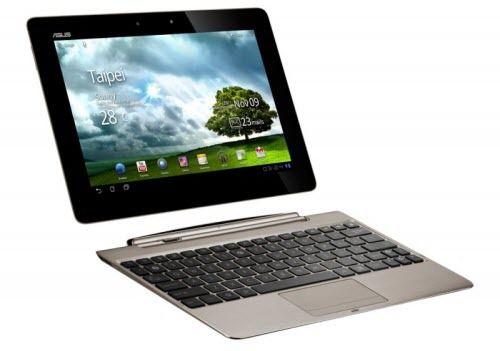
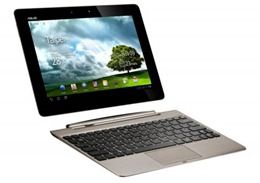
ASUS-Transformer-PrimeYou know what you want in an Ultra Mobile Computing solution. You want a rich spectrum of quality desktop applications with security, flexibility and processing power wrapped up into a handheld device. Unfortunately, after a busy CES, your options remain limited.

Computing at CES this year was all about Ultrabooks and Ice Cream Sandwich and while both of these topics are interesting, neither of the sectors produced anything that can be used today as a handheld PC.

Android devices continue to be crippled by low-quality and restricted software despite some amazing hardware solutions. The ASUS transformer Prime shows what can be done but is the same disappointment as the ‘smartbook’ devices I was testing in 2010. Just try using the Web Browser for a suite of web-based apps, try to write an article in the web-based WordPress back-end or try to book a flight. It’s actually quite embarrassing to see how little the software has moved on. Look for an office suite, a set of security tools, audio and video tools and a good quality image library and editing suite. It seems the only thing the Android ecosystem is working on today is gaming and that’s largely because of the attention that Nvidia have managed to drum up for the Tegra platform.

The fact is that the number of Android tablets out there doesn’t translate into any sort of business-case for porting and developing quality apps. Why bother investing $200K in a high-quality application port for a 7” or 10” screen when the market is an estimated 20 million customers and the average app purchase cost is under $4. The risk is not worth taking.

What the Android market needs is a huge boost in numbers. Fortunately, the Kindle Fire and the newly announced Asus Eee Pad MeMo with Android 4.0 operating system and a price of $250 could help. Although the Kindle Fire only runs V2.x Android software the chances are that newer versions of the Amazon product will get an upgrade and boost the ICS customer base. The Eee Pad MeMo at $250 speaks for itself. By the end of 2012 I estimate there will be well over 50 million Android tablets in the market and the numbers will be accelerating. At that point it makes sense to sit down with your developers and talk about an Android tablet application, albeit for a 2013 launch.

As I look across the other platforms and operating systems, I don’t see any major solutions rising up. The iPad continues to dominate mobile productivity apps but the form factor and operating system flexibility are limiting. The current Windows/Oaktrail pairing is disappointing too in terms of both battery life and performance.
  P1020239P1020241

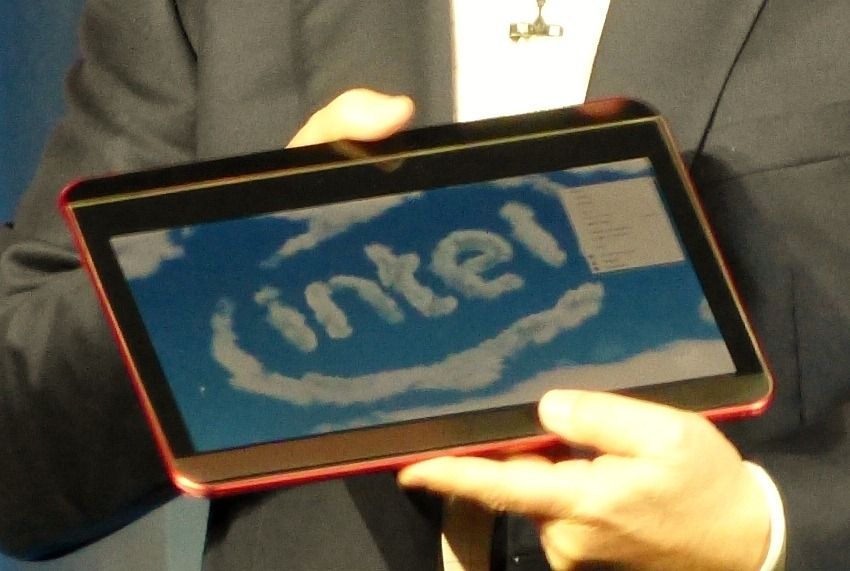
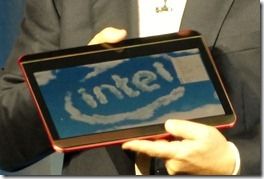
Intel held up the next-gen 32nm, re-architected ‘Clover Trail’ Windows tablet platform at CES which could provide the best chance of a quality handheld Windows experience and with Windows 8, this is probably the one to watch out for. Clover Trail is due in the second half of the year.

Cedar Trail netbooks and tablets provide an intermediate solution though and with the EeePC X101CH coming in cheap and light, it might be something to look at more closely but if you’re really looking for a handheld solution, I just can’t give you any news right now.

We’re at Mobile World Congress next month and at CeBIT in March so with Windows 8 looming, there’s a chance that UMPCPortal will come alive again. In the meantime, I can only advise buying a 7” Android 4.0 tablet and experimenting as soon as you can. While it can be frustrating for productivity, there’s a whole lot of good stuff that can still be done and I’m still not going anywhere without my Samsung Galaxy Tab. Paired with an Ultrabook, it’s a great solution.


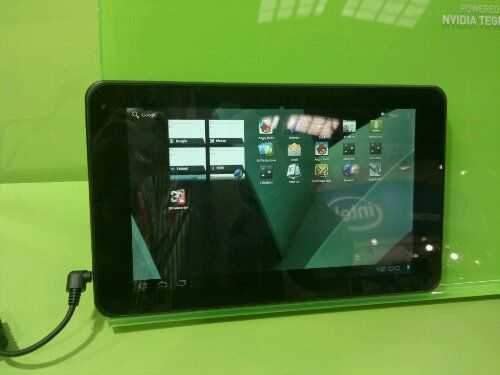
LG Optimus Pad at MWC.

Tags: , , , , ,


image

image

Tegra and Honeycomb seem to be everywhere at MWC. We spotted the Acer Iconia 100 yesterday but that seems to be the only 7″-er. Everything else is 10″. At this early stage in the Honeycomb lifeline there isn’t a lot of time for manufacturers to make huge differentiation in the software layers so LG have chosen to go the hardware route on their tablet and have added 3D cameras. Unfortunately I wasn’t able to test them.

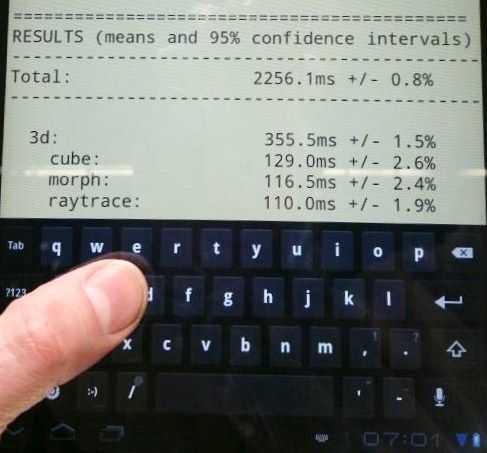
With Honeycomb being so new its difficult to come to any conclusions but I saw an amazingly sharp and high-contrast screen that was let down by a user interface that should be a lot, lot smoother.

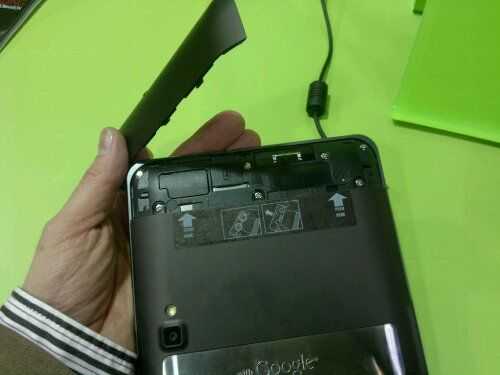
On the back you have a removable panel which seems to be only for the Sim card. I think I must have missed something there but I’m sure there’s no removable battery. Build quality overall seems very good and the gaming experience was an obvious step up from what I’ve seen on other devices. If developers jump on the bandwagon and optimise for Tegra, it will a real advantage in the gaming space.

With that 3D feature in the device I’m certainly not expecting it to be cheap and I wonder, is anyone really crying out for 3D camera like this?

Nvidia Showcase Tegra Games

Tags: , , , , ,


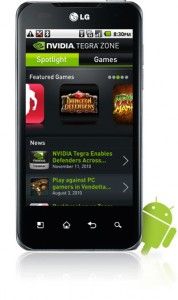
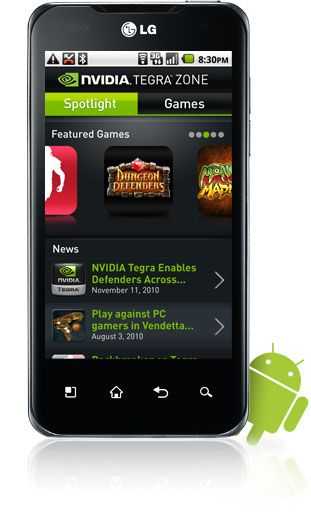
With an incoming surge of Tegra dual-core Android tablets and phones hitting the market Nvidia have made the move to highlight Tegra optimised games. To do this they have created a new Android app called Tegra Zone that will soon be available via the Android Market.

Tegra Zone will launch highlighting several games including Dungeon Defenders, Fruit Ninja HD, Back Breaker THD and Monster Madness. The highlight from that list is Dungeon Defends as it’s the first Unreal Engine 3 game to arrive on the Android platform offering immersive gameplay and stunning graphics.

Tegra Zone is designed to complement the Android Market as it offers additional information about the game such as professional reviews, gameplay videos and game trailers while at the same time allowing the user to download the game through the Android Market.

Source: Nvidia via TheNextWeb

Notion Ink Adam 3rd-Party Hands-On is Revealing.

Tags: , , ,


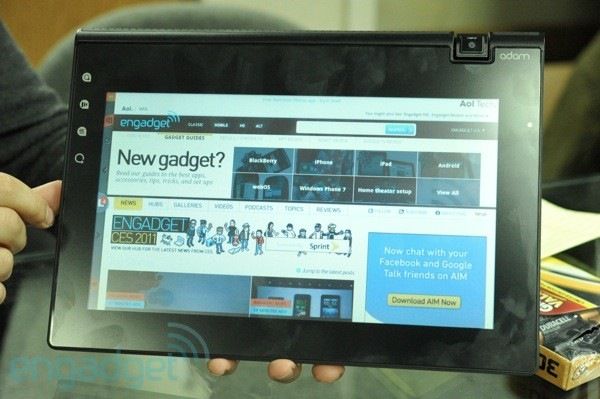
The Engadget team got some quality time with a working Notion Ink tablet this morning and their report sreavels some good details about the performance, buid, screen and software.

notion ink adam

One of the key features is the PixelQi screen which Engadget report to have good viewing angles, great sunlight reading characteristics but a slightly washed-out color mode. The build and weight is reported to be good for reading although at 1.5lbs (680gm) I’d argue that it’s still too heavy for long-term use. You need to be in under the 500gm mark for that. Admittedly that’s a huge challenge for a 10” device.

Engadget report some details about the UI but aren’t singing its praises at all -  “a few of us Engadget editors were perplexed by some of the features.”

Overall one gets the impression that all the software work might be in vain following news about Honeycomb today but it’s good to see the tablet working and, finally, a product for the Pixel QI display technology.

Check out the Engadget post for more details.

“Have Patience” – Nvidia on Tablets at Computex.

Tags: , , ,


Capture_00022

The tablet featured first in the press conference but there were no product announcements. We’ve actually left the event to head on out to the ASUS press conference.

The tablet has the “ability to allow is to enjoy nearly all the content that we would like to enjoy on a computer today” says Jen-Hsun Huang, CEO of Nvidia, who went on to talk up the potential market for tablets, his excitement and of course, the Tegra 2.

Surprisingly, he then said “have patience” and went on to explain that devices should come to market in the fall. Just how long is this Tegra story going to drag on?

Here are the relevant slides from the conference…

Capture_00034 Capture_00031 Capture_00029 Capture_00032 Capture_00028

ICD Ultra. Nvidia Tegra 2 Tablet for Q2 2010. (Video)

Tags: , , ,


The UK company ICD (Innovative Converged Devices) has an interesting product called the Ultra. Its a 7” device based on the Nvidia Tegra 2 platform and runs Android. (Detailed overview here.) We weren’t able to see it running so we can’t confirm if this is a true Google Android phone device or just a build based on the open-source components. Like the Mobinnova Beam, if it comes with Google apps and the Marketplace, it’ a good indicator that Google are taking the non-voice segment seriously.

ICD Ultra specifications

The IC Ultra is heading for Verizon in the US and as ICD is known to be working with T-Mobile in the UK, we hope that it will reach the EU shores too.

Mobinnova Beam. Lightweight, Mobile, Connected. Could this be the start of Android productivity?

Tags: , , , , , ,


It’s not confirmed right now but the Mobinnova Beam could be the first non-voice Android device to get the full Google seal of approval and if it does, it could become quite the mobile all-rounder.This is the lightest 8.9” laptop-style device we have in the product database!

4268973737_51c68f1b08

The Beam is coming to AT&T with HSPA and Android with a 3D UI and a super light weight of around 820gm. That’s lighter than any other netbook out there thanks to the small, 24Wh battery and fanless processing platform based on Nvidia Tegra 2.

Sizing-wise, the Beam is slightly deeper than the  EeePC 901 but significantly thinner. In terms of battery life, we’re looking at an on-net, in-use life of 8-10 hours (estimated) which means you really could leave this device on, and connected, all-day.

Pricing and availability is unknown right now but we’re watching this one very carefully. If it gets Google approval, it could signify the start of Android-based productivity and that’s why we’re reporting it here on UMPCPortal. This has pro-mobility potential.

Full specs, article links, videos in the Beam product page.

Meet:Mobility Podcast 39 – CES 2010 Warm-up

Tags: , , ,


Meet:Mobility Podcast 38 is now up. Recorded on Dec 30th 2009.

JKK, Sascha and I talk at length about the main CES 2010 topics including Pineview, consumer tablets and other mobile computing devices. Also covered: Camangi Webstation. Viliv N5. Tegra. Predictions for 2010.

podcaster_full-273x300

Listen, subscribe or download the podcast at Meet:Mobility

You can also find the podcast on Mevio where it’s available in a number of different formats and on iTunes (Please rate the show on iTunes.) You can also subscribe via RSS.

Meet:Mobility Podcast 39 – CES 2010 Warm-up

Tags: , , ,


podcaster_full-273x300

Meet:Mobility Podcast 38 is now up. Recorded on Dec 30th 2009.

JKK, Sascha and Chippy talk at length about the main CES 2010 topics including Pineview, consumer tablets and other mobile computing devices. Also covered: Camangi Webstation. Viliv N5. Tegra. Predictions for 2010.

(Show details below)

Listen, subscribe or download the podcast at Meet:Mobility

You can also find the podcast on Mevio where it’s available in a number of different formats and on iTunes (Please rate the show on iTunes.) You can also subscribe via RSS.

Notion Ink Tegra Android Smartpad.

Tags: , , ,


Looking quite sexy and with a brain to match, this is one pad we’ll be keeping a close eye on when we go to CES in Jan.

notion_ink_smartpad_1

It’s a large, 10.1-inch 1024×600 device running Android on a Nvidia Tegra T20 platform and has some really noteworthy features.

  • Pixel QI screen – Lower power. Better outdoor readability.
  • 3G
  • A-GPS, Compass, ambient light and water sensor.
  • HDMI out
  • 3MP AF camera.

You won’t see that lot appear for under $500 but even if it’s $600, it would make a very interesting home-to-office device. 10.1-inches is a little too large for our liking and the 1.7lb weight means it’s a two-handed device but this is definitely an interesting product.  It reminds us of  the ‘Haiku’ Microsoft ‘Origami’ concept of 2006.

The Tegra T20 is unknown to us at the moment so this could also be something that will be announced at CES. Information available at the moment leads us to believe this could be the next-generation Tegra platform. We’re wondering whether this could be a multi-core Cortex A5 implementation; a natural progression path from the multi-core ARM11 that Tegra currently uses.

Notion Ink Tegra Android smartpad uses Pixel Qi display – SlashGear.

Nvidia on Smartbook Operating Systems: WinCE best for now.

Tags: , , ,


tegra This is a subject we discussed at length on the last MeeMobility podcast. Operating systems for smartbooks. Android appears to be a great brand but it’s not ready for the big(ger) screen yet. As far as I know, the Open Handset Alliance has never announced plans to upscale the OS to laptop-style usage so for the time being, a good brand is all it is.

Nvidia, the creators of the Tegra MID and Smartbook platform, think the same and are focusing on WinCE right now. Yes, it’s a little shocking to us too. We know the platform is mature and stable but we can’t say we’ve ever seen any good quality consumer-focused mobile internet devices running it. Windows Mobile 6.5 and Windows Mobile 7, extensions of the WINCE OS could carry more branding weight and attract more developers but again, it might not be the right choice for consumers.

The Nvidia info comes from an interesting ComputerWorld article.

Nvidia chose to work with Windows CE first, said Rayfield, because it “is a rock-solid operating system that has been shipped billions of times.”

Windows CE also has a “low memory footprint and a good collection of apps,” Rayfield said.

He said Nvidia is also improving Tegra for use on Windows Mobile, a close variant of Windows CE, for ARM-based smartphones.

Nvidia is working with Google to accelerate Android, which is based on Linux, when running on Tegra hardware. But it will be about a year before that delivers for smartbooks, due to existing limitations in Android, he said.

Get that? A year before Android ‘delivers’ on a smartbook.

The Tegra playing field has a number of big holes that need to be filled. CPU power, Operating Systems, Adobe Flash, a rich suite of modern applications and the all-important developer ecosystem. When you look at Moorestown and Moblin V2 and hear Intel talking about it being able to deliver better smartbooks than the ARM-based ecosystem, you have to wonder whether Nvidia can really compete. Maybe Tegra-based MIDs and Smartphones on Anroid, Win 7, Mer or Maemo would be a better focus?

Windows Mobile 7 ‘Chassis 1’ Hardware.

Tags: , , , ,


mondi-right-thumb ZDnet posted some information about a rumored ‘Chassis 1’ specification for Windows 7 mobile phones yesterday and although it’s great to see, it looks like a list of the hardware that many of us in the UMPC and MID community have been been talking about for the last few years. It’s basically a list of currently available mobile technology and includes ARMV6+ processor, 800×480 multi-touch, 3MP cam, compass, accelerometer, light Sensor, high speed USB, BT2.1 and fast SSD. The other interesting spec is a screen size of 3.5” or more. 

ARMV6 is not exactly thrilling but the ‘+’ would indicate that Microsoft are going to build WM7 for the Cortex architecture meaning ARMv7 and high-end platforms like Snapdragon, Tegra and OMAP.

What we don’t know is what the software layer is going to be like and that’s arguably the most important element.

Nvidia: $99 MIDs with Tegra. $299 UMPCs with ION

Tags: , , ,


This story is currently developing at MWC. Updates will be added below.

tegra
Via Engadget

“A $99 Tegra-based MID is expected to be announced by Nvidia at MWC. The MID includes full high-definition 1080p video playback and full Wi-Fi and 3G mobile broadband connectivity capabilities. The always-on device can go “days” between battery charges, a company spokesman said.”[Via PCWorld]

Update 1:
It’s not quite clear what they mean by $99. Subsidised perhaps? If so, ignore the hype on the pricing but it’s interesting to see nvidia highlight the Tegra 600-based MID (ARM core) and the Ion based PC shown in the diagram (looking like it’s based on the old HTC Shift!)

Udate 2: Press release. note that there is no mention of voice here. [Source]

SANTA CLARA, CA UNITED STATES

NVIDIA Tegra Brings Full Internet Experience to Always On, Always-Connected Devices

BARCELONA, Spain, Feb. 16 MOBILE WORLD CONGRESS 09 — Today’s users want an always-connected device for social media applications such as Facebook and YouTube, as well as great multimedia performance for recording and watching HD movies and videos on the go.

NVIDIA Corporation, the inventor of the graphics processor, today introduced a new platform, based on the NVIDIA(R) Tegra(TM) 600 Series computer-on-a-chip that enables a $99, always-on, always-connected HD mobile internet device (MID) that can go days between battery charges.

This platform will enable OEMs to quickly build and bring to market devices that carriers can offer for as low as $99 — bringing broadband connectivity and all of the Web’s HD content to the masses.

“Mobile internet devices have evolved to provide consumers with the performance and connectivity required by today’s lifestyle,” said Michael Rayfield, general manager of the mobile business unit at NVIDIA. “Until now, consumers could get just another ‘gadget’ with limited functionality or a PC that’s not ‘always on’. A Tegra-based platform combines the best of both worlds.”

The Tegra MID delivers:

— 720p and 1080p video playback
— Days of use between charges
— Full Wi-Fi and 3G connectivity
— Optimized hardware support for Web 2.0 applications for a true
desktop-class internet experience
— A complete software solution including Microsoft Windows Embedded CE
OS, application viewers, full Internet browser, UI framework, board
support package (BSP), software development kit (SDK), Web mail client,
and more

“The next generation of smart, connected, service-oriented devices are centered around rich multimedia experiences and enhanced functionality,” said Mukund Ghangurde, Director, CE and Consumer Product Management at Microsoft Corp. “We are pleased to collaborate with NVIDIA to develop platform resources that assist OEMs in quickly bringing these new devices to market.”

In addition, NVIDIA partnered with ST-Ericsson to add 3G communication capability into this new platform, allowing for seamless connectivity, worldwide.

“ST-Ericsson together with NVIDIA have developed a Microsoft Windows Embedded CE implementation using the ST-Ericsson U335 and the NVIDIA Tegra which is ready for customer design development,” stated Jorgen Lantto, Chief Technology Officer, ST-Ericsson. “This solution takes advantage of the high volume, IOT tested and proven U335 modem solution together with NVIDIA which takes multimedia performance to a new level.”

ICD, a leading consumer ODM, also announced support of the new class of devices enabled by this new platform.

“ICD has long believed that there will be a new generation of innovative connected devices. Designing these devices around the Tegra platform will bring carriers an amazing level of functionality at prices as low as $99,” said David Hayes, President and CEO of ICD.

Update 4: Earlier (2008) news about Tegra.

Nvidia Tegra video demo in 1.2W. Questions remain!

Tags: , , ,


Guess what the first word of this Nvidia video is? a) Welcome b) Today c) Intel

The Tegra demonstration is impressive, showing HD video content being decoded in around 1W instead of 12W but they clearly didn’t cover all bases. For a start, you can’t even run a big screen backlight at 1W and if I’m doing my research correctly I can see that Tegra doesn’t include a communications and radio subsystem. Even so, what exactly are they trying to compare here? They are putting a general purpose CPU (i’m guessing its Celeron there) against a dedicated video codec in a video decoding test. Not only that, they are showing their new tech against Intel’s old tech. Booo!

I’m sure the NVidia board is impressive but come on guys, lets see you doing some general purpose computing with Wifi, BT, 3G, storage, USB and compare it against a Silverthorne/Poulsbo combo that will do the same in a MID-sized board in under 5W. Bring out the MIDs Nvidia. Or better still, send them to me and I’ll perform a special selection of Chippy tests on them.

Nvidia confirms Tegra for Windows Mobile MIDs.

Tags: , ,


tegrareference In an article over at CNet, Mike Rayfield, general manager of NVidia’s mobile business reveals that the company will show its new Tegra platform and a MID reference design (left) this week.

Tegra comes in 600 and 600Mhz flavours and will be formerly revealed tomorrow if earlier news is correct. It will be interesting to see if this is a Cortex A8 based device with enough processing power to give the Atom Z-Series a run for it’s money.

The reference design looks like an oversize Nokia N96 to me which certainly isn’t a bad thing as it’s likely to have a bigger 4.8″ screen at Internet-friendly resolutions. You could also fit a nice big battery in there for all-day life.

One really interesting aspect of the ‘leak’ details is that the design is being built exclusively to work with Windows Mobile. Windows Mobile 7 is mentioned too. The article also hints that the MID-range extends from 4-inch minitablets (with keyboards hopefully) up to subnotebooks for NVidia. Stick that in your diagram Steve!

Update: Engadget published a few more details:

  • The first Tegra systems will be handhelds or small laptops with screens ranging in size from 4-inches to 12-inches.
  • Starting prices for the initial devices will range from $199 to $249
  • More at Engadget

Update: Gizmodo have an image that seems to suggest that Tegra uses an ARM11 core but its not 100% clear where the image comes from.

I’ll be keeping an eye on new Nvidia Computex website over the next 24 hours. Also note that there’s a MID section on the ARM website that shows the N95 and iPhone as new products.

Update. ARM issued a press release. Tegra will use the ARM11 MPCore (up to four cores) technology.


Recommended Sites

  • Big Beach Our marketing advisors. Located in UK.
  • Carrypad Tablets and consumer mobile products
  • JKKMobile JKKMobile – Mobile computing and hacking – Partner of UMPCPortal
  • Liliputing Netbooks and small-form-factor laptoping – Partner of UMPCPortal
  • Ultrabook News Ultrabook products, specs and news