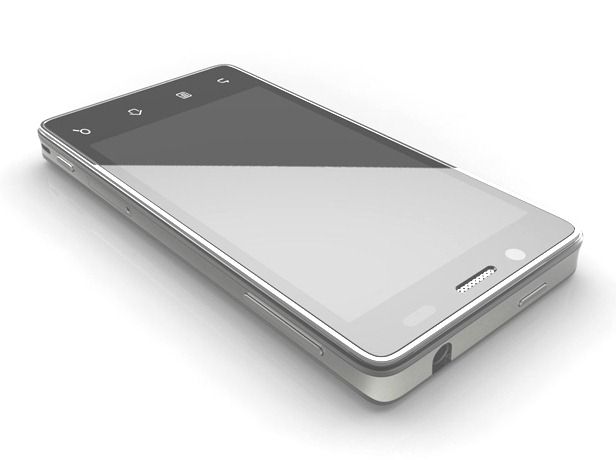
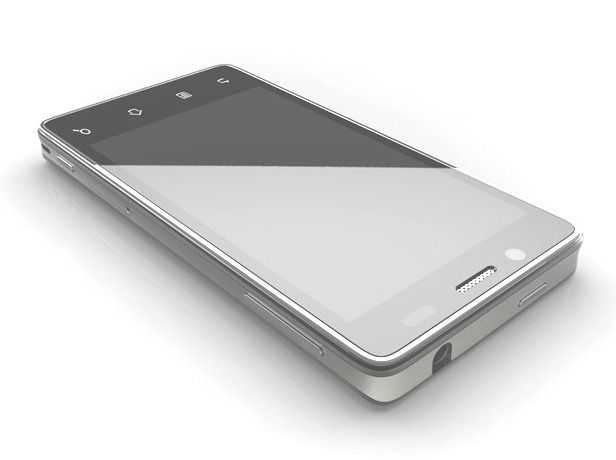
In July last year Carrrypad was one of the few publications to have unrestricted access to a Moorestown phone. Made by Aava as a reference design it ran Meego. We were supposed to see Intel phones later that year but it turned out that the Moorestown platform wasn’t good enough and Intel promptly moved focus to the Medfield platform. In February this year Intel held an early prototype Medfield phone up on stage. This time it was running Android. Later in the year Meego was effectively dropped and since then Intel have been pushing Android (via an official tie-up with Google) and talking about 32nm Medfield-based phones in the first half of 2011.
Technology Review have had hands-on with an early prototype, possibly another Aava reference design or development kit that Intel are calling ‘production grade.’ They have also had hands-on with a Medfield Tablet running Ice Cream Sandwich too. Unfortunately there aren’t many details or thoughts but there’s a hint that Intel will reveal more at CES in just 3 weeks time. We’ll be in the keynote to cover this of course.
The only real feedback given by Technology Review on the Intel phone was this:
The phone was powerful and pleasing to use, on a par with the latest iPhone and Android handsets. It could play Blu-Ray-quality video and stream it to a TV if desired; Web browsing was smooth and fast. Smith says Intel has built circuits into the Medfield chip specifically to speed up Android apps and Web browsing.
That’s likely to indicate Wi-Di integration and other hardware acceleration. Remember there will be hardware video encoding in Medfield. It’s also likely that Medfield phones scale up a little bit higher than other leading smartphones in terms of performance. What you get in performance though, is likely to cost in terms of battery life.
At the end of the day, if Medfield is good enough, easy to design and integrate and, importantly, cheap enough, manufacturers are likely to be interested. If it offers unique features such as Wireless Display and other technologies, it might even raise an eyebrow with the customer but it’s still going to have to compete in a fierce smartphone market where it will have to differentiate itself against Android and other popular brands, operating systems and platforms.
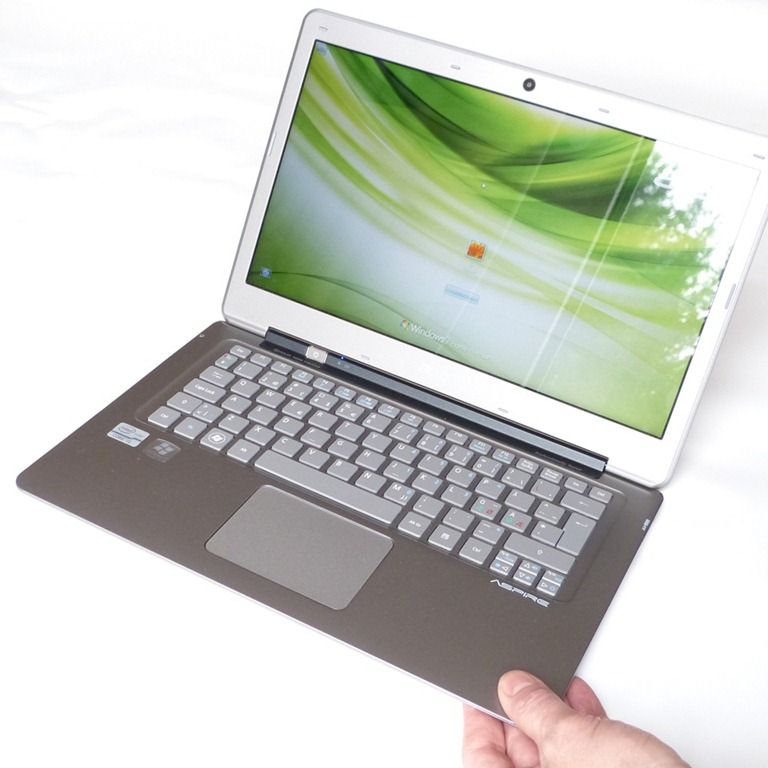
From the day that the Acer Aspire S3 was launched everyone knew that it would be coming in as a ‘value’ option in the Ultrabook field. We’ve tested it extensively over the last week and can say that it’s not only a ‘value’ option offering Core i5 performance where others in the price category are only offering capped Core i3, but it’s also an honest Ultrabook too. It doesn’t show-off, doesn’t have any outstanding features but it does everything well. From screen to keyboard to performance and battery life it works well as an all-round 1.3KG 13” Ultrabook. Read on for our full review of the Acer Aspire S3 320GB HDD, Core i5 Ultrabook. (Model MS2346 with Finnish keyboard layout being tested here.)
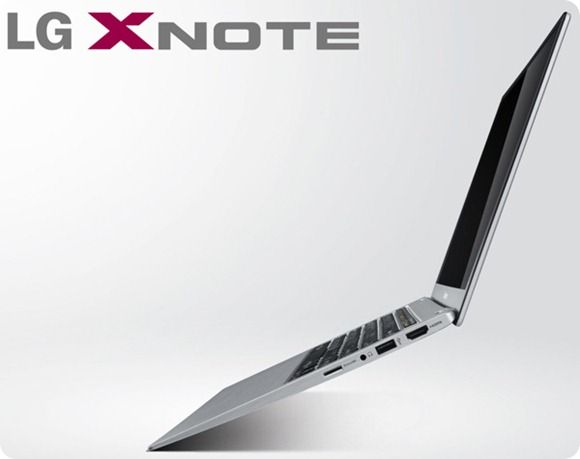
Our close blogging friends over at Netbooknews.de (We’ll be working closely at CES in Jan) have what must be the first hands-on report for the LG Xnote Z330 Ultrabook. It’s slim, attractive and comes in Core i5 and Core i7 versions, with a 128GB SSD. It will arrive on European shelves in Jan or Feb (Marketing talk for Feb!) for a reasonable, if not ground-breaking, price of 999 Euros. (Post-tax price.)
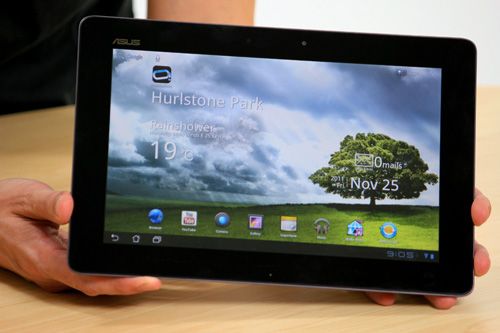
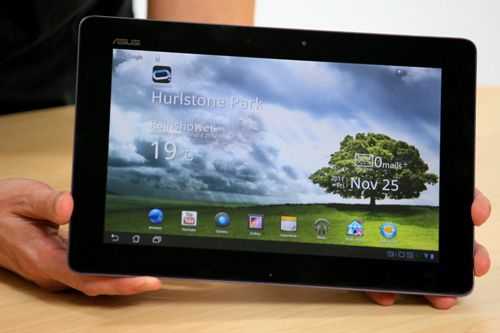
Our pal Ritchie has a detailed writeup of his hands-on experience with the Transformer Prime along with some great photos to whet your appetite of this thin and powerful device. If you’re the visual type, he’s also prepared a video summary of the Transformer Prime for your enjoyment:
Ritchie says that the Super IPS+ display looks great, and this will be an upgrade over the original Transformer’s regular IPS display, while retaining the durable Gorilla Glass. Asus added a display brightness boosting function to the Transformer Prime which is intended for better viewing during outside use.
Tegra 3’s performance is also in full force; it appears as though it can handle 720p and 1080p video with no problems. That could make the Transformer Prime a great portable home-theater (thanks to the micro-HDMI port), with the only problem being the relatively weak Android codec support. I’m curious to know how well the Transformer Prime can handle software video decoding that comes along with some third-party applications.
The unit itself is slimmer and lighter than the iPad 2, and attached with the keyboard, the Transformer Prime is rated to run for 18 hours which is pretty awesome.
Unless there are any unforseen issues leading up to it’s launch, the Transformer Prime is certainly setting the new bar for Android tablets, and I would go as far to say that Apple better pay attention as well. The Transformer Prime has nearly everything one could want in a tablet today except for a little Ice Cream Sandwich action.
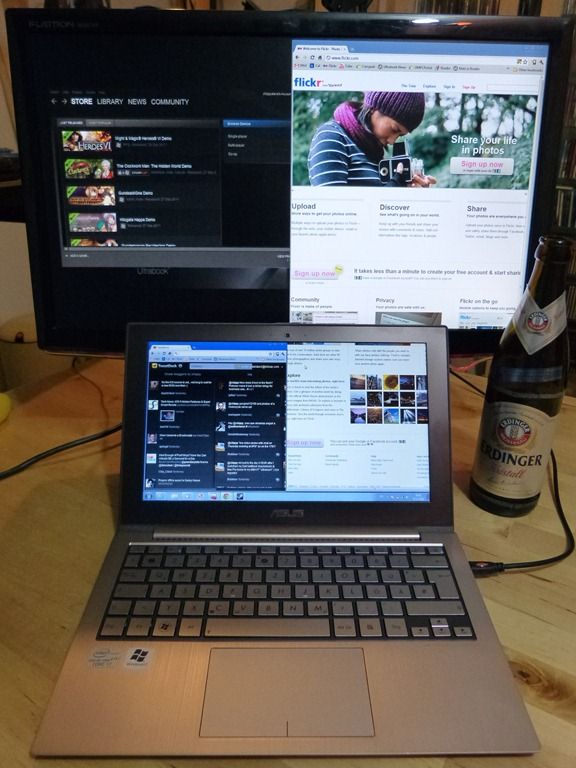
Thanks to everyone that joined in the live testing session yesterday evening. It was totally worth the effort because we uncovered a few more nuggets of information and a lot of data on gaming as well as confirming battery life and performance. The videos are embedded at the bottom of this article.
The bad news first. During the evening we experienced two power-downs on removing / inserting the power plug while we were in a game. It was an instant-off situation [see it on the live video here.]. Apparently others have experienced this too. I testing today, I experienced an instant shut-off while World Of Warcraft was loading (on battery mode.)
Our LIVE REVIEW is planned for Thursday 17th November at 2100 GMT+1 (9pm Berlin time- meet everyone here. Your local time here.) so if you have queries and want to see the results live, add it to your calendar. We’ll have a live chat and video going for a few hours. The ASUS UX21 will get a good thrashing with benchmarks, videos, productivity, gaming and much more.
A more detailed first impressions article will go out within the next 48hrs. Check back here or subscribe on Twitter or Facebook.
And now to the video. Don’t forget to support Ultrabooknews by ‘liking’ the YouTube video and please, if you have a positive or negative thought, add it to the comments. It helps us all.
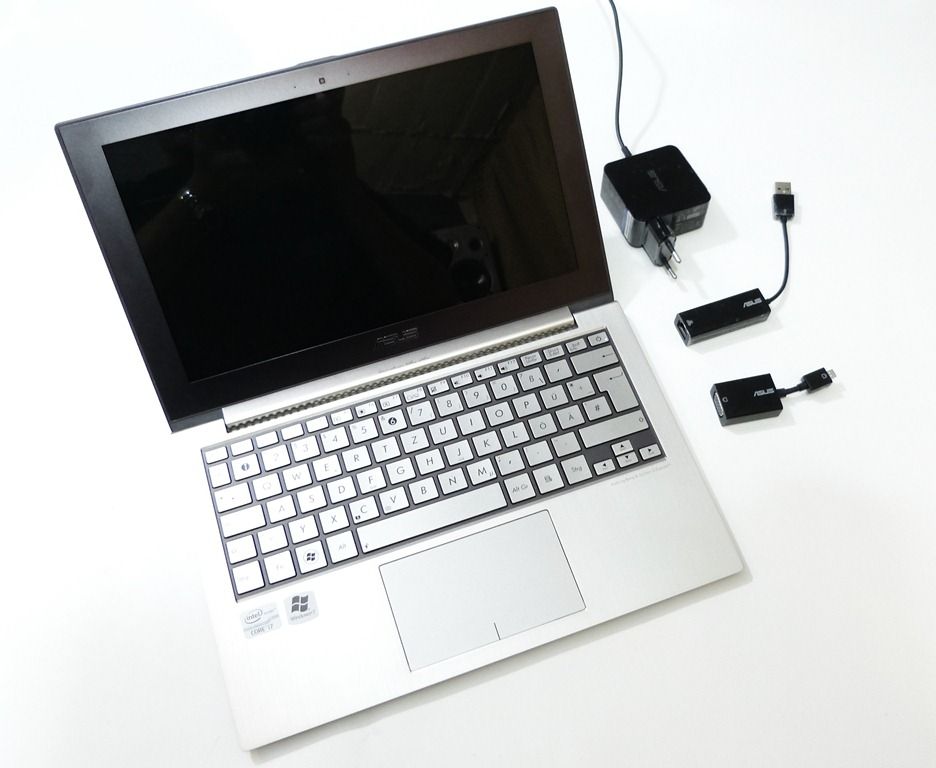
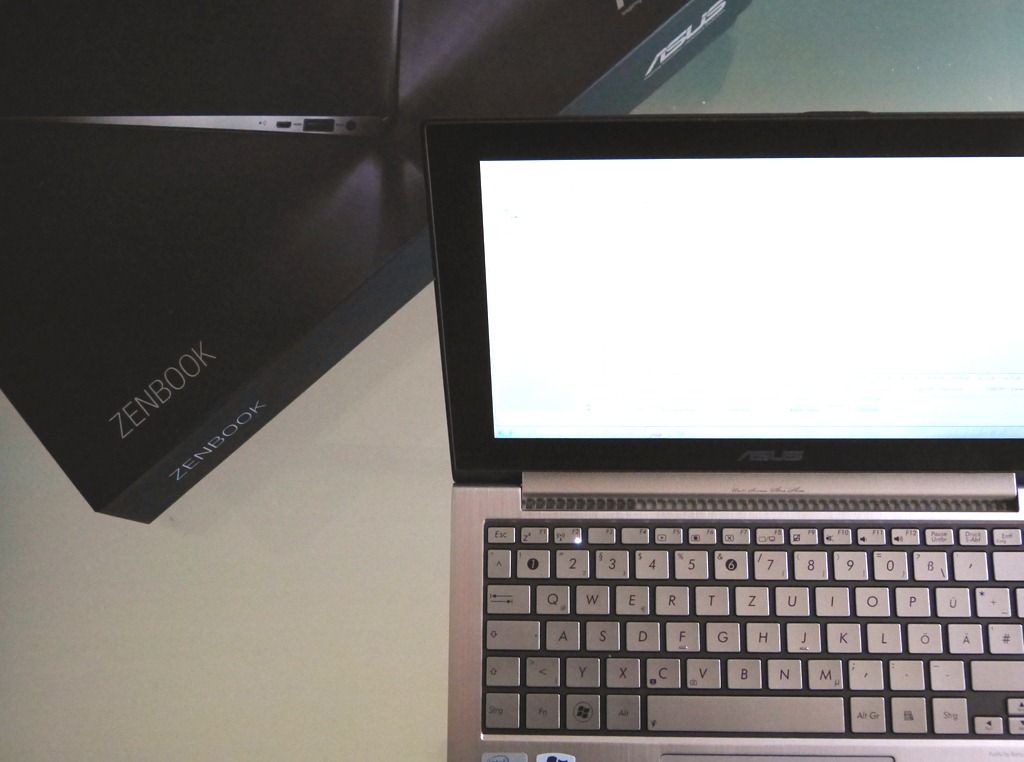
I’m pleased to announce that we have our first Ultrabook here for testing. Thanks to Asus for sending over the ASUS UX21E, the 11.6”, 1160gm (2lb 9oz) Ultrabook in Core i7, 128GB build. (Model details – ASUS Zenbook UX21E-KX008V)
It looks just a awesome as the first time I saw it at IFA in September, boots in an impressively quick time, turns in a 300ms Sunspider score, has good speakers, a very bright (but glossy) screen , is totally silent as I type this and it looks like it will allow you to web-work for about 4.5 hours.
In a meeting with Toshiba Europe today we got an update, and more hands on with the Toshiba Z830 Ultrabook. It’s light, well featured and will come in Portégé and Satellite versions meaning business, and consumer specifications. Toshiba haven’t decided on final specification line-up yet and price targets weren’t given but from what we learnt today, we can’t see the Z830 coming at under $/€1000. First though, lets give you the video, taken after the meeting. It’s one of the most complete overview’s to date so worth watching.